
Supreme Court allows telehealth and mail access to mifepristone for now
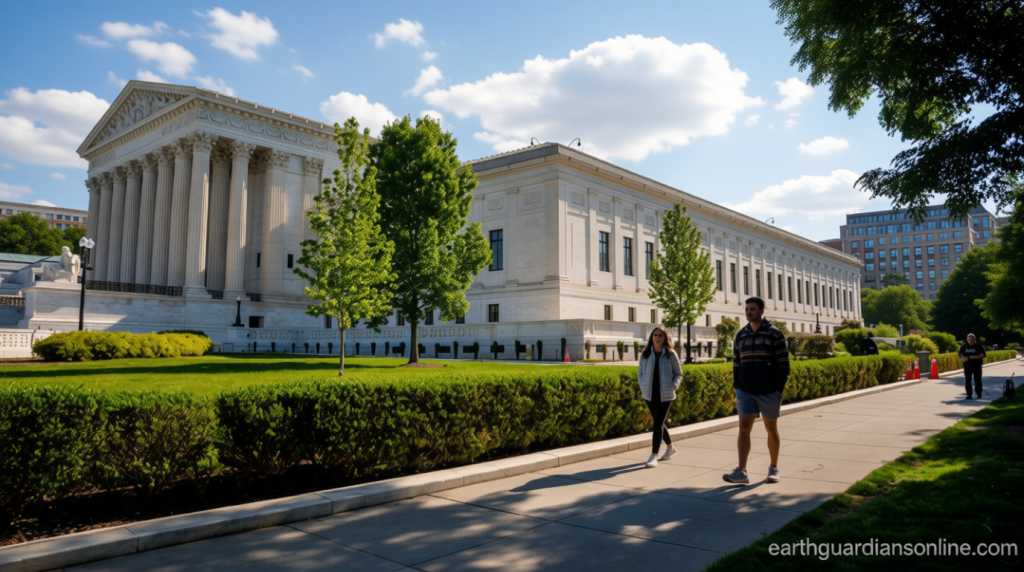
Supreme Court allows telehealth and mail access to mifepristone for now
Supreme Court allows telehealth and mail – The Supreme Court on Thursday permitted ongoing access for women to the abortion medication mifepristone via telehealth consultations, preserving current availability while Louisiana officials continue to advocate for restricting its distribution in lower courts. This temporary decision came nearly half an hour after an earlier administrative stay, which had expanded access to the drug, expired at 5 p.m. ET. The ruling effectively paused a more restrictive order issued by the 5th U.S. Circuit Court of Appeals, which had previously mandated in-person visits for mifepristone. As the legal battle unfolds, the focus will now shift to the New Orleans-based appeals court, tasked with determining the validity of Louisiana’s challenge to the drug’s accessibility.
A temporary reprieve for abortion access
The Supreme Court’s order marks a critical moment in the ongoing debate over abortion rights. By extending access to mifepristone through telehealth and mail services, the justices ensured that women could continue obtaining the medication without immediate disruption. This move was met with mixed reactions, as it balanced the need to maintain current procedures with the potential for further legal constraints. The 5th Circuit’s initial decision, which required in-person visits, had sparked concern about limiting access, especially in rural areas where telehealth is vital. The Supreme Court’s intervention temporarily halted that requirement, providing a brief window for the status quo to remain in place.
However, the order did not come with an explanation of the justices’ reasoning or a disclosure of the vote count. This lack of clarity has left advocates and legal analysts questioning the decision’s rationale. Justice Clarence Thomas and Samuel Alito, among others, expressed dissent, arguing that the ruling was premature and potentially detrimental to the broader fight against abortion rights. Their objections highlight the deep divisions within the court, even as they maintain a collective decision to defer the case to the appeals court.
Dissenting opinions: A critique of the status quo
Justice Samuel Alito’s dissent offered a pointed critique of the court’s decision, emphasizing the stakes of the ruling. “The court’s unreasoned order granting stays in this case is remarkable,” he wrote. “What is at stake,” he added, “is the perpetration of a scheme to undermine our decision” overturning Roe v. Wade four years ago. Alito’s argument underscores the broader implications of the ruling, suggesting that the Supreme Court’s temporary action could pave the way for further restrictions on abortion access.
Justice Clarence Thomas, meanwhile, focused on a different legal angle. In his solo dissent, he contended that a long-neglected 19th-century law—specifically, one that prohibits the mailing of drugs used for abortions—prevented manufacturers from seeking judicial intervention. Thomas argued that the companies “are not entitled to a stay of an adverse court order based on lost profits from their criminal enterprise.” He further claimed that the firms “cannot, in any legally relevant sense, be irreparably harmed by a court order that makes it more difficult for them to commit crimes.” This perspective reframes the issue, linking the legal battle over mifepristone to the broader question of accountability in abortion-related practices.
Administrative stay and the path forward
The Supreme Court’s order arrived just minutes before the expiration of the administrative stay, which had been a temporary measure allowing widespread access to the medication. The timing of the decision raised questions about its urgency and the strategic considerations behind it. By intervening so close to the deadline, the justices may have aimed to prevent immediate implementation of the stricter rule, but the lack of formal reasoning has left uncertainty about the long-term implications.
The decision to not hear arguments in the case, despite requests from both sides, has further complicated the legal landscape. Instead of addressing the merits of Louisiana’s challenge directly, the Supreme Court opted to defer the matter to the appeals court. This approach could lead to a more detailed examination of the state’s arguments, potentially setting the stage for a future return to the high court. The appeals court is now expected to evaluate the legal basis of the challenge, which could determine whether mifepristone remains accessible through mail and telehealth channels.
For now, the ruling maintains the current balance, allowing women to continue using mifepristone as they have in recent months. However, the decision also signals that the Supreme Court is willing to revisit the issue, depending on the outcome in the lower courts. Advocates for reproductive rights have welcomed the temporary pause, but they remain cautious about the broader trend of the court’s approach to abortion access. Conversely, opponents argue that the ruling delays necessary restrictions, giving more time for legal challenges to be resolved in favor of their position.
The ongoing case has become a focal point in the larger fight over abortion rights, with Louisiana’s challenge representing a significant step in the effort to limit access to mifepristone. The state’s arguments, rooted in the 19th-century law, aim to restrict the drug’s availability by challenging its mailing and telehealth use. If the appeals court upholds Louisiana’s position, the next phase of the legal battle could see the Supreme Court once again taking up the matter, potentially leading to a final decision that reshapes abortion access across the country.
As the case moves forward, the implications for women’s health and reproductive rights will remain under intense scrutiny. The Supreme Court’s temporary decision to allow continued access to mifepristone reflects a complex interplay of legal strategies, ideological differences, and the urgency of the issue. With the appeals court now in charge, the path to a definitive resolution is uncertain, but the stakes for both sides remain high. The ruling has ensured that the status quo will hold for the time being, yet the future of mifepristone—and the broader abortion landscape—remains in flux.
A dynamic legal landscape
The unfolding legal drama surrounding mifepristone highlights the dynamic nature of the Supreme Court’s involvement in reproductive rights. The justices’ decision to extend access through telehealth and mail services demonstrates their willingness to provide temporary relief, even as they maintain a conservative stance on abortion. This approach has allowed for a continuation of the drug’s availability, but it also leaves the door open for further restrictions, depending on the appeals court’s findings.
Analysts note that the Supreme Court’s hesitation to fully commit to one side of the argument may reflect a desire to avoid immediate backlash. By deferring the decision, the justices may have allowed the appeals court to conduct a more thorough examination of Louisiana’s claims, which could provide a clearer legal framework for the drug’s distribution. The absence of a vote count or detailed reasoning, however, has sparked speculation about the internal dynamics of the court and the potential for future rulings that could reshape abortion access.
For now, the decision stands as a temporary victory for those seeking to preserve current access to mifepristone. Yet, the battle is far from over. The case’s progression through the lower courts will determine whether the Supreme Court is compelled to revisit the issue, and the outcome could have far-reaching consequences for women’s healthcare options. The court’s latest action, while providing immediate relief, underscores the ongoing legal and political tensions that define the current landscape of abortion rights in the United States.
