
The Bryson DeChambeau Show captivates the crowds, even on a bad day. Is that fascination enough for a truce with the PGA?
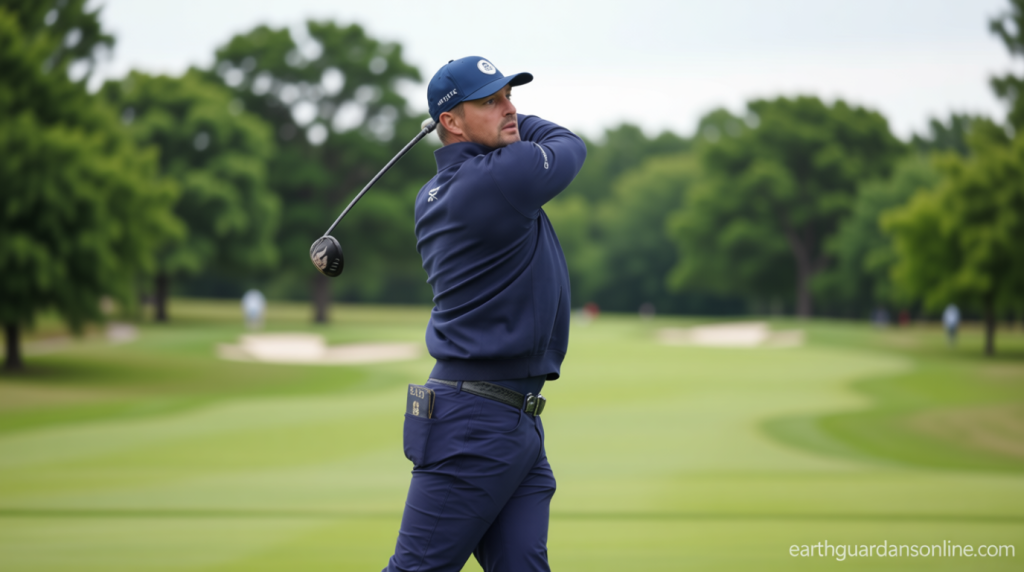
The Bryson DeChambeau Show captivates the crowds, even on a bad day. Is that fascination enough for a truce with the PGA?
A Day of Dramatic Flair
The Bryson DeChambeau Show captivates the crowds – Despite a subpar performance in the PGA Championship’s opening round, Bryson DeChambeau demonstrated his trademark flair by cutting through the player’s parking lot and heading straight to the driving range. The 29-year-old, known for his high-octane approach to the sport, arrived with a determined air, setting up two buckets beside him as if preparing for a mini-competition. His routine involved frequent pauses to analyze video clips of his swing captured on an iPhone, or to fend off photographers who had stationed themselves behind him. The scene was a mix of determination and frustration, as DeChambeau seemed to believe that practice could still salvage his day, even as his performance on the course spoke otherwise.
DeChambeau’s first-round score of 6-over 76 left him at plus-17 after his three previous major championship starts. The round was a rollercoaster of misfortune, with one errant shot landing in an unexpected location—a staircase that bore the tent “Level Blue On the Fairway.” The ball’s placement was almost comically ironic, yet it became one of DeChambeau’s standout moments, as he managed to save par from that precarious spot. The crowd’s laughter and applause seemed to echo the absurdity of the situation, but DeChambeau’s ability to turn setbacks into spectacle remained undiminished.
The Struggles of the Two-Time Champion
Throughout the day, DeChambeau’s golfing challenges were on full display. His drives veered sharply to the right, while his putts defied predictability, ranging from short to long, wide to narrow. The tricky Aronimink greens tested his composure, but the most memorable moment came on the par-3 eighth hole. A second shot lifted high enough to create a drizzle, flying over the green with such force that it seemed like a scene from a cartoon. DeChambeau, ever the showman, completed the effect with a loop-di-loop, earning a double bogey but also a moment of dark humor from the spectators.
His body language shifted dramatically as the round unfolded. Early on, there was a sense of purpose, but by mid-round, DeChambeau’s demeanor had evolved into puzzlement, then outright irritation. He lodged his club into the green with a force that suggested both frustration and a need to assert control. At times, he would retrace his steps to the scene of a previous error, taking a ghost swing as if searching for answers or rehearsing a mental mulligan. The tension between his relentless ambition and the reality of his performance was palpable, even as he continued to draw attention for his unique style.
The LIV Golf Dilemma
DeChambeau’s struggles on the course come at a crucial moment for the LIV Golf rebels, including the two-time US Open champion. The breakaway league, once a symbol of defiance against the PGA Tour, is now facing mounting pressure. The Saudi Public Investment Fund, which initially fueled LIV’s expansion, has begun to withdraw financial support, leaving the project in a precarious position. DeChambeau’s contract with LIV is set to expire at the end of 2026, and while a return to the PGA Tour is possible, it won’t be without complications.
His participation in a lawsuit alleging that the PGA Tour abused its monopoly to penalize players who joined LIV adds another layer to the conflict. A return to the PGA would require negotiations, potential penalties, and a reconciliation that DeChambeau might not be ready to accept. The Tour has made a gesture toward compromise by easing its strict social media policies, but DeChambeau, a fervent YouTuber, has already hinted at a bold alternative: playing solo on his platform if a deal isn’t reached. The stakes are high, and the outcome could determine the future of both leagues.
The Power of Performance
While DeChambeau’s golf might not be flawless, his ability to command attention is undeniable. Even on a day when his game faltered, the crowd’s reactions to his play were electric. At 8:18 a.m., he arrived at his tee time in a black puffy parka, a practical choice given the cool, rainy conditions. But the parka didn’t dampen the enthusiasm for his opening drive, which drew a chorus of “Whoa!” from the spectators. As the round progressed, the exclamations grew more intense: “Jesus!” and “Holy moly” became regular exclamations, while “Oh s**t” punctuated the drama of his misfires.
DeChambeau’s appeal lies in his unapologetic style. Unlike the subtlety of a traditional golf swing, his approach is loud, bold, and often unpredictable. This is not just about skill; it’s about spectacle. Fans of the sport may prefer the precision of a well-executed shot, but they also crave the drama of a powerful drive that cracks the air with authority. DeChambeau’s performance, even when it went awry, kept the audience engaged. He didn’t just play golf—he performed, and that performance was both a gift and a burden.
A Clash of Egos
At the heart of the PGA Tour and LIV Golf’s rivalry is ego. Neither side is willing to admit fault, and both believe they need to maintain their stance. DeChambeau, with his bold personality and unyielding confidence, has become a lightning rod for the conflict. His actions on the course, though imperfect, underscore his determination to remain in the spotlight, even as the PGA works to reclaim its dominance.
Yet, the PGA Tour has not been without its own challenges. The 2025 season saw record-breaking viewership on CBS, surpassing figures from 2018. While LIV Golf’s events drew only 480,000 viewers, the PGA’s top events maintained a steady 3.1 million audience. This disparity highlights the Tour’s continued strength, but it also raises questions about whether DeChambeau’s presence alone can salvage LIV’s credibility. As he walked the fairways, often leaving Fowler and Åberg to chat with their caddies, DeChambeau’s performance became a silent protest against the status quo. The PGA’s decision to loosen its social media rules was a step toward unity, but for DeChambeau, it’s a far cry from a complete resolution.
Ultimately, the PGA Championship serves as a microcosm of the broader conflict. DeChambeau’s ability to entertain and dominate, even when his game isn’t at its peak, suggests that his presence alone can influence the narrative. But can that same charisma bridge the gap between two competing golf empires? For now, the answer seems to be yes—but the question of whether it’s enough for a lasting truce remains unanswered.
“Whoa.” “Jesus!” “Holy moly.” “Oh s**t.”
