
China’s Xi gives Putin a red-carpet welcome – and makes a veiled jab at the US
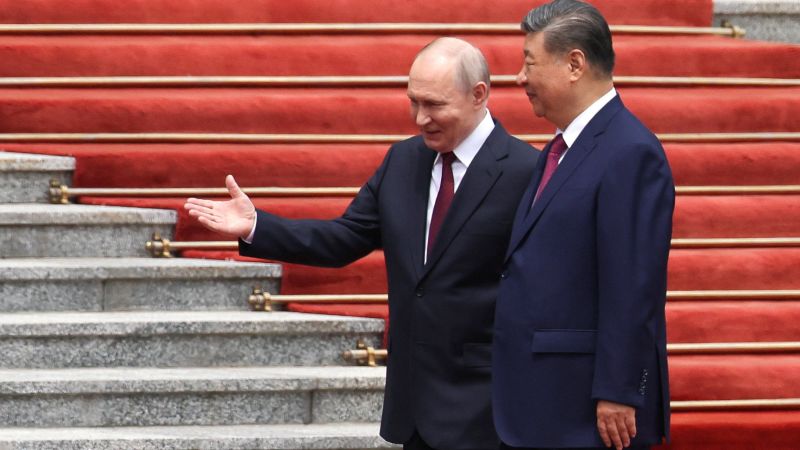
China’s Xi Welcomes Putin with Strategic Alliance Focus
Global Diplomacy and Bilateral Ties
China s Xi gives Putin a red – China’s Xi gives Putin a red-carpet welcome during his state visit to Beijing, signaling a renewed commitment to strengthening Sino-Russian cooperation. The meeting took place amid rising global uncertainties, as Chinese President Xi Jinping and Russian President Vladimir Putin discussed shared goals in international affairs. This visit, which spans 24 hours, follows Xi’s earlier summit with former U.S. President Donald Trump, highlighting China’s strategic efforts to solidify its position as a key player in world politics. Xi’s emphasis on the partnership as a “force of calm amid chaos” reflects the growing importance of the China-Russia alliance in shaping global dynamics.
During the talks, Xi Jinping highlighted the escalating influence of Western unilateralism, framing it as a challenge to international stability. He described the current geopolitical landscape as one of “turbulence and transformation,” while criticizing the U.S. for its assertive policies. “Unilateral hegemonic currents are running rampant,” Xi noted, according to state media reports. This critique subtly positioned the U.S. as a disruptor in global relations, contrasting it with the collaborative approach between China and Russia. The summit’s timing, coinciding with heightened tensions in the Middle East, underscored the strategic significance of the leaders’ meeting.
Strategic Initiatives and Joint Statements
Xi and Putin issued a joint statement pledging support for a multipolar world order, a vision that challenges the U.S.-dominated unipolar system. The document emphasized the need for balanced global power structures, with both leaders expressing confidence in their ability to counter Western dominance. They also addressed the U.S. plan to construct a Golden Dome missile defense system, calling it a threat to strategic stability. “The Golden Dome project undermines the interconnectedness of offensive and defensive capabilities,” the statement asserted, suggesting a shared concern about American military posturing.
The leaders’ alliance has grown stronger in recent years, with Xi hosting Putin for more than 40 meetings since he took office. This visit, his 25th since becoming president, reinforced the personal and political bond between the two. Xi’s use of a traditional Chinese idiom—“One day apart feels like three autumns”—was cited as a symbol of their deepening relationship. The phrase, which conveys the longing for reunion, highlighted the emotional and strategic dimensions of their partnership in the face of global challenges.
Xi and Putin also critiqued the U.S. for its interference in Latin American and Caribbean affairs, referencing the arrest of Venezuelan President Nicolás Maduro. The leaders called this action a form of “unilateral pressure,” suggesting a broader concern about Western influence on sovereign nations. They further criticized the use of diplomacy as a veil for military aggression, citing the U.S. strikes on Iran as a prime example. “Military strikes and preemptive negotiations threaten global stability,” the statement read, reinforcing their shared critique of American foreign policy.
Regional Solidarity and Economic Cooperation
As the Middle East crisis intensifies, the Sino-Russian alliance has become a focal point for regional solidarity. Xi’s hospitality during Putin’s visit reflected the growing mutual reliance between the two nations, particularly in economic and security matters. Their collaboration on trade agreements and energy projects has bolstered their global influence, positioning them as alternatives to Western-led institutions. The joint statement underscored this shift, emphasizing the importance of coordinated efforts to counteract Western dominance in international affairs.
Putin’s visit to China also coincided with discussions on economic synergy, with both leaders highlighting the benefits of bilateral trade. The partnership has seen significant growth, driven by shared interests in countering U.S. policies and reducing dependency on Western markets. By hosting Putin amid the ongoing Middle East tensions, China demonstrated its ability to serve as a mediator and strategic ally. This dynamic reflects a broader trend in global diplomacy, where China and Russia are increasingly working together to reshape international narratives and policies.
