
Should you worry about the Ebola outbreak? Here’s what the numbers tell us
Ebola Outbreak in DRC and Uganda Sparks Global Concern
Should you worry about the Ebola – As of late Wednesday, the World Health Organization (WHO) has confirmed that an Ebola outbreak in the Democratic Republic of Congo (DRC) and Uganda is rapidly escalating, posing a significant threat at the national and regional levels. The strain responsible for the current crisis, known as Bundibugyo, lacks a targeted treatment or vaccine, raising alarms among health officials. Despite this, the WHO has categorized the outbreak as a “public health emergency of international concern,” while emphasizing that the global risk remains relatively low.
The Role of the Bundibugyo Strain
The Bundibugyo variant, which has been identified as the culprit behind the outbreak, has not been fully eradicated in previous cases. This strain is particularly worrisome because it has not been associated with a specific cure or vaccine. Dr. Tedros Adhanom Ghebreyesus, the WHO’s director-general, highlighted several key factors contributing to the outbreak’s severity. Among them was the delayed recognition of the epidemic, which allowed the virus to spread unnoticed for weeks. Another concern is the high rate of mortality among healthcare workers, who have been directly exposed to the pathogen. Additionally, the presence of substantial population movement within the affected regions complicates containment efforts.
On May 5, the WHO received an alert about an unusual illness in Mongbwalu, a town in the DRC’s Ituri province. The alert included reports of four health workers dying within a short span of four days. This led to the dispatch of an investigation team to the area on May 12, where they collected samples for testing. Officials noted that the outbreak likely began “a couple months ago,” and the delay in identifying it created a critical four-week gap during which the virus could circulate unchecked.
International Response and Patient Transfers
The outbreak has drawn attention to the need for rapid international coordination. The US Centers for Disease Control and Prevention (CDC) reported that an American citizen, Dr. Peter Stafford, had tested positive for Ebola and was displaying symptoms. The patient, a general surgeon specializing in burn care, had been assisting patients in Bunia, a city in the DRC. According to the international charity Serge, two other healthcare professionals—Stafford’s wife, Dr. Rebekah Stafford, and Dr. Patrick LaRochelle—may have been exposed to the virus but are currently asymptomatic.
To mitigate the risk, the CDC has arranged for six high-risk contacts of the American patient to be relocated to Europe for observation. Five of these individuals will be sent to Germany, while one will receive care in the Czech Republic. The American citizen, who arrived in Berlin on Wednesday morning, is being treated at Charité University Hospital, as confirmed by German authorities. This move underscores the proactive steps being taken to isolate potential cases and monitor their health closely.
Country-Level Measures and Suspected Cases
While the global risk is deemed low, national and regional concerns are mounting. In Uganda, health authorities have confirmed two cases of Ebola as of Tuesday. The first was a DRC patient who was treated at a Ugandan facility and later succumbed to the disease. The second case is also believed to have originated from the DRC. The Ugandan government has implemented outbreak control measures, including enhanced disease surveillance and readiness protocols for emergency responses.
Dr. Anne Ancia, WHO’s representative in the DRC, acknowledged the uncertainty surrounding the exact number of infections. She noted that while 51 cases have been officially confirmed in the DRC, at least 139 deaths are thought to be linked to the outbreak, with nearly 600 additional cases suspected. “We have significant uncertainty about the number of infections and how far the virus has spread,” Ancia stated, underscoring the challenges in tracking the epidemic’s full scope.
Transmission and Symptoms
Understanding how Ebola spreads is crucial for containment. The virus is transmitted through direct contact with bodily fluids from an infected person, such as blood, saliva, or vomit. It can also spread via contaminated objects or surfaces, as well as through fecal matter. The incubation period, the time between exposure and symptom onset, ranges from two to 21 days. However, individuals are not contagious until they begin exhibiting symptoms, which include fever, headache, and muscle pain, progressing to more severe conditions like hemorrhagic fever.
Health officials are particularly concerned about the speed at which the outbreak has developed. Tedros expressed deep worry over the “scale and speed” of the epidemic, noting that the lack of a specific treatment for the Bundibugyo strain adds to the urgency. “Potential spread of Ebola warrants serious concern,” he said, highlighting the need for coordinated global action. The combination of rapid transmission and limited medical countermeasures makes this outbreak a unique challenge.
Global Preparedness and Future Outlook
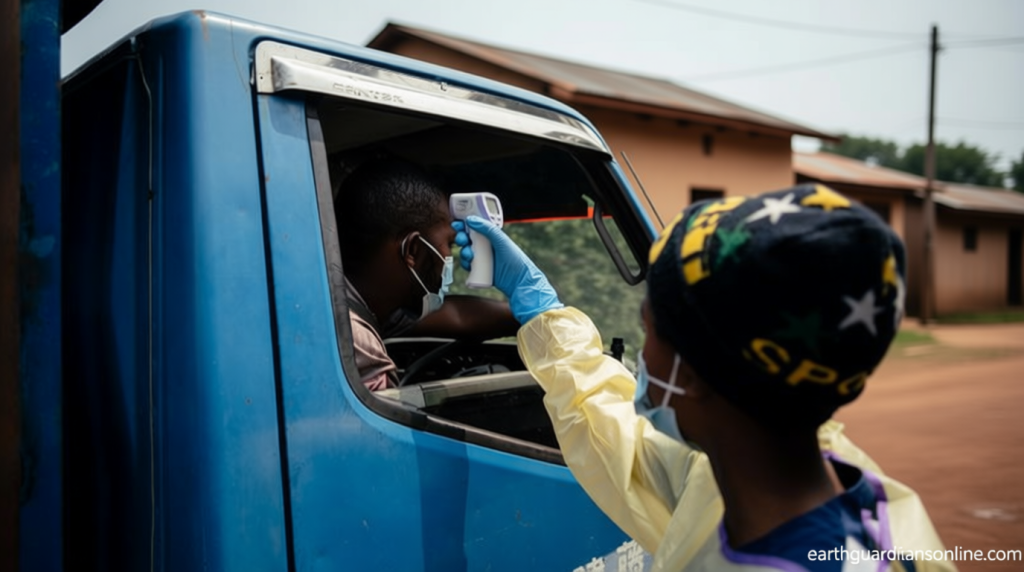
Many countries have taken swift measures to curb the spread of the virus. These include implementing travel restrictions from the affected regions, conducting health screenings at border checkpoints, and deploying medical resources to support outbreak response. For instance, the DRC has ramped up its surveillance efforts, while neighboring countries have heightened their readiness to detect and manage cases.
Despite these efforts, the situation remains fluid. The WHO continues to investigate the precise origin of the outbreak and the timeline of its emergence. Officials are also monitoring population movements within the affected areas, which could facilitate further spread. The strain’s ability to cause severe illness without a known cure means that early detection and rapid isolation are critical. While the immediate threat is localized, the potential for international spread cannot be ignored, especially with the movement of infected individuals across borders.
As the outbreak progresses, the focus remains on containing the virus and providing timely medical care. The WHO’s declaration of a public health emergency signals the need for increased vigilance and resource allocation. For now, the American case serves as a reminder of the interconnected nature of global health challenges. With continued monitoring and international collaboration, the hope is to prevent the outbreak from escalating further and to stabilize the situation in the DRC and Uganda.
“We have significant uncertainty about the number of infections and how far the virus has spread,” Dr. Anne Ancia, WHO’s representative in the DRC said.
The ongoing situation highlights the importance of early intervention in infectious disease outbreaks. While the Bundibugyo strain has not been as widely studied as the more common Zaire strain, its emergence in this region underscores the need for vigilance. As the WHO and local health authorities work to gather more data, the global community watches closely, ready to respond with additional support if required.
