
New York’s hottest club is the street outside Madison Square Garden
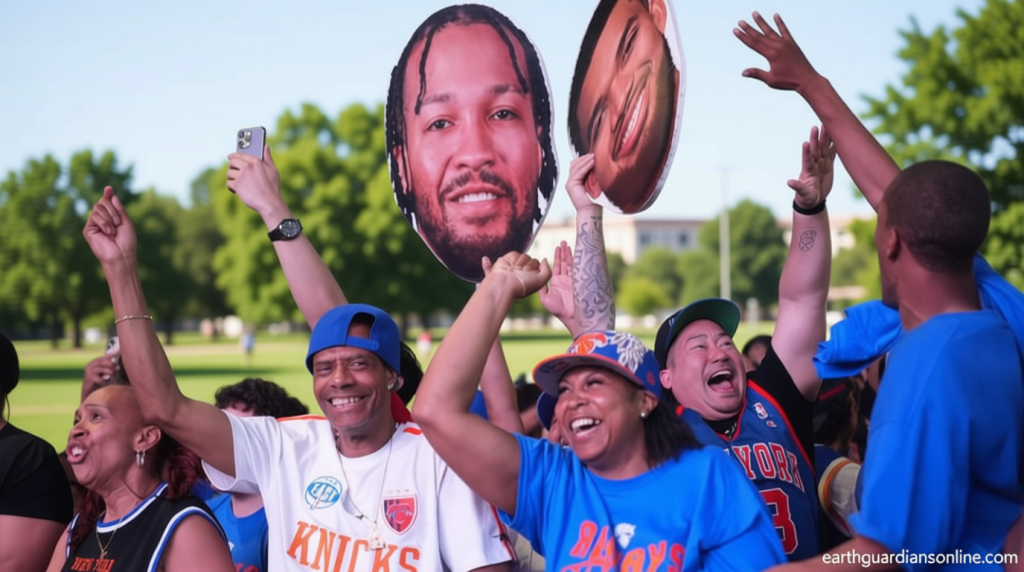
Madison Square Garden’s Most Vibrant Scene: The Street Outside the Arena
New York s hottest club is – On a sweltering evening marked by temperatures nearing 90 degrees, a towering figure in a tailored suit stood vigilant near the edge of a crowd-control barrier. His presence was a silent testament to the fervor of New York basketball fans, who had gathered outside Madison Square Garden to witness the historic Game 1 of the Eastern Conference Finals. The man’s gear—a headset, a badge, and a walkie-talkie—hinted at his role as a security officer, tasked with maintaining order in a place that had become a battleground for belief in the Knicks’ revival. Though he faced away from the jubilant crowd, his words carried weight, especially as the game’s momentum shifted dramatically in the final quarter.
The Outside Game: A Test of Fandom
Inside the arena, the Knicks were staging a remarkable turnaround, overcoming a 22-point deficit to claim victory. But beyond the barricades, the scene was equally charged. The sidewalks had transformed into a chaotic, sweat-drenched zone where fans jostled for a view of a massive screen erected to broadcast the game. This was no ordinary viewing area—it was a curated experience, offering proximity to the action without the cost of a ticket. Yet, the trade-off was clear: those outside had to navigate a labyrinth of fans, vendors, and the relentless heat, all while relying on sheer determination to stay close to the virtual spectacle.
“You should have had faith,” the security officer intoned to the restless throngs who had abandoned the watch party as the Knicks faltered in the early stages. His remark, delivered with a tone of detached authority, felt like a verdict on the city’s shifting allegiance.
The watch party, though free to enter, was a psychological and physical trial. Temporary metal barriers carved the block into a maze, with police officers ensuring no one slipped through the cracks. Fans packed the space like a subway car, their energy palpable despite the lack of alcohol. Instead, vendors offered colorful plastic bottles filled with DIY concoctions—think neon-hued drinks with names like “Blue Hawaii” that promised a taste of the game’s intensity without the price of a stadium seat.
A Fractured Fandom: Between Hope and Desperation
For those who stayed, the experience was a blend of anticipation and exhaustion. The screens at either end of the block became focal points, drawing fans into a shared ritual of waving inflatables like the Thunder Stick to disrupt the Cavaliers during free throws. Yet, the energy was often spontaneous, a grassroots surge of cheers and chants that seemed to grow organically rather than be orchestrated. The challenge, however, was inescapable: once fans left the watch party, they rarely returned, trapped by the ebb and flow of the game’s narrative.
As the Knicks’ defense faltered early in Game 1, some in the crowd began to lose faith. A midtown office worker, stepping onto the subway platform at Penn Station, let out a rallying cry: “Go Knicks!” The response was immediate, with a nearby fan in a blue-and-orange jersey shouting back, “Aight!” The exchange was brief but emblematic of the collective hope that pulsed through the streets. It was a reminder that even in the face of adversity, the city’s fandom remained resilient, if not a bit fractured.
The Knicks had entered the series on a high, having swept the 76ers in a dramatic run through the first two playoff rounds. Their nine-day layoff between games had been a chance to regroup, but the pressure of the Eastern Conference Finals loomed large. The team’s recent success had rekindled confidence among a fanbase that had long struggled to see the Knicks as a contender. For the first time in over three decades, the city was talking about a championship—not just as a possibility, but as an expectation.
The Cost of Passion: Hydration and Hypocrisy
In the heat of the moment, the watch party’s limitations became starkly apparent. Access to food, water, or restrooms was scarce, forcing fans to improvise. One group of friends, eager to stay hydrated, opted for $50 glass bottles of Saratoga water from an upscale sushi and steakhouse nearby. It was a small but telling sacrifice, highlighting the lengths to which fans would go to remain in the game’s orbit. Yet, the decision to stay or leave often hinged on more than just thirst—it was a reflection of the Knicks’ performance, or lack thereof, in the opening minutes of the contest.
The security officer’s words were not just a reminder of the crowd’s impatience but a symbolic boundary between those who had faith and those who had not. As the game’s first quarter unfolded, the Knicks’ sloppy play chipped away at the audience’s belief, creating a palpable sense of doubt. But the crowd, ever the resilient force, clung to the hope that the team’s resurgence under head coach Mike Brown and the dynamic leadership of Jalen Brunson would translate into a breakthrough. The postseason offense, now spearheaded by Karl-Anthony Towns, had shown promise, and some wondered if the coaching staff had finally cracked the code.
For many, the watch party outside MSG was more than a venue—it was a microcosm of the city’s relationship with its beloved team. The bustling sidewalks and fervent chants mirrored the Knicks’ own journey from underdog to contender. Yet, the experience also revealed the paradox of fandom: a community that celebrated triumphs with unbridled joy but endured defeats with a mix of frustration and determination. As the game’s final minutes unfolded, the crowd’s energy became a living testament to the unyielding spirit of New York, even when the Knicks’ fortunes wavered.
The series had only just begun, but the stakes were clear. For the city, this was a chance to reclaim its basketball legacy. For the fans outside the arena, it was a test of loyalty, a place where they could feel the pulse of the game without the price of a seat. And for the security officers, it was a reminder that in the world of sports, the line between celebration and chaos is often thin. As the Knicks’ victory reverberated through the streets, the crowd’s endurance became a symbol of their unwavering connection to the team, no matter the odds.
CNN’s Don Riddell documented the scene, capturing the essence of a city united in its pursuit of glory. The watch party outside Madison Square Garden was more than a gathering—it was a statement, a declaration that New York’s basketball heart had not cooled. Whether the Knicks could sustain this momentum remained to be seen, but for the moment, the streets were alive with the same electric energy that had once defined the city’s sports culture. The question lingered: would this resurgence be a fleeting spark, or the beginning of something much greater?
