
Katherine Legge aims to make history by racing the Indy 500 and Coca-Cola ‘double.’ She’s just looking forward to bedtime
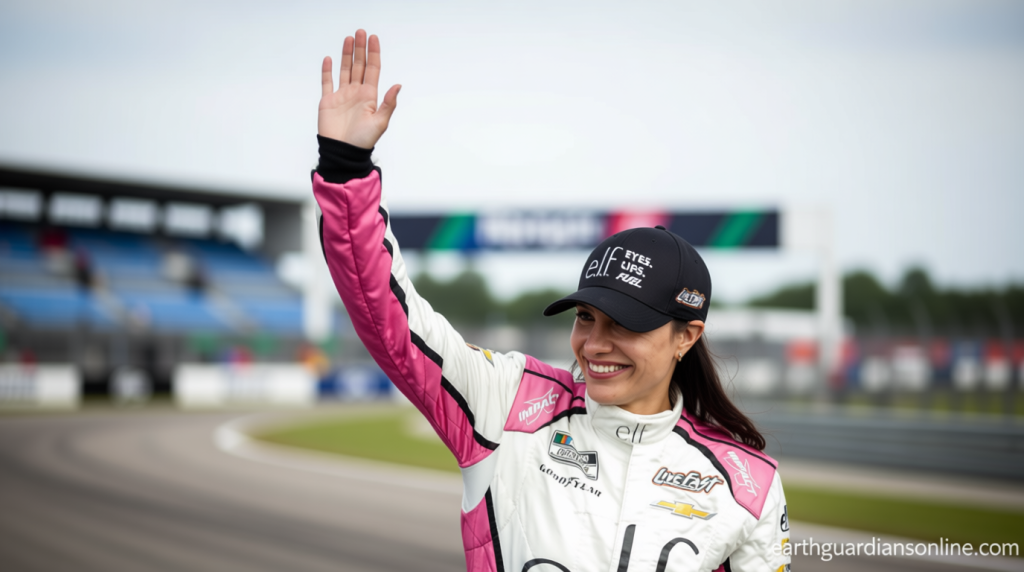
Katherine Legge Aims to Make History with Indy 500 and Coca-Cola Double
The High-Stakes Double Challenge
Katherine Legge aims to make history – On Memorial Day, Katherine Legge is poised to etch her name into motorsport history by attempting the Indy-Charlotte “double.” This unprecedented feat requires racing the Indianapolis 500 and the Coca-Cola 600 on the same day, a task few have dared to tackle. As the first woman to try this dual challenge, Legge’s journey is both historic and personal. The Indianapolis 500, a legendary race in the IndyCar series, and the Coca-Cola 600, a high-stakes NASCAR event, demand relentless focus and physical endurance. While the odds are stacked against her, Legge remains undeterred, embracing the opportunity to redefine what’s possible in racing.
“It’s like racing from New York to Daytona Beach at an average of 200 miles per hour—without a break,” Legge said. “You can’t afford to lose concentration for even a moment. I don’t think anyone truly grasps the intensity of it.”
Logistics and Mental Fortitude
Legge’s plan is a masterstroke of timing and coordination. She will begin the day with a helicopter from the Brickyard, then fly to North Carolina, where another helicopter will transport her to the Charlotte Motor Speedway infield. A shuttle bus will finally take her to the pit lane, assuming all the logistics go as smoothly as planned. However, the margin for error is slim: even a delay in Indianapolis could throw off the entire schedule. “The weather is a wild card,” she acknowledged, highlighting the precarious balance between preparation and execution.
“I’m trying to think about my hybrid strategy while explaining how I’m going to tackle the double. I’m not sure if my brain will be ready for anything next week,” Legge joked, showing how the mental demands of the day are as taxing as the physical ones.
Switching between two distinct racing environments adds another layer of complexity. The Indianapolis 500, known for its high-speed, technical precision, contrasts sharply with the Coca-Cola 600, which features the heavy, powerful stock cars of NASCAR. Legge must adapt her driving style, team communication, and race strategy on the fly, a challenge that tests not only her skills but also her composure under pressure.
Legge’s energy consumption is staggering. She estimates she’ll burn between 5,000 and 6,000 calories by the end of the day, relying on a mix of energy gels, chewable supplements, ripe bananas, and even baby food to sustain her. This unconventional approach reflects her readiness to embrace whatever it takes to succeed, even if it means fueling her body with unexpected options.
A Legacy of Pioneering Spirit
While the Memorial Day double has been attempted by several drivers, none have matched Legge’s ambition. John Andretti was the first to try it in 1994, finishing 10th at Indianapolis before engine failure disrupted his progress in Charlotte. Since then, names like Robby Gordon, Kyle Larson, and Kurt Busch have joined the ranks of contenders, but only Tony Stewart has completed the full 1,100-mile challenge. His 2001 performance, marked by precise timing and unwavering focus, sets a high bar for Legge to aim for.
“What will I eat after the IndyCar race? I’ll probably feel nauseous, but that’s part of the journey,” Legge mused, capturing the chaos of her mind as she balances preparation with the thrill of competition.
Stewart’s 2001 race remains a benchmark for Legge. He started the Indianapolis 500 at 11 a.m. ET, finished sixth by 2:30 p.m., and completed the transition to Charlotte in under an hour. This level of efficiency underscores the importance of meticulous planning, a lesson Legge is keen to apply as she prepares to face the same demanding schedule. While the odds are against her, her resolve to make history is unshaken.
