
Kevin Warsh sworn in as Fed chair at pivotal moment for US economy
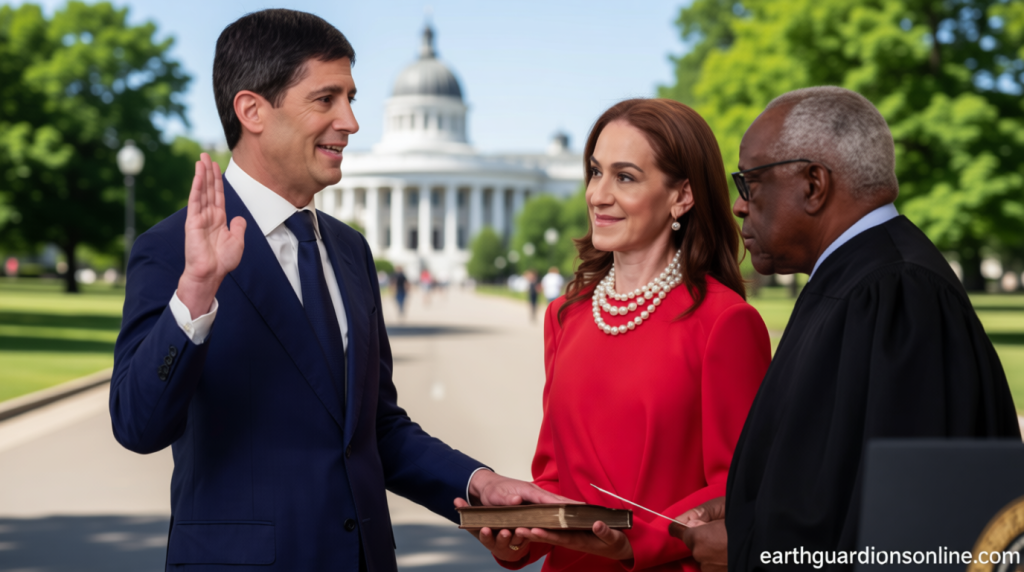
Kevin Warsh Assumes Role as Fed Chair Amid Economic Uncertainty
Kevin Warsh sworn in as Fed chair – On Friday, Kevin Warsh officially took the helm as chairman of the Federal Reserve’s Board of Governors, succeeding Jerome Powell in one of the world’s most influential economic roles. The 56-year-old economist now faces a critical juncture for the U.S. economy, marked by escalating inflation, intensifying global conflicts, and a volatile financial market. His appointment comes as the central bank grapples with mounting pressure to balance growth and price stability while navigating the fallout from recent geopolitical tensions and rising energy costs.
The Shifting Economic Context
The U.S. economy is currently under strain from a confluence of challenges. The ongoing US-Israeli conflict with Iran has exacerbated oil price fluctuations, sending gasoline costs soaring. Mortgage rates, too, have reached their peak in nine months, adding to the burden on households. Inflation, which has surged to its highest level in three years, now threatens to undermine consumer confidence and erode the purchasing power of millions. Despite these hurdles, the American consumer has shown remarkable resilience, continuing to spend at a steady pace even amid rising prices. This persistence has shielded the broader economy from a deeper downturn, but it also highlights the growing dissatisfaction with economic conditions.
Consumer sentiment has plummeted to its lowest point in recent history, with Americans expressing more pessimism than during major crises such as the Iraq War, 9/11, the Great Recession, or the aftermath of the pandemic. This widespread discontent could have significant implications for the midterm elections, as voters demand clear answers from policymakers. For Warsh, the stakes are high: his ability to navigate this complex environment will determine the Fed’s credibility and effectiveness in the coming months.
Trump’s Endorsement and Expectations
President Donald Trump, who nominated Warsh in January, delivered a speech at the White House following his swearing-in, lauding the new chairman’s capabilities. “I expect he will go down as one of the truly great chairmen of the Federal Reserve that we’ve ever had,” Trump said, emphasizing Warsh’s broad expertise and respect across political lines. “He’s got abilities that very few people have, covers a lot of territory, and is respected by everybody.” These comments underscore the administration’s confidence in Warsh’s ability to steer the central bank through turbulent times.
While Trump praised Warsh’s independence, he also voiced his own agenda for the Fed. Earlier in the year, the president had criticized Jerome Powell for not cutting interest rates swiftly enough, calling him a “numbskull” and even threatening to replace him. Now, however, Trump has urged Warsh to “be totally independent,” urging him to make decisions without direct presidential influence. “Don’t look at me, don’t look at anybody, just do your own thing and do a great job,” the president added, signaling his support for Warsh’s autonomy while maintaining a watchful eye on the central bank’s actions.
Warsh’s Reform Agenda
Warsh has made it clear that his leadership will prioritize structural changes to the Fed’s operations. In his remarks after the inauguration, he emphasized the need for a “reform-oriented Federal Reserve,” one that learns from past successes and mistakes. “I will lead with a focus on lower inflation and stronger economic growth,” he stated, highlighting his commitment to fiscal discipline and long-term stability. His approach aligns with Trump’s vision of a more assertive central bank, one that actively supports economic expansion through lower borrowing costs.
A key aspect of Warsh’s plan involves streamlining the Fed’s communication strategy. He has proposed limiting the public-facing discussions by officials regarding their policy outlook, aiming to reduce perceived subjectivity in rate decisions. This move reflects a broader effort to centralize authority within the Fed and ensure that monetary policy remains insulated from political pressures. Trump’s remarks during the ceremony also echoed this sentiment, with the president claiming the Fed “lost its way” in recent years by focusing on issues unrelated to its core mission.
The Federal Open Market Committee’s Role
Despite Trump’s insistence on independence, the Fed chair alone cannot dictate interest rate changes. The actual decisions rest with the Federal Open Market Committee (FOMC), a body of policymakers who evaluate economic indicators and outlooks before voting on rate adjustments. In March, the FOMC had projected a rate cut later this year, but recent assessments of higher energy prices and geopolitical instability have shifted their stance. Most now favor maintaining current rates, with some considering the possibility of a rate hike if inflation proves difficult to control.
Warsh’s initial meeting as chair is scheduled for June 16-17, where he will likely outline his strategy for addressing inflation and fostering growth. The FOMC’s upcoming deliberations will be crucial in determining the direction of monetary policy, with the chair’s influence playing a pivotal role in shaping the consensus. Warsh’s vision for the Fed may eventually lead to a more aggressive stance on interest rates, but the committee’s collective judgment will ultimately guide the path forward.
Political Ramifications and Challenges
The current economic climate has heightened the political stakes for the Fed. With consumer sentiment at a historic low and inflationary pressures persisting, the central bank’s decisions will be closely scrutinized by both the public and lawmakers. Warsh’s ability to maintain the Fed’s independence while addressing these concerns will be tested, as his policies could either reinforce or challenge the administration’s economic priorities.
Trump’s public endorsement of Warsh is a strategic move to ensure alignment with his policy goals, particularly the push for lower interest rates. However, the president’s contradictory rhetoric—praising independence while criticizing Powell’s approach—leaves room for interpretation. This duality may create tension within the Fed, as Warsh balances his own convictions with the expectations of the White House. His success will depend on his capacity to project stability without appearing too subservient to political agendas.
A New Era for the Federal Reserve
Warsh’s tenure marks a turning point for the Federal Reserve. His focus on reform, combined with Trump’s advocacy for rate cuts, could redefine the institution’s role in the U.S. economy. The upcoming months will be a litmus test for his leadership, as he navigates a landscape where inflation, geopolitical uncertainty, and affordability concerns collide. Whether the Fed will adopt a more aggressive stance or maintain a cautious approach will shape the nation’s economic trajectory in the short and long term.
As the central bank prepares for its next round of policy decisions, the pressure to act decisively is mounting. Warsh’s experience in economic theory and policy-making positions him to address these challenges, but the complexity of the current environment requires careful navigation. The stakes are clear: his actions will influence not only the financial markets but also the livelihoods of millions of Americans. The question remains whether Warsh can unify the Fed’s board while delivering the results the nation desperately needs.
