
US funding cuts have hampered response to the deadly Ebola crisis, aid workers say
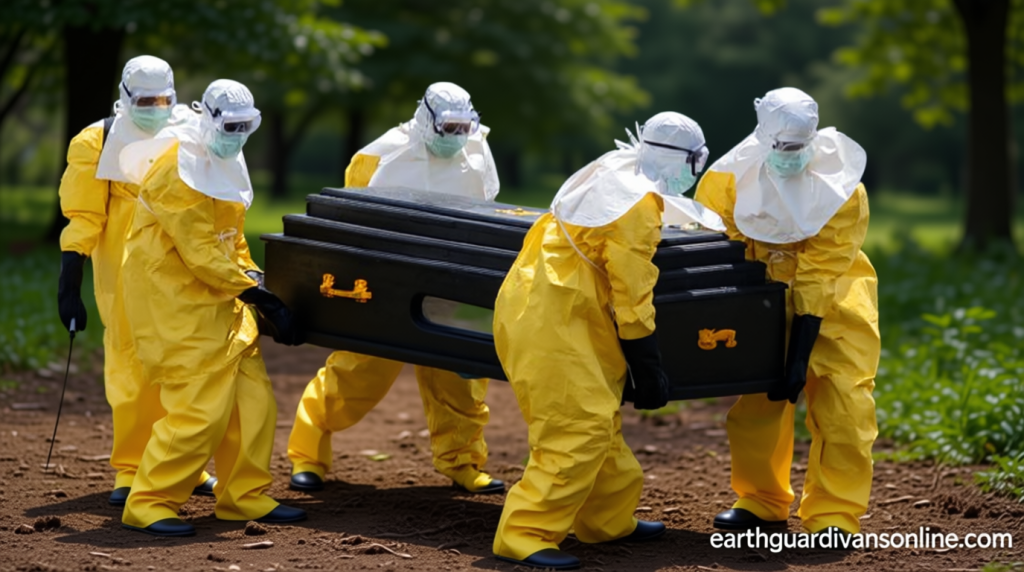
US Funding Cuts Hamper Ebola Response in DRC
US funding cuts have hampered response – The ongoing Ebola outbreak in the Democratic Republic of the Congo (DRC) has drawn criticism from health workers, who claim that US funding cuts have hampered the effectiveness of containment efforts. As the virus spreads in northeast DRC, experts highlight how reductions in U.S. foreign aid and support for the World Health Organization (WHO) have weakened the infrastructure needed to tackle the crisis. With years of underinvestment and recent budget cuts, the region’s healthcare systems have struggled to keep pace with the evolving epidemic, leaving communities vulnerable to further transmission.
Challenges in Detection and Control
Health officials warn that the Bundibugyo strain of the virus, which is responsible for the current outbreak, has been particularly difficult to track. Unlike more common strains, Bundibugyo lacks a targeted vaccine, complicating prevention and treatment strategies. This, combined with inadequate testing capabilities and strained local resources, has allowed the disease to spread faster than anticipated. US funding cuts have hampered the ability of health agencies to deploy rapid-response teams, leading to delays in identifying and isolating cases.
Dr. Leonard Ndebele, a WHO epidemiologist, noted that the strain’s unique characteristics, along with underdeveloped rural health infrastructure, created a significant challenge for early detection. “Without sustained U.S. financial backing, our capacity to monitor outbreaks in real time has been severely compromised,” he said. The situation has also been worsened by ethnic conflicts in the region, which have slowed community cooperation with health initiatives. “These factors, when combined, US funding cuts have hampered the overall response to the crisis,” added a local clinic director.
Trump Administration’s Impact on Global Health
The Trump administration’s policies toward global health funding have been a central point of debate. By cutting support for the WHO and dissolving USAID, the U.S. government reduced its ability to provide critical resources to countries like the DRC and Uganda. These decisions, which have affected disease surveillance and emergency response, have drawn criticism from organizations dependent on American aid. “The fourfold reduction in funding has directly weakened the systems that now face strain,” said a senior health policy analyst, pointing to the loss of essential tools and personnel.
Experts argue that the cuts have not only limited the DRC’s capacity to handle the outbreak but also disrupted regional coordination. The lack of U.S. financial support has forced local governments to rely on smaller, less equipped teams to manage the crisis. “Without the U.S. contribution, we’re operating with a fraction of the resources needed to combat this epidemic,” stated Dr. Abigail Mwanga, a public health specialist. This underfunding has led to prolonged response times and increased risks of the virus spreading to neighboring countries.
Responses from U.S. Officials
Despite the criticisms, U.S. officials have defended their approach to funding. A State Department spokesperson said that US funding cuts have hampered the epidemic’s progression only marginally, as the WHO was able to step in quickly once the outbreak was confirmed. “Our support remained consistent even after USAID was dismantled,” they claimed, citing ongoing programs that carried over from the previous administration. However, aid workers question whether these measures were sufficient to counteract the broader effects of the cuts.
“The administration’s decisions didn’t stop the outbreak, but they delayed the response, allowing it to grow out of control,” remarked a former USAID employee. This sentiment is echoed by many in the field, who argue that the U.S. has historically played a pivotal role in global health initiatives. With reduced funding, they say, the potential for a larger, more widespread crisis has increased. “We’re seeing the consequences of years of underinvestment and the Trump administration’s cuts,” said a regional health coordinator. “It’s a critical moment for the DRC’s healthcare system.”
