
A PDF let the internet hear the final words in the cockpit of a UPS plane as it crashed. The NTSB now wants it taken down
A PDF let the internet hear the final words in the cockpit of a UPS plane as it crashed. The NTSB now wants it taken down
A PDF let the internet hear – Advancements in audio extraction technology have enabled the retrieval of cockpit sounds from static images, prompting the National Transportation Safety Board (NTSB) to temporarily halt the public release of most data from its investigations. This unprecedented move highlights the growing concern over how easily sensitive information can be compromised by modern digital tools. Typically, cockpit voice recordings (CVRs) are kept confidential to protect the privacy of victims and their families, as well as to maintain the integrity of ongoing safety reviews. However, a recent incident involving UPS Flight 2976 has raised questions about the potential for digital reconstruction of these critical audio files.
The UPS Crash and Its Audio Revelation
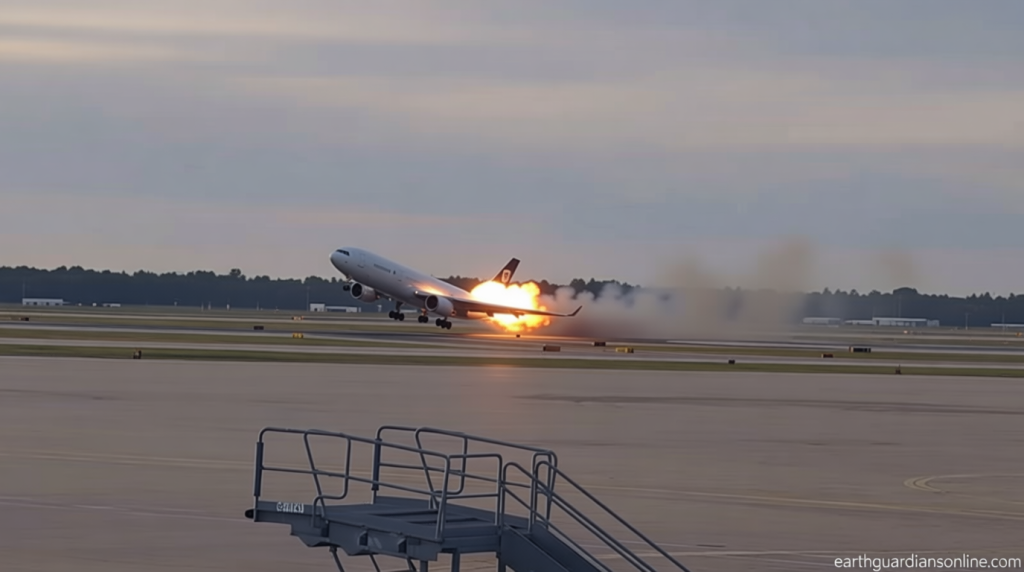
On November 4, 2026, during takeoff from Louisville, Kentucky, UPS Flight 2976 experienced a catastrophic engine failure. The incident resulted in the loss of three crew members and 12 individuals on the ground. As part of its standard investigative process, the NTSB released a detailed docket containing thousands of pages of reports, video footage of the engine separation, and a transcript of the CVR. Among the materials shared was a PDF file that provided an analysis of the spectrogram—the visual representation of the audio captured by the recorder.
A spectrogram, a visual depiction of sound, maps frequency variations over time. Until recently, these images were considered secondary data, primarily used by investigators to study the crash. But thanks to breakthroughs in image recognition and computational methods, members of the public have been able to use the spectrogram to recreate the voices of the pilots in the moments before the disaster. This reconstruction, which included background noise and echoes, was made available online, sparking debates over the NTSB’s data-sharing policies.
“We show our work and we’ve been doing this type of thing for years. Nobody was aware that you can recreate audio from a picture,”
explained a NTSB spokesperson. The statement underscored the board’s commitment to transparency while acknowledging the newfound ability to extract audio from visual data. This revelation has forced the NTSB to revisit its protocols, leading to a rare decision to restrict public access to all investigation dockets, including the one related to the UPS crash.
The board’s action comes as a response to the realization that spectrogram images—once thought to be inert data—can now be manipulated to reveal previously confidential information. In a statement issued on Thursday, the NTSB emphasized that its decision was driven by the risk of compromising privacy. “We’ve always prioritized the release of information to ensure public trust,” the spokesperson added, “but now that we understand the possibility of digital recreation, we must take precautionary steps.”
A Controversial Breakthrough in Digital Reconstruction
The spectrogram analysis of UPS Flight 2976’s CVR was a key element in the public’s ability to recreate the final 30 seconds of the flight. This clip, which featured the pilots’ voices as they grappled with a disabled aircraft, was not only shared on social media platforms but also embedded into online discussions, amplifying its reach. The NTSB’s transparency in releasing such data, while standard practice, has now been called into question due to the ease with which it can be transformed into an audible record.
NTSB Chairwoman Jennifer Homendy expressed frustration over the incident, calling it “deeply troubling” in a post on X. “Laws against releasing CVR audio exist to protect privacy, preserve the integrity of NTSB investigations, and out of respect for accident victims and their families during a time of tremendous loss,” Homendy wrote. Her comments reflect a broader tension between the board’s traditional approach to data disclosure and the rapid evolution of digital tools that challenge its secrecy.
The NTSB’s decision to close public access to its investigation dockets marks a significant shift in its approach. While the board typically shares information with the public to foster accountability and awareness, the incident has prompted it to safeguard its materials more aggressively. The PDF file containing the spectrogram analysis, which was previously available, is now being flagged for removal, with the NTSB urging platforms like X and Reddit to take down posts featuring the reconstructed audio.
Experts suggest that the ability to extract audio from spectrograms is a byproduct of machine learning algorithms and advanced image processing software. These tools can identify patterns in visual data and convert them into sound, effectively bridging the gap between sight and hearing. The UPS crash case has become a cautionary tale, illustrating how even seemingly harmless images can expose private conversations and sensitive details.
Broader Implications for Aviation Safety Investigations
The NTSB’s move has sparked discussions about the future of cockpit voice recorder data. While the CVR itself remains a secure document, the risk of its contents being digitally reconstructed has prompted the board to reassess its procedures. This includes not only the release of spectrogram images but also other visual materials that might inadvertently reveal audio information.
Homendy’s comments on X highlight the importance of maintaining privacy in aviation accidents. “We’ve always believed that the public has a right to know, but the methods of disclosure must evolve with technology,” she noted. The NTSB’s actions signal a broader effort to adapt to the digital age, ensuring that sensitive information is not exposed through unforeseen means. This includes reviewing the accessibility of all investigation materials and implementing stricter guidelines for their distribution.
As the NTSB works to address the issue, it faces a challenge in balancing transparency with privacy. The board’s investigative hearings are designed to share findings with the public, but the recent incident has raised concerns about how these findings might be misinterpreted or misused. The UPS crash case serves as a reminder that even the most rigorous safety processes must account for the potential for technological disruption.
Experts in the field argue that the NTSB’s response is both timely and necessary. “The ability to extract audio from spectrograms is a game-changer,” said one aviation safety analyst. “It means that every visual record of a crash could be a potential source of private conversations. This requires a proactive approach to information management.”
In the wake of the UPS crash, the NTSB has intensified its efforts to control the dissemination of data. This includes working with social media platforms to identify and remove posts containing the reconstructed audio. The board’s statement also emphasized that the incident has prompted a review of its entire data-sharing strategy, with the goal of preventing similar breaches in the future.
As the investigation into the UPS crash continues, the NTSB’s decision to restrict access to its dockets underscores the growing impact of digital innovation on traditional safety protocols. While the public has been given a glimpse into the final moments of the flight, the board is now taking steps to ensure that such moments remain protected from unwanted scrutiny.
CNN’s Pete Muntean contributed to this report.
