
Radicalization concerns, seized guns and 911 calls: San Diego shooting prompts questions about parental awareness, gun access
Radicalization concerns, seized guns and 911 calls: San Diego shooting prompts questions about parental awareness, gun access
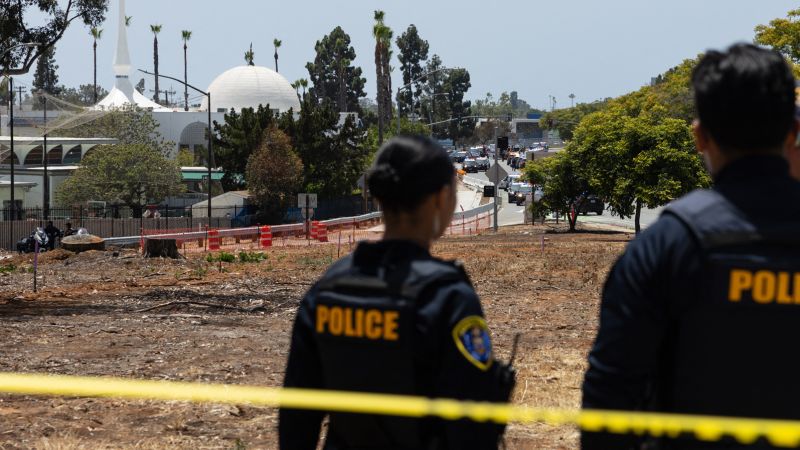
Radicalization concerns seized guns and 911 calls – A Monday morning call to authorities from the mother revealed a troubling situation: her 17-year-old son had gone missing, along with several firearms from her home. The boy had left behind a potential suicide note before vanishing with a man he met online, someone she had never met in person. Both were described as wearing camouflage, according to the police report. Two hours later, as investigators continued their search, reports emerged of an active shooter at the Islamic Center of San Diego, the city’s largest mosque. Three men were found dead in the attack—Amin Abdullah, Mansour Kaziha, and Nadir Awad.
Teenagers Identified as Mosque Attackers
San Diego Police Chief Scott Wahl confirmed that the two teenagers, Cain Clark and Caleb Vazquez, were the shooters responsible for the mosque attack. Both were found dead inside their car, with self-inflicted gunshot wounds. Vazquez had been under a psychiatric hold just days prior, and law enforcement had filed a gun violence emergency protective order to seize firearms from his home due to concerns about his “suspicious behavior idolizing Nazis and mass shooters,” as noted in court documents. The order was issued in January of last year, following a 72-hour involuntary psychiatric hold. Vazquez’s parents had already voluntarily removed around two dozen firearms from their home at that time, according to the declaration filed with the court.
Clark, a minor at the time of the shooting, was not previously on law enforcement’s radar. However, the firearms used in the attack were taken from his family’s residence, as stated by a law enforcement official close to the case. The police have not yet disclosed whether Clark’s parents shared details about how the weapons were stored or accessed. “Authorities are still looking into” whether charges against Clark’s parents will be recommended, Wahl noted on Tuesday. The investigation is ongoing, and the link between the mother’s son and the mosque attackers remains under scrutiny.
Parents’ Role in Gun Access and Radicalization
Questions are now arising about how the shooters obtained the firearms. While Vazquez’s family had been involved in a legal process to restrict his access to weapons, Clark’s parents were not subject to the same measures. Legal experts emphasized that parental liability in such cases hinges on their awareness of the child’s risk and their actions to secure the guns. “The case underscores the challenges of preventing violence even when red flags are reported,” one expert told CNN. “Parents and law enforcement may miss warning signs, especially if they’re not actively monitoring the situation.”
Vazquez’s parents stated that online hate rhetoric played a role in their son’s “descent into radicalized ideologies and violent beliefs.” In a statement, they said, “We reject hatred, extremism, bigotry, and violence in every form.” They also noted that measures were taken to assist him with his mental instability, including time spent in rehabilitation centers. “We repeatedly encouraged him to seek help, and he voluntarily spent time in multiple facilities,” they added. Yet, they expressed regret, saying they will live with the burden of wondering if more could have been done to prevent the tragedy.
Historical Context and Legal Precedents
Parents of shooters have faced legal consequences in similar cases. Two years ago, the parents of Oxford High School shooter Ethan Crumbley were convicted in connection to their son’s deadly attack. More recently, the parents of Apalachee High School shooter Colt Gray were also held accountable. These cases highlight a growing trend in holding families responsible for their children’s actions, particularly when firearms are involved. However, the process is complex, requiring proof of prior knowledge and failure to act.
San Diego County District Attorney’s Office has not shared details about potential charges, citing the ongoing investigation. Police, too, have remained tight-lipped, describing the case as “very extensive and sensitive.” This secrecy has fueled debate over transparency in cases involving minors and gun violence. Critics argue that the public needs clear information to understand the role of parental oversight in such incidents.
What Led to the Attack?
The attackers’ motivations remain under investigation, but the mosque shooting was linked to racist ideologies. A video of the attack was shared online, alongside writings that cited extremist views. This suggests a possible connection between the shooters and the broader radicalization movement. Experts are analyzing whether the two teenagers’ online activities played a role in their decision to carry out the violence.
While Vazquez’s history with mental health issues and his exposure to Nazi symbolism were documented, the timeline of his release from the facility remains unclear. A federal law enforcement official explained that Vazquez had been in a mental health program up until the day before the shooting. The reasons for his discharge were not disclosed, as the facility cited medical privacy laws and the sensitivity of the case. This ambiguity has raised concerns about how thoroughly the system is addressing the risks associated with young individuals.
Implications for Gun Control and Parental Responsibility
The incident has sparked discussions about the balance between gun access and safety. Gun violence experts point out that while protective orders can limit access, they are not foolproof. “Even with preventive measures, the potential for a child to act out remains,” one expert said. “The key is whether parents or guardians actively monitor their child’s behavior and take steps to mitigate risks.”
For Clark’s family, the focus is on their awareness of his potential for violence. If they were unaware of his radicalization or mental health struggles, their liability may be lessened. However, if they had knowledge and failed to act, the consequences could be more severe. The case serves as a reminder that gun access is not just a matter of policy but also of personal responsibility within families.
As the investigation continues, the community is left to grapple with the broader implications of the shooting. The mosque attack, the missing son, and the seized guns all point to a web of factors that may have contributed to the tragedy. While the exact causes remain to be determined, the case has already ignited conversations about how to better prevent such incidents in the future. Parents, educators, and lawmakers are being urged to consider how to strengthen systems that identify and address red flags in young individuals’ behavior.
The shooting underscores the intersection of mental health, radicalization, and gun safety. As authorities work to piece together the events leading up to the attack, the question remains: how much responsibility should parents bear when their children commit acts of violence? The answer may depend on the specific circumstances of each case, but the San Diego incident has brought these issues into sharp focus.
With the bodies of the mosque victims still being examined and the shooters’ backgrounds under review, the case continues to evolve. It has become a focal point for discussions about the legal and moral obligations of parents in ensuring their children’s safety—and the safety of others. As more details emerge, the public will be watching closely to see how the investigation unfolds and what lessons can be learned from this tragic event.
