
What it’s like to have your nude body auctioned for tens of millions
What it’s like to have your nude body auctioned for tens of millions
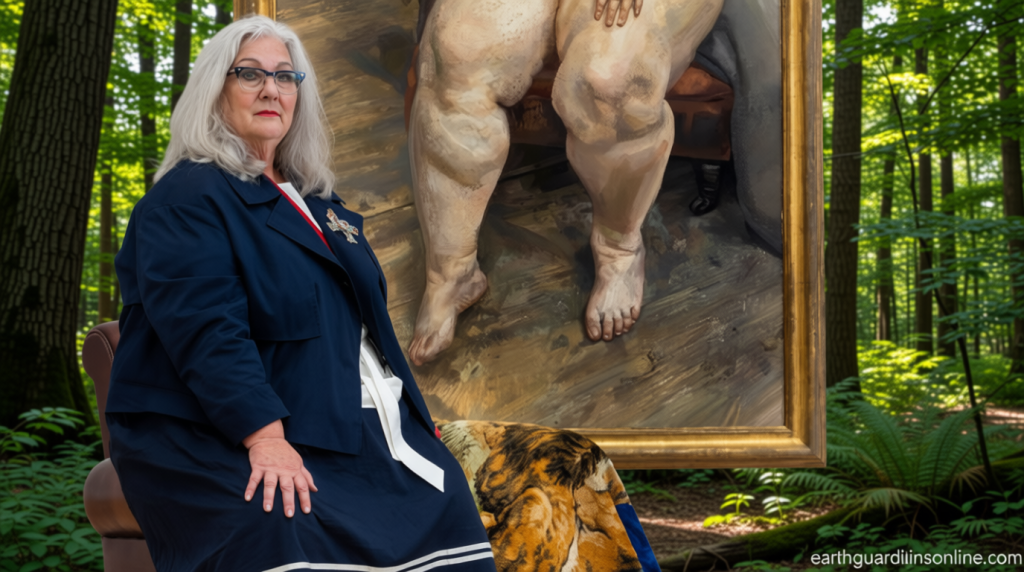
What it s like to have – When the heavy 200-pound canvas is finally secured on the wall, the room holds its breath. The painting’s subject—a strikingly rendered nude figure—dominates the space, its presence both commanding and serene. A pale backdrop of Sotheby’s London gallery amplifies the rawness of the artwork, as if the artist’s brushstrokes were meant to transcend the canvas entirely. Sue Tilley, the woman at the center of Lucian Freud’s “Sleeping by the Lion Carpet” (1996), has made the journey from her hometown of St Leonards-on-Sea to witness this moment. Her imposing likeness, captured in oil, sits in quiet defiance, its folds and contours evoking a sense of both vulnerability and power. The gathering of attendees—curators, journalists, and a handful of art enthusiasts—whispers in awe, their admiration underscoring the magnitude of the event. Yet, amid the reverent hush, a voice breaks through: “Hello,” announces a small woman near the back, “I’m here in real life!”
The Weight of Legacy
Sotheby’s Europe chairman Olivier Barker has called “Sleeping by the Lion Carpet” the pinnacle of Freud’s oeuvre, estimating its value at £25-35 million ($33-45 million) for the upcoming Lewis Collection sale on 24 June. For Sue Tilley, this figure is both staggering and surreal. “It feels very weird,” she reflects, “because I never really got any money.” Her laughter echoes as she jokes, “I think sometimes I’m probably worth about £100 million. How shocking is that!” The painting’s impending sale marks a rare moment of financial recognition for someone who, for decades, posed for the iconic artist without compensation. Though the numbers are impressive, Tilley’s connection to the work runs deeper than mere economics.
“People think I walked in the room and went ‘Wow, let’s work on the most expensive painting in the world.’ It wasn’t like that at all.”
Freud’s collaboration with Tilley spanned the 1990s, during which they produced four portraits: “Evening in the Studio” (1993), “Benefits Supervisor Resting” (1994), “Benefits Supervisor Sleeping” (1995), and “Sleeping by the Lion Carpet.” Two of these have already set records. The 1995 piece sold for $33.6 million at Christie’s in 2008, becoming the most costly work by a living artist. The 1994 portrait, however, shattered expectations in 2015, fetching $56.2 million at the same auction house. These milestones highlight Freud’s enduring influence, yet Tilley remains grounded in the personal journey that led to them.
From Club Nights to Canvases
Sue Tilley and Lucian Freud’s paths crossed through the vibrant underground of London’s art scene. Their mutual acquaintance, Leigh Bowery—a pioneering Australian performance artist and club kid—introduced them. Bowery, who moved to London as a teenager driven by a fascination with its cultural energy, was both a creative force and a bridge between worlds. Tilley, a lifelong friend of Bowery’s, later authored his biography, offering insight into the artist’s complex personality. “He made a name for himself as being very outrageous,” she says. “But deep down, he was a very normal person.”
Freud, meanwhile, was drawn to the avant-garde pulse of London’s artistic community. “The ticking heart of what was really going on in London at that particular moment in time,” Barker describes, “was the kind of energy Freud thrived on.” This dynamic shaped the relationship between the artist and his muses, including Tilley and Bowery. The pair’s collaboration was a blend of spontaneity and rigor, as Freud sought to capture the essence of his subjects in their rawest form. Tilley’s role in this process was pivotal: “She completed something that (Freud) needed of his models,” Barker adds, emphasizing her significance in the artist’s creative universe.
“I think that’s why he liked me,” Tilley says. “I disobeyed him the whole time.”
The process of posing for Freud was as intense as it was transformative. Tilley had never before modeled nude, and the initial sessions filled her with trepidation. Bowery, ever the instigator, would visit her home to “make me strip my clothes off so I could practice.” His instructions, though precise, were intimidating, leaving Tilley “in the fear of God.” But when she first met Freud, she found her own rhythm. “He had this way of making me feel comfortable,” she explains. “I didn’t need to follow his rules—just be myself.”
The sessions followed a strict schedule, beginning at 7:30 a.m. with breakfast and culminating in long hours of concentration. Freud’s relentless pace meant Tilley often felt the pressure of performance, her body a canvas for the artist’s vision. Yet, moments of respite were not unheard of. When she dozed off during a session, Freud would occasionally grant her a brief reprieve, as if acknowledging the toll of the process. “Sometimes I’d dream he’d given me a few minutes off,” she recalls. “I’d wake up and rise to my feet before being scolded.” Despite the occasional tension, the partnership yielded a body of work that continues to captivate.
The Muse Myth
Sue Tilley has often been labeled Freud’s muse, a term she finds both flattering and limiting. “I always think of a wafty kind of girl in love with the artist sniffing smelling salts because she was about to pass out,” she quips. This image contrasts sharply with her reality. For Tilley, the relationship with Freud was one of mutual respect and artistic collaboration. “He wasn’t just my muse—he was my partner in creating something that felt alive.”
Freud’s nudes, including Tilley’s, were painted during an era defined by extreme thinness. Models like Kate Moss embodied the “heroin chic” aesthetic, which influenced the visual language of the time. Tilley, however, brings a distinct perspective to the table. “I was never the kind of person who’d let a model’s image dictate my appearance,” she says. Her presence in Freud’s work is not just about physicality but also about the emotional depth she brought to each session. The process, she notes, was as much about introspection as it was about art.
As the auction approaches, Tilley’s reflections reveal a blend of pride and humility. “It’s humbling to see my likeness valued so highly,” she admits. Yet, she remains grounded, emphasizing the shared journey between artist and subject. “Freud wasn’t just painting me—he was painting the world we lived in together.” The legacy of “Sleeping by the Lion Carpet” is not just a testament to Freud’s genius but also to the individual who, for years, stood before his gaze and allowed her essence to be transformed into art.
