
Flashpoints and fury: Inside protests at a New Jersey ICE facility
Flashpoints and Fury: Inside Protests at a New Jersey ICE Facility
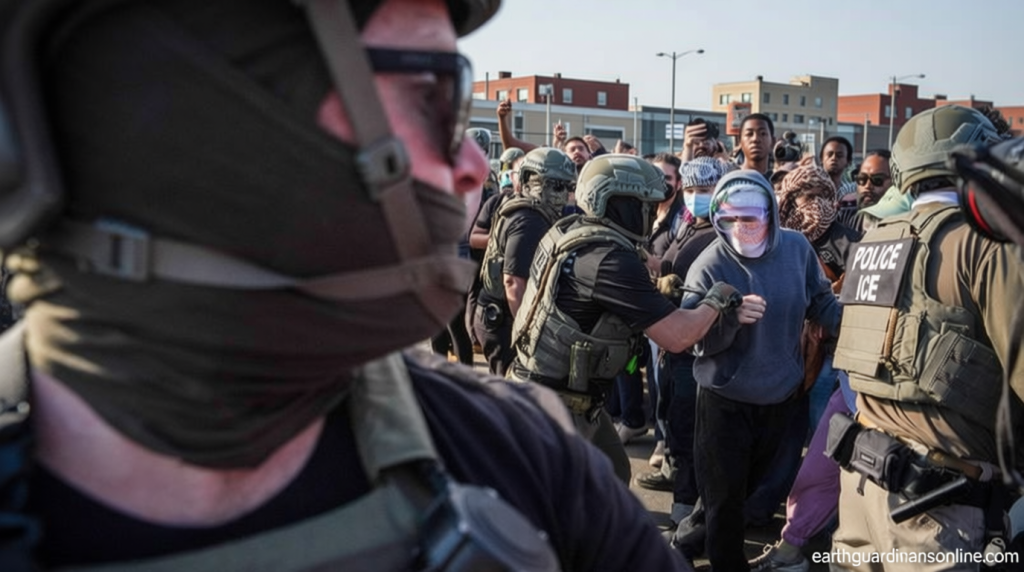
Flashpoints and fury – At the edge of Newark, New Jersey, a seemingly ordinary industrial sector has become a focal point of heated debate this week. Protesters have gathered daily near an ICE detention center, where tensions flared as demonstrators confronted federal agents. The demonstrations coincide with ongoing scrutiny of the Trump administration’s immigration policies, which have intensified focus on conditions at Delaney Hall—a privately operated, 1,000-bed facility now facing calls for increased oversight. The protest zone outside the facility, recently established, has become a stage for both outrage and resistance.
The Heart of the Dispute
Delaney Hall, situated along a high-traffic road lined with commercial trucks, has drawn significant attention due to its role in the immigration system. Lawmakers, including New Jersey Governor Mikie Sherrill, attempted to visit the facility over the weekend but were initially blocked from entry. Their efforts to inspect the premises reflect growing concern over the treatment of detainees. However, as the week progressed, officials were permitted access, leading to a series of interactions that highlighted the divide between protesters and authorities.
On Monday, New Jersey Senator Andy Kim, a Democrat, toured the facility and described the atmosphere as one of confrontation. “There was a standoff between agents and protesters,” Kim stated, emphasizing the volatile nature of the situation. Despite his attempt to mediate and ease tensions, the senator was briefly incapacitated by pepper spray during the encounter. This incident underscored the physical intensity of the protests, which have swelled and diminished in size, often reaching hundreds of people at a time.
“These images—what happened—it honestly felt very familiar because we’ve seen it online. We’ve seen it on TV. To see it in person is surreal,” said Kim, capturing the visceral reaction of those witnessing the conflict firsthand.
The protests have not only disrupted daily operations but also prompted the facility’s operators, the GEO Group, to take defensive measures. On Friday morning, workers painted yellow lines on the sidewalk and erected signs warning of private property and no trespassing. A telecommunications truck arrived, and staff were observed installing surveillance cameras to monitor the crowds. These actions suggest an effort to manage the situation, though they also fueled accusations of heightened control.
State Police and Federal Agents Collaborate
Amid the chaos, New Jersey State Police announced their role in securing the area, with the governor authorizing the creation of a “peaceful, protected protest zone.” This decision marked a shift in responsibility, as state troopers assumed control of the perimeter. The move was hailed by the Department of Homeland Security (DHS) as a “win for law and order,” though it sparked criticism from some quarters. The governor had previously resisted allowing state police to support ICE agents during the protests, a stance that now appears to have changed.
Friday night saw a clash between state police and protesters as troopers worked to clear a path for vehicles exiting the facility. “A limited number did not comply with repeated requests to clear a safe passage for the vehicles and took dangerous actions, including deploying fireworks and throwing gas canisters at law enforcement,” said New Jersey Attorney General Jennifer Davenport. These confrontations highlighted the escalating nature of the protests, with demonstrators employing creative methods to disrupt operations.
Health Department’s Inspection Efforts
As tensions mounted, the New Jersey Health Department attempted to conduct a public health and food safety inspection at Delaney Hall. The department’s goal was to evaluate conditions following reports of inadequate living standards. However, their access was restricted, with officials permitted only to inspect the food service areas. “Our team was denied the ability to conduct a full inspection of the facility,” the health department stated, indicating a lack of transparency in the operation.
This partial inspection has raised questions about the thoroughness of oversight efforts. The DHS, meanwhile, has maintained its position, defending the facility’s conditions while considering broader actions. In response to the protests, the agency is exploring the possibility of diverting Customs and Border Protection officers from Newark Airport to bolster staffing at Delaney Hall. Such a move could lead to delays in air travel, adding another layer of complexity to the situation.
Protesters and Supporters Converge
The protests have drawn a mix of supporters and critics, with activists demanding accountability and others backing ICE’s operations. A planned “Support ICE” rally is set for Saturday outside the facility, aiming to counter the growing discontent. The event reflects the polarized views surrounding the agency’s role in immigration enforcement. While some see the protests as a necessary response to inhumane conditions, others argue that they have created a spectacle of tension.
Delaney Hall’s location, near a major transportation artery, has made it a strategic hub for immigration processing. The facility’s design, with its razor wire fencing and enclosed spaces, contrasts sharply with the open-air nature of the protest zone. This juxtaposition has become a symbol of the broader conflict between detention and freedom, with protesters often standing in the same area where detainees are processed.
As the week unfolds, the facility remains at the center of national attention. The clash between protesters and agents, the involvement of state and federal authorities, and the ongoing inspections all contribute to a narrative of resistance and resilience. Whether the protests will lead to lasting reforms or continued escalation remains to be seen, but the events at Delaney Hall have already left a significant mark on the immigration debate.
CNN’s Taylor Romine, Sarah Boxer, Chris Boyette, Sarah Dewberry, and Hanna Park contributed to this report.
