
White House breaks from precedent by not releasing Trump’s medical report
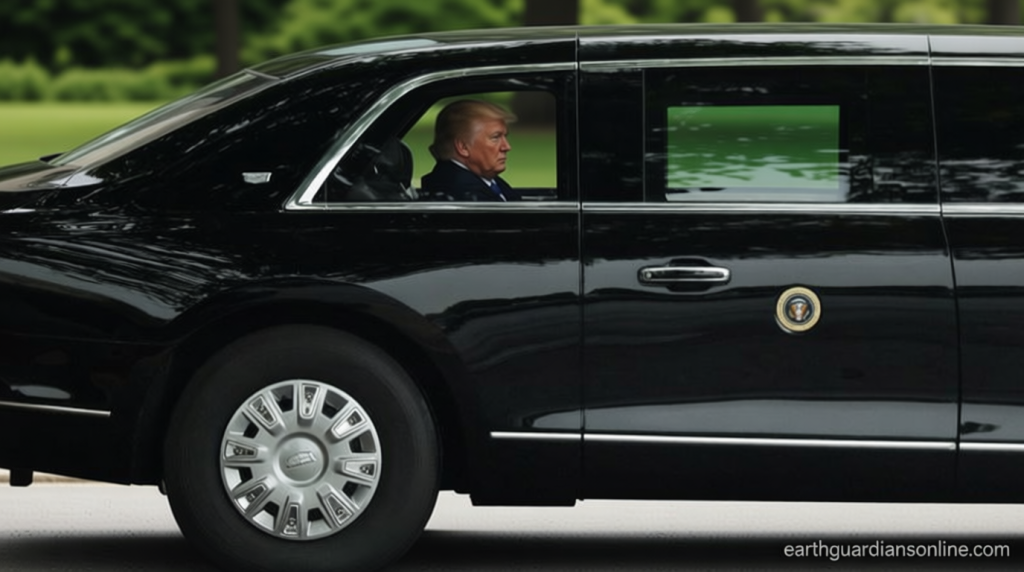
White House Deviates from Tradition by Withholding Trump’s Latest Medical Summary
White House breaks from precedent by not – Eight hours after the story initially appeared, the White House released a brief summary of President Donald Trump’s recent physical examination. However, the absence of the full medical report has raised eyebrows, marking a notable shift from the administration’s past approach. This silence has intensified speculation about the president’s health, particularly as he prepares to enter his eighth decade. While the White House has traditionally provided summaries of Trump’s medical evaluations, this time around, it has yet to confirm whether the findings will be made public, leaving the public in limbo.
Trump’s Self-Reported Health Claims
During a visit to Walter Reed National Military Medical Center on Tuesday, Trump asserted via social media that he was in “perfect health.” The president has consistently framed his physical condition as a cornerstone of his political identity, often emphasizing his vitality and strength. Yet, despite his promises to share a detailed summary within “the next day or so,” no further updates have been issued. This lack of transparency has sparked questions about the White House’s commitment to public accountability in matters of presidential health.
“Finding it unimaginable that the White House would withhold even a basic statement about the president’s condition,” remarked Dr. Jonathan Reiner, a professor at The George Washington School of Medicine & Health Sciences. “Such silence will only fuel doubts about his readiness for the responsibilities of the office.”
A History of Medical Disclosures
Previously, the White House has been proactive in sharing medical updates. After Trump’s April visit to Walter Reed, his personal physician, Dr. Sean Barbabella, released a memo summarizing the results within two days. During the October checkup, Barbabella promptly declared the president in “exceptional health” the same day. Now, with Trump’s third physical in the past 13 months, the administration’s delayed disclosure has created a contrast. Past presidents typically undergo one annual exam, but Trump’s frequent visits have been framed as a “six-month physical” in his own words, suggesting a more aggressive approach to monitoring his well-being.
Visible Signs of Aging and Public Scrutiny
As Trump ages, his physical condition has become a focal point for critics. Frequent hand bruising, often concealed with heavy makeup, has been a recurring issue. In 2023, photos of swollen legs led to the revelation of a diagnosis for chronic venous insufficiency, a condition commonly seen in older adults. Additionally, a rash on his neck in March was cited by Barbabella as a result of “preventative skin treatment,” though the exact reason for the intervention remained unclear. These incidents have underscored growing public concern, especially in light of recent debates over former President Joe Biden’s cognitive abilities.
Trump’s apparent fatigue during meetings has also drawn attention. At various events, he has been observed dozing off, an occurrence he and his team have dismissed as a sign of “boring” sessions. The president has previously joked that the media has “got me in a blink,” highlighting his tendency to deflect scrutiny. Yet, as his age becomes more prominent, the pressure to demonstrate his fitness for office has increased.
Medical Expert Perspectives
Medical professionals note that while individual conditions may not be alarming, the White House’s reluctance to provide comprehensive details could exacerbate public anxiety. Dr. Reiner emphasized that the lack of disclosure implies a possible withholding of critical information. “It intensifies the perception of the administration’s transparency,” he said. “If they are not sharing the full picture, it suggests there is something they want to keep hidden.”
Trump’s personal physician, Dr. Ronny Jackson, has historically been a key figure in communicating his health status. During Trump’s first term, Jackson held an hour-long press conference solely focused on the president’s vitality, praising his “incredible genes” and projecting an image of unyielding strength. However, the current administration’s approach appears more subdued, with no similar public statements following the latest exam. This contrast has led to speculation about whether the White House is adopting a more cautious strategy in handling Trump’s health narrative.
Recent Trends and the Psychological Impact
The frequency of Trump’s medical checkups has also increased. Visiting Walter Reed for the third time in 13 months, the president has become a regular fixture at the military hospital. Meanwhile, his visits to a Florida dentist in 2023 were described as routine, but no specific details were given. These actions have been interpreted as part of a broader effort to maintain the illusion of peak health, even as physical signs of aging become more pronounced.
Experts argue that the cumulative effect of these conditions, combined with the White House’s silence, has the potential to erode public confidence. “Each small detail adds to the narrative,” said Dr. Reiner. “Without full disclosure, people are left to fill in the blanks, often with their own interpretations.” This has been particularly evident in the current political climate, where concerns about presidential health are amplified by comparisons to past leaders. The debate over Biden’s mental acuity has made the American public more attuned to questions about cognitive and physical fitness, especially for a leader of Trump’s age.
The White House’s Response and Ongoing Uncertainty
Despite the growing attention, the White House has not provided any official comments. In a Truth Social post following the recent visit, Trump confidently stated, “Everything checked out PERFECTLY.” His aides have remained tight-lipped, offering only vague explanations for the delay in releasing the report. This ambiguity has left journalists and analysts scrambling for insights, with some questioning whether the administration is intentionally obscuring potential health risks.
The decision to withhold the full medical report has been met with mixed reactions. Supporters argue that Trump’s health is a personal matter, while critics view it as a strategic move to control the narrative. Regardless of the motive, the White House’s approach has set a new precedent, one that could shape the way presidential health is discussed in the future. As the president prepares to celebrate his 80th birthday, the silence surrounding his latest examination may become a defining moment in the ongoing discourse about leadership and health in the modern era.
With the White House’s usual transparency absent, the public is left to wonder about the implications of this shift. Whether it reflects a change in protocol or a calculated effort to manage perception remains unclear. What is certain, however, is that the lack of information has sparked a new wave of scrutiny, further entrenching the connection between Trump’s health and his political standing.
