
Prosecutor tells jury that the killing of a teen at a Texas track meet was murder and not self-defense
Prosecutor Claims Teen’s Death at Texas Track Meet Was Murder, Not Self-Defense
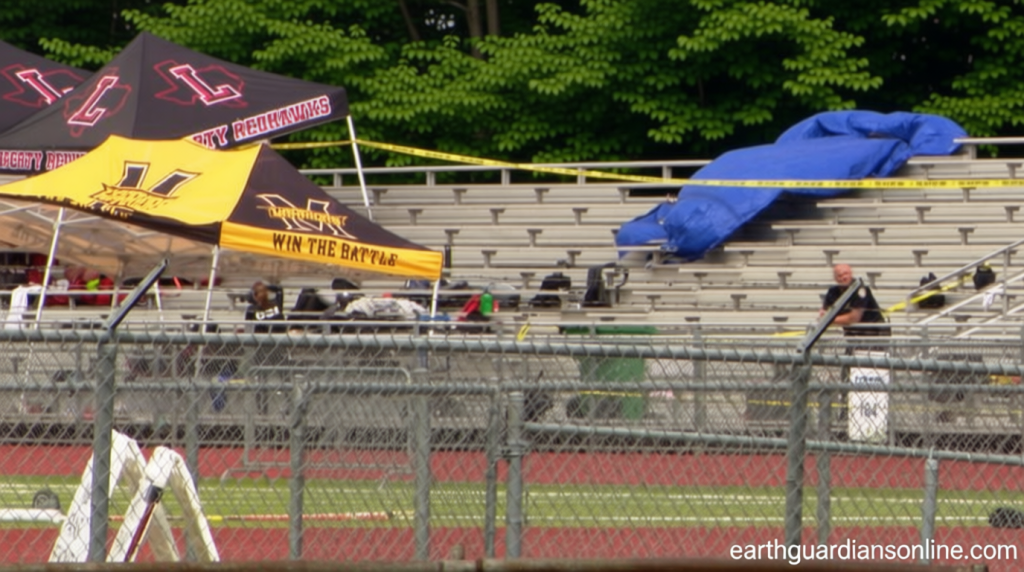
Prosecutor tells jury that the killing – During a track meet in Frisco, Texas, a 17-year-old student was killed in what prosecutors describe as a sudden, unexpected assault. The case, which has drawn national attention, began with a confrontation between the victim, Austin Metcalf, and his accused competitor, Karmelo Anthony, now 19. The trial opened Thursday, with the jury seated in a Collin County courtroom that saw a steady stream of spectators hoping for a vantage point. The incident, which occurred on a rainy April morning in 2025, has become a focal point for discussions about race, justice, and the events leading to the fatal clash.
The tragic event unfolded during a routine athletic competition, but its implications quickly escalated beyond the track. Social media platforms played a significant role in amplifying the case, framing it through the lens of racial disparity. This has added layers of complexity to the trial, as the community in the affluent Dallas suburb grapples with the circumstances of the killing. Anthony, who is Black, and Metcalf, who was white, were both students at high schools within the same city, their lives intersecting in a moment that would forever alter their families’ trajectories.
Accused Claims Self-Defense, But Prosecution Argues It Was a “Senseless Murder”
Anthony’s account of the incident, as detailed in an arrest report, asserts that he acted in self-defense during a heated exchange. According to his version, the confrontation arose when he sat under a tent belonging to Metcalf’s team, triggering an argument. When Metcalf asked Anthony to move, the latter allegedly pulled a knife from his bag and warned, “Touch me and see what happens,” before the fatal strike. However, the prosecutor, Bill Wirskye, presented a contrasting narrative during the trial’s opening arguments.
“He didn’t want a fight,” Wirskye stated, addressing the jury. “This was a deliberate act of violence, not a moment of desperation or protection.” The prosecutor emphasized that Anthony’s actions were premeditated, positioning the case as a clear example of murder rather than a justifiable defense.
The trial’s proceedings have been marked by strict protocols, including a judge’s decision to limit public discourse by attorneys. This measure aims to prevent preconceived notions from influencing the jury’s perception of the events. The courtroom, located in the bustling Collin County area, has seen heightened security due to the public interest and the potential for emotional reactions during the trial.
Witness Accounts and the Twin Brother’s Attempt to Save the Victim
Witnesses’ testimonies provided crucial context for the jury, detailing the sequence of events that led to the fatal stabbing. The confrontation, as described in the report, began when Anthony positioned himself under the bleacher tent of Metcalf’s team, creating an environment where tensions could escalate. Metcalf, who was reportedly in a state of agitation, confronted Anthony, prompting the latter to reach for his knife. The video evidence, though grainy, shows Anthony sprinting away from the scene shortly after the attack, raising questions about his intent.
Met calf’s twin brother was present during the incident and attempted to intervene, according to accounts shared with investigators. The twin’s efforts to save his sibling highlight the personal stakes of the case, as the two were not only friends but also peers in a competitive setting. The killing, however, left the family in shock, with the twin now bearing the weight of witnessing his brother’s death.
Defense Argues for Split-Second Reaction in a Moment of Chaos
Defense attorney Mike Howard challenged the prosecution’s narrative during his opening statement, asserting that Metcalf’s actions initiated the conflict. “In that split second, Melo has a decision to make: how and when to act,” Howard said, framing the incident as a reaction to immediate threat. He argued that self-defense requires swift action, and waiting too long could render it ineffective. “Self-defense is useless if you wait too late to defend yourself,” Howard emphasized, suggesting Anthony’s response was driven by fear rather than malice.
Howard also pointed to the chaotic environment of the track meet, where competitors and spectators alike were in motion. The incident, he claimed, occurred in a moment of tension that could have led to a misinterpretation of Anthony’s actions. “He reacts in a split second of fear, chaos,” Howard noted, aiming to paint a picture of Anthony as a youth caught in a life-threatening situation.
The case has sparked broader conversations about race and the role of social media in shaping public opinion. Metcalf’s father, Jeff Metcalf, has been vocal about the need to focus on the facts rather than racial stereotypes. “This was not a race thing. This is not a political thing,” he said on Fox News’ “America Reports.” “Please do not comment if you do not know what happened. This is a human being thing.” His words underscore the family’s desire for a fair trial, free from external biases.
Authorities have also taken steps to manage the public narrative, issuing warnings about misinformation spreading online. Frisco Police Chief David Shilson called for vigilance against posts that spread “misinformation, hate, fear, and division,” emphasizing the importance of accurate reporting. The community, though divided in its interpretation of the event, remains united in its support for a thorough examination of the facts.
The Weight of the Charges and the Future of the Accused
If found guilty of murder, Anthony faces the possibility of life in prison. The severity of the charge reflects the gravity of the incident and the public’s demand for accountability. The prosecution has outlined a clear path to conviction, citing Anthony’s prior actions and the lack of evidence supporting his claim of self-defense. Meanwhile, the defense continues to argue that the circumstances of the attack justify Anthony’s actions as a necessary response to perceived danger.
The trial has become a microcosm of larger societal debates, with the jury tasked to weigh the evidence and determine the truth. As the proceedings unfold, the community watches closely, hoping for clarity in a case that has captured the nation’s attention. The twin brother’s attempt to save his sibling, the racial dynamics at play, and the competitive nature of the track meet all contribute to the complexity of the situation.
With the trial in its early stages, the jury’s deliberations will hinge on the testimonies of witnesses, the video footage, and the conflicting accounts of the two teens. The courtroom, now a stage for legal arguments and emotional testimony, continues to serve as a reminder of how quickly a moment can turn tragic. As the case progresses, the hope remains that the facts will prevail, and the jury will deliver a verdict that reflects the true nature of the events.
