
Bumblebees show advanced problem-solving skills in new experiment
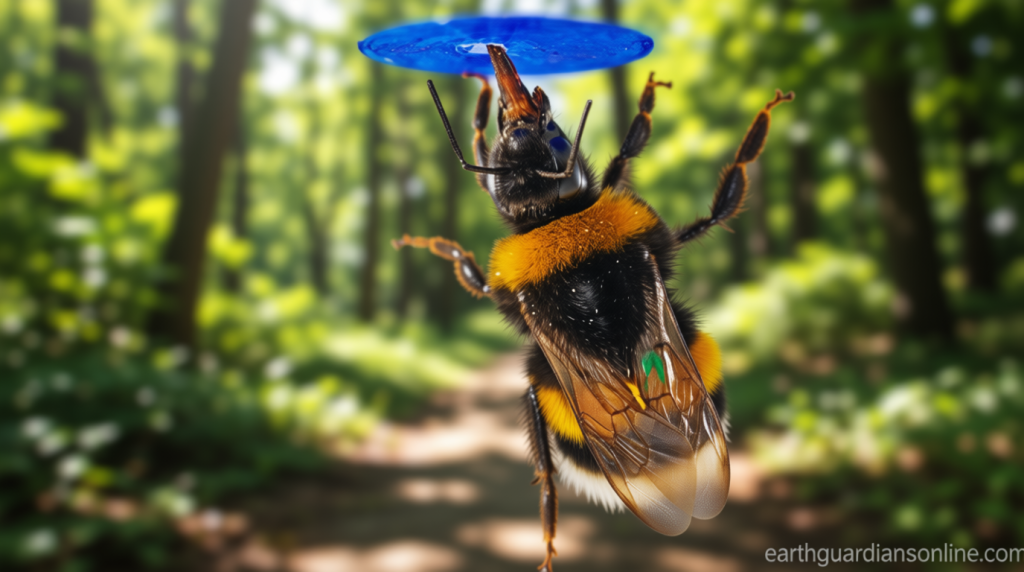
Bumblebees Display Remarkable Problem-Solving Abilities in Groundbreaking Study
Bumblebees show advanced problem solving skills – A recent scientific discovery has challenged long-held assumptions about the cognitive capacities of insects. Researchers have found that bumblebees can perform tasks requiring spontaneous insight, a skill previously thought to be exclusive to higher primates and a few other species. This finding, published in the journal *Science*, adds a new dimension to our understanding of animal intelligence and suggests that even tiny insect brains may harbor surprising adaptability.
A Legacy of Insight: Köhler’s Pioneering Work
Over a century ago, German psychologist Wolfgang Köhler introduced an experiment that reshaped perceptions of animal cognition. In his study, chimpanzees were presented with a banana suspended out of reach and a collection of objects—boxes, poles, and sticks—scattered around them. The apes were not taught how to solve the problem but instead had to figure it out on their own. Their ability to stack boxes to create a platform and grasp the reward demonstrated that insight, or the capacity for spontaneous problem-solving, is not limited to humans.
Insight differs from basic problem-solving in that it involves understanding cause and effect without relying on trial and error, copying others, or prior experience. While most animals can navigate simple challenges, insight requires a more abstract form of reasoning. Historically, this ability has been observed in species like great apes, elephants, and certain birds. However, the question of whether invertebrates such as octopuses or spiders could also exhibit this skill has sparked ongoing debate in the scientific community.
The Bumblebee Experiment: A Novel Task
The new study aimed to test whether bumblebees could demonstrate insight in a complex scenario. In the experiment, bees were placed in a controlled environment where they had to manipulate objects to achieve a goal. Researchers designed a task involving a plastic foam ball and an artificial blue flower. The bees were first exposed to the flower with a sugary reward inside and a foam ball nearby, allowing them to become accustomed to the objects without instruction.
In a subsequent phase, the flower was covered by the ball, prompting the bees to push it away to access the reward. This simple task tested their ability to recognize the relationship between the objects and the goal. The final challenge, which required insight, involved relocating the flower to the ceiling above one of four pits. The bees had to roll the ball to the correct pit and climb onto it to reach the treat—a task that demanded both spatial awareness and strategic planning.
Researchers observed that 75% of the bees who had experienced the earlier stages of the experiment successfully navigated this final challenge. In contrast, bees from two additional groups—those unfamiliar with the ball and those only exposed to the flower—struggled to solve the puzzle. This highlights the importance of prior exposure to the components of a problem, even when the solution itself is not explicitly taught.
“We showed for the first time that bumblebees can solve a completely novel object-manipulation task, spontaneously and without being trained to do so, or without any trial and error,” said lead author Akshaye Bhambore, a doctoral researcher at the University of Oulu in Finland. His team’s findings suggest that bumblebees possess the cognitive flexibility to tackle unfamiliar challenges through independent reasoning.
James Nieh, a professor at the University of California San Diego, emphasized the significance of the results. “Bees do not normally move objects around to make platforms, so this is not a natural bumblebee behavior,” he noted in an email. “But the experiment shows that they can remember a hidden goal location and manipulate an object in relation to that goal.” Nieh’s observation underscores the adaptability of bee behavior in response to new stimuli.
Natalie Hempel de Ibarra, an associate professor of neuroethology at the University of Exeter in England, echoed this sentiment. “This exciting new study shows that insects can learn and change their behavior in ways scientists are only just starting to understand,” she said. Hempel de Ibarra, who was not involved in the research, highlighted the broader implications of the study for pollinator behavior and ecological interactions.
Designing the Experiment: A Controlled Environment
The researchers constructed a circular arena measuring 10 centimeters in diameter and 3.2 centimeters in height, restricting the bees’ movement to walking rather than flying. This setup allowed precise observation of their actions. The center of the arena featured an artificial blue flower containing a sugary solution, while a small foam ball was placed nearby to introduce the concept of object manipulation.
After the bees explored the environment, the researchers introduced a modified scenario. The flower was now positioned above a pit, and the ball had to be rolled to the correct location to access the reward. This design tested whether the bees could apply their prior knowledge of the objects to solve a new problem. The success rate of the majority of bees in this final task—75%—indicates that insight may be more widespread in the animal kingdom than previously believed.
Study coauthor Olli Loukola, a behavioral ecologist, explained the rationale behind the experiment. “We wanted to know how much previous information they needed in order to solve the task,” he said. The results suggest that while exposure to individual elements of a problem aids in solving it, the ability to combine that knowledge into a novel solution reflects a deeper cognitive process.
These findings have implications beyond the laboratory. The flexibility demonstrated by bumblebees could influence how they interact with flowers in changing environments. As landscapes evolve and pollinators face new challenges, such adaptive behaviors may be crucial for survival. The study also contributes to the growing field of interspecies communication, raising questions about the extent of cognitive abilities in invertebrates.
While the experiment does not prove that bumblebees possess the same level of insight as chimpanzees, it provides compelling evidence of their capacity for abstract thinking. This challenges the notion that only large-brained animals can perform such tasks. As scientists continue to explore the cognitive world of insects, the boundaries between species may blur, revealing a more interconnected web of intelligence across the animal kingdom.
Implications for Future Research
The study opens new avenues for investigating how bees and other insects navigate their environments. Researchers are now curious about the neural mechanisms behind their problem-solving abilities, which could lead to breakthroughs in understanding insect cognition. Additionally, the results may inspire innovations in robotics and artificial intelligence, as engineers seek to replicate such efficient and adaptive decision-making processes.
As the debate over invertebrate intelligence intensifies, this research positions bumblebees as a key subject for further investigation. The ability to solve novel tasks through insight not only enhances our appreciation of their intelligence but also encourages scientists to reconsider the capabilities of other small-brained creatures. With each new study, the landscape of animal cognition continues to expand, offering fresh perspectives on the evolution of thought and behavior.
