
Norway’s crown princess on waiting list for lung transplant
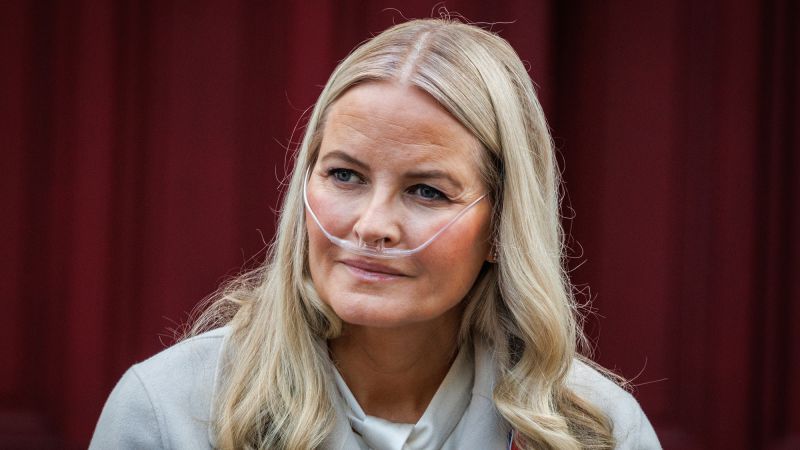
Waiting for a Lung Transplant: Norway’s Crown Princess in Critical Condition
Norway s crown princess on waiting – The Norwegian royal household has announced that Crown Princess Mette-Marit is currently on a transplant waiting list due to a life-threatening, progressive lung disease. This development comes as the 52-year-old member of the monarchy faces significant health challenges that have forced adjustments to her royal responsibilities. The statement, released on Friday, highlights that Mette-Marit will no longer be able to perform her duties as an active participant in the royal family’s public engagements.
The condition, identified as pulmonary fibrosis, was first diagnosed in 2018. Pulmonary fibrosis is a chronic illness characterized by the scarring of lung tissue, leading to reduced oxygen intake and severe breathing difficulties. According to the palace, the disease has progressed to a critical stage, necessitating the transplant as a potential lifesaving measure. Are Holm, a lung specialist at Oslo’s Rikshospitalet, emphasized the gravity of the situation in a press statement, stating, “The Crown Princess’s lung condition has reached a serious phase. Following an in-depth medical evaluation, she is now being considered for transplant procedures as soon as a compatible donor becomes available.”
As the princess awaits a donor, her schedule has been reshaped to prioritize her health. The royal household noted that she will be unable to take part in official functions during this period. Her husband, Crown Prince Haakon, has also adjusted his itinerary, returning early from an international trip to Japan. This move underscores the family’s commitment to supporting Mette-Marit through her treatment. The couple’s silver wedding anniversary celebrations, originally planned for August, have been postponed until later in the year. Additionally, Mette-Marit will not join a scheduled tour of Norway in September, which was meant to showcase the nation’s cultural and historical landmarks.
The royal family’s dynamics have shifted in response to the princess’s condition. Their daughter, Princess Ingrid Alexandra, who was studying in Australia, has returned to Norway. She will now attend the University of Oslo for the autumn semester, according to the palace. Meanwhile, their son Prince Sverre Magnus is set to begin his studies in Europe this fall. The statement mentioned that he will return to Norway “whenever the situation demands,” reflecting the family’s flexibility in accommodating Mette-Marit’s medical needs.
While the focus remains on the princess’s health, the royal family has been under scrutiny for recent controversies. One such issue involves their older son, Marius Borg Høiby, who has been facing a rape trial. The case has drawn public attention, with the outcome pending. At the same time, Mette-Marit herself has become the subject of a separate investigation, following the release of the Epstein files. These documents revealed her prior relationship with Jeffrey Epstein, a convicted sex offender. The revelation has sparked debates about her role within the royal family and the implications of her personal history.
The Epstein files, which surfaced in recent months, have brought the royal household into the spotlight. The files detail conversations and interactions between Epstein and various high-profile individuals, including Mette-Marit. While the princess’s relationship with Epstein was previously known, the public release of the documents has amplified the discussion. The palace has not yet issued a detailed response to the controversy, but the situation underscores the ongoing challenges faced by the royal family.
Despite the health and public challenges, the royal family continues to operate with a sense of duty. Crown Prince Haakon has pledged to modify his commitments to ensure he spends more time with Mette-Marit during her treatment. This includes reducing his travel schedule, both domestically and internationally, in the lead-up to and following the transplant. The statement from the palace reflects a balanced approach to maintaining the monarchy’s image while addressing the personal needs of its members.
Public interest in the princess’s health has grown, with many expressing concern about her well-being. Pulmonary fibrosis, though rare, is a condition that affects approximately 100,000 people in the United States alone. Its progression can vary, but in severe cases, a lung transplant is often the most viable option. The royal household has confirmed that Mette-Marit’s condition is being monitored closely, and the medical team is working to secure a donor as quickly as possible.
Mette-Marit’s journey to her current health challenges began in 1999 when she met Haakon at a music festival. The couple’s relationship quickly evolved, and they married in 2001 at Oslo Cathedral, an event attended by 800 guests and broadcast to millions. Her role in the royal family has always been central, but the recent developments have tested her ability to balance personal and public life. The palace has stated that her condition has required a reevaluation of her responsibilities, highlighting the adaptability of the monarchy in the face of unforeseen circumstances.
The focus on the princess’s health also sheds light on the broader challenges of maintaining a royal family’s public image. The Epstein files have not only impacted Mette-Marit but have also sparked a wider conversation about the roles of members of the royal family in modern society. While the princess has been a figure of admiration for her charitable work and public appearances, the controversy has introduced new layers to her narrative. Nonetheless, the royal household remains committed to transparency, with updates provided to the public as the situation unfolds.
As the waiting list progresses, the anticipation surrounding Mette-Marit’s transplant continues to grow. The medical team at Rikshospitalet is expected to monitor her condition and prepare for the procedure. The palace has assured that the process will be handled with care, ensuring that the princess receives the best possible treatment. This moment marks a critical turning point for the royal family, as they navigate the complexities of health, duty, and public perception.
In conclusion, Norway’s Crown Princess Mette-Marit’s placement on the lung transplant waiting list has brought attention to her health struggles and the impact on the royal family’s operations. The diagnosis of pulmonary fibrosis in 2018 has led to a reorganization of her schedule, with both her and her husband Haakon making significant adjustments. The family’s efforts to support Mette-Marit during this time reflect their dedication to her well-being, even as they face new challenges. The situation also highlights the broader themes of responsibility and personal life within the royal household, as the public continues to follow their journey with interest.
