
Israeli offensive emboldens Hezbollah as it claims mantle of Lebanon’s defender
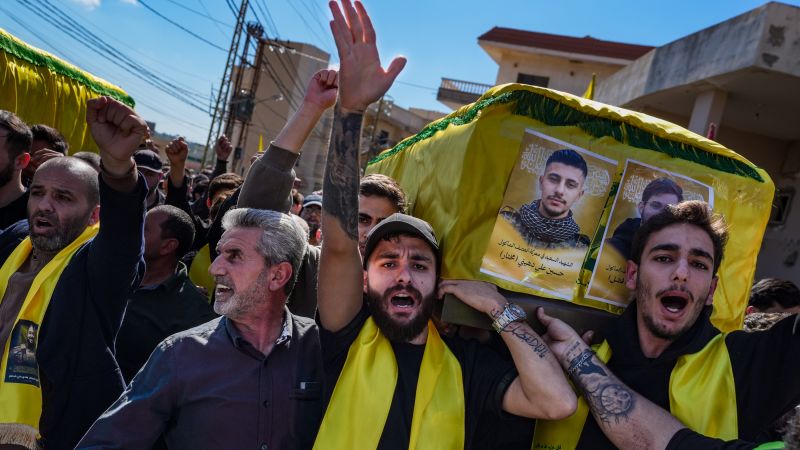
Israeli offensive emboldens Hezbollah as it claims mantle of Lebanon’s defender
Israeli offensive emboldens Hezbollah as it claims – Once regarded as near collapse, Hezbollah has reemerged with renewed strength, fueled by recent Israeli military actions. The group’s decline was once seen as inevitable, with regional analysts predicting its demise after a series of aggressive campaigns by Israel. The ouster of Syrian President Bashar al-Assad in 2024 had stripped Hezbollah of a vital regional ally, cutting off a key supply route for weapons and resources. The death of its longtime leader, Hassan Nasrallah, in the same year further weakened its position. Despite these setbacks, Lebanon and Israel entered direct negotiations for the first time in decades, with the Lebanese government aiming to fully disarm the group.
Reigniting the Conflict
The turning point came with the U.S.-led attack on Iran, which the US and Israel initiated in March. This move reignited tensions, giving Hezbollah a chance to assert its role as Lebanon’s protector. “The Israeli-American war has created the perfect opportunity for us to respond,” said Ibrahim Al Moussawi, a Hezbollah parliamentarian in Beirut. The group, previously hesitant to escalate hostilities, launched rocket attacks into northern Israel, marking a significant shift in its strategy. Analysts note that Hezbollah’s resilience stems from its ability to adapt and maintain a strong ideological foothold among young Shia Muslims in the country.
“What the Israelis have done is completely revitalize Hezbollah’s resistance rationale,” remarked Nicholas Blanford, a researcher with the Atlantic Council. “Despite the casualties, their morale remains high, and they are ready to sustain the conflict.”
Recent ceasefire agreements, including one brokered in Washington last week, have not curbed the violence. The latest deal mandates Hezbollah to halt all rocket fire, withdraw from southern Lebanon, and eventually disarm. However, both sides have repeatedly broken such terms. Israel launched a sustained offensive in November 2024, accusing Hezbollah of not fully complying with earlier truces. The group, meanwhile, chose not to retaliate, a decision that now appears to have been reversed.
Hezbollah’s Strategic Adaptation
Israel’s intensified operations have forced Hezbollah to adopt new tactics. While Israeli strikes have diminished the group’s conventional rocket capabilities, Hezbollah has turned to explosive drones, guided by fiber optic cables, to bypass defenses in southern Lebanon. This innovation has allowed the group to target Israeli military installations and missile batteries, resulting in the deaths of 15 Israeli soldiers since mid-April. “We’ve learned to innovate,” said a Hezbollah fighter in the Beqaa Valley, “because the Israelis are trying to break our will.”
Despite the ongoing violence, Hezbollah maintains its narrative of defending Lebanon’s sovereignty. “The government didn’t fulfill its duty,” Al Moussawi stated. “We are compelled to act because the people need us.” This sentiment echoes among many Lebanese citizens, who view the group as a necessary force in the face of Israeli aggression. “The Israelis are taking our land,” the fighter added. “They have a plan to occupy it, and we will not allow that.”
Hezbollah’s influence remains strong, particularly in the Beqaa Valley, where it has cultivated unwavering loyalty. The group’s ability to inspire devotion among Shia communities has become a key asset. “Loyalty is not just about fighting,” explained a 30-year-old Hezbollah operative in the area. “It’s about identity, faith, and the promise of protecting our home.”
Regional Implications and Challenges
As the conflict persists, regional dynamics have shifted. Hezbollah’s resurgence challenges Israel’s dominance in the area, while also drawing international attention. The group’s operations have raised concerns about civilian casualties, with the Lebanese government reporting over 3,000 deaths and a million displaced individuals since the offensive began. “This is not just a war between two groups,” said a local arms smuggler, who spoke to CNN under anonymity. “It’s a broader struggle for Lebanon’s future.”
Although Syrian authorities claim to intercept weapons heading to Hezbollah, the group has maintained a steady flow of arms through alternative routes. “Even without Assad’s support, we still have ways to arm ourselves,” the smuggler noted. “The fight is not about who has the most weapons, but who is willing to fight hardest.”
Hezbollah’s adaptability is evident in its ability to sustain operations despite setbacks. The group’s decentralized structure allows it to replace lost members quickly, ensuring continuity in its resistance. “Whenever a leader is killed, a new one rises,” the fighter said. “We become stronger, not weaker, because our purpose is clear: to protect our people.”
The Future of Hezbollah and Lebanon
With Israel’s offensive deepening, Hezbollah has positioned itself as the last line of defense for Lebanon. The group’s renewed relevance is undeniable, as it continues to rally support and challenge Israeli advances. “Hezbollah is no longer just a militia—it is a symbol of resistance,” Blanford observed. “Its survival depends on its ability to unite the people and hold the line.”
As the situation evolves, the outcome of the conflict will likely shape Lebanon’s political landscape. The government’s inability to maintain control has emboldened Hezbollah, while the group’s tactics have tested Israel’s endurance. The battle for the south is far from over, and the fate of both nations hangs in the balance. For now, Hezbollah remains steadfast in its mission, even as it faces the full might of Israel’s military might.
For many Lebanese, the conflict is a test of national identity. “We are not just fighting for our land,” the fighter said. “We are fighting for our right to be free from occupation.” This determination, combined with Hezbollah’s strategic ingenuity, ensures its place in the region’s evolving geopolitics. As the war continues, the group’s ability to sustain its role as Lebanon’s defender will be crucial in determining the course of the conflict.
Streaming now: CNN’s exclusive access to a Hezbollah fighter in the Beqaa Valley offers rare insight into the group’s current strategy. The report reveals the personal toll of the war, as well as the ideological resolve that fuels Hezbollah’s actions. With tensions rising, the story of Lebanon’s resistance movement continues to unfold, shaping the region’s future in real time.
