
‘What else do we have?’ Maine Democrats signal they’ll stick with Graham Platner, some with regret
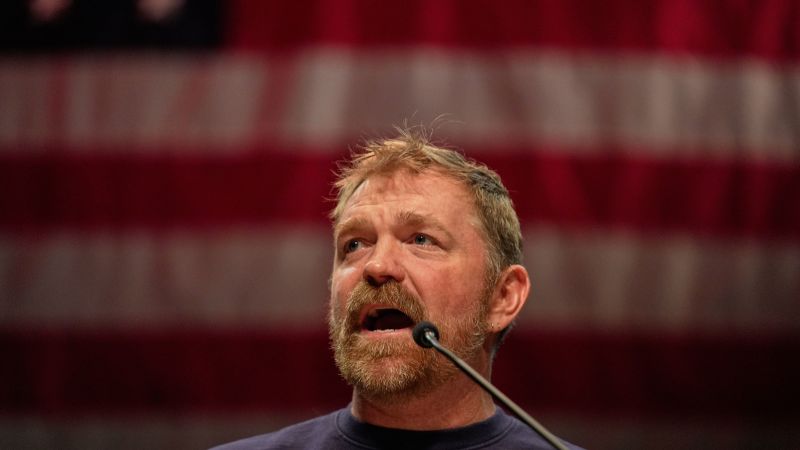
Maine Democrats Show Resolve to Support Graham Platner Amid Growing Scrutiny
What else do we have Maine – Despite a wave of recent controversies, Graham Platner is still seen as the frontrunner for Maine’s Democratic Senate nomination in Tuesday’s primary. However, the once-unified support for the Marine Corps veteran and oyster farmer has fractured, with some voters expressing cautious approval while others voice lingering doubts. The race, which could determine whether Democrats can reclaim a Senate seat in a state currently held by a Republican, has become a litmus test for the party’s ability to balance personal conduct with political ambition.
Scandals and Diverging Opinions
Platner’s campaign, which initially captured the imagination of many Democrats with its populist message, has been overshadowed by a series of personal scandals. These include allegations tied to a tattoo featuring a Nazi-linked symbol, which he recently covered up, and reports about his behavior in past relationships. Sandra Braden, a Maine voter, told CNN that she no longer fully trusts Platner’s claims of change. “I don’t have a lot of faith he’s transformed,” Braden said. “He didn’t even know where that tattoo came from. That’s a big red flag.”
“I’m going to vote for him, yeah, but I don’t like it. I’m not in favor of all that s**t,” Braden added, highlighting her reluctant support. Her remarks reflect a growing sentiment among some voters who feel compelled to back Platner despite his shortcomings, particularly as he is viewed as the best chance to challenge Susan Collins, the five-term Republican senator.
Platner’s campaign has faced a barrage of criticism, including a recent New York Times article that detailed accounts from three of his ex-girlfriends. The piece painted a picture of volatile and “toxic” relationships, citing allegations of heavy drinking, infidelity, and demeaning treatment of women. One account even described physical intimidation, though Platner’s team quickly dismissed these claims as exaggerated. “He strongly disputes any accusations of physical altercations,” his campaign stated, while emphasizing his denial of prior knowledge about the tattoo’s symbolism.
A Rally of Defenses and Acknowledgment
On Friday night, Platner addressed the controversy during a rally in Bar Harbor, where he was joined by progressive California Representative Ro Khanna and other Democratic candidates. “As every piece of that past and journey gets dug up, litigated, and weaponized, you have my back,” Platner said, vowing to stand firm against “politically motivated” attacks. He framed his history as a testament to resilience, adding, “The state of Maine raised me, and the state of Maine saved me. I will always have your back.”
“When serious and false accusations are made against me, Maine, you have my back,” Platner asserted. His words were met with applause, though the emotional weight of his speech underscored the pressure he faces to defend his character.
Khanna, who also spoke at the event, sought to reassure attendees by downplaying the personal issues. “We need to be honest: Most of us have not lived perfect lives,” he noted, arguing that Platner’s past should not overshadow his potential. “No one should make excuses for his past relationships, some of which were toxic and volatile,” Khanna said. “But he was ashamed of some of the things he said and did, and unlike others, he took accountability for it.”
“He’s worked to be a better man, a better human being,” Khanna continued, linking Platner’s behavior to his experiences in three combat tours in Iraq. “We broke thousands of young men by sending them into dumb wars, taking away their factory jobs. That’s not an excuse, it’s the truth.”
Strategic Moves and Future Plans
Platner’s campaign has already begun planning beyond the primary. In addition to holding a town hall in Portland on Sunday, they have scheduled a virtual event next Wednesday, signaling their intent to engage voters with multiple formats. This proactive approach contrasts with the suspension of Governor Janet Mills, a key party figure who had initially been a strong contender. Mills, who dropped out of the race after being recruited to challenge Collins, remains on the ballot, raising questions about the party’s unity.
“The Governor remains on the ballot,” a source close to her told CNN. “She’s getting encouragement to re-enter the primary.” This development has left some Democrats questioning whether Mills’ exit was a strategic move or a concession to Platner’s momentum. Meanwhile, other voters, like Woody Hayward, have expressed a desire for “fresh blood” in the Senate. “But what else — what else do we have, right?” Hayward asked, echoing the frustration of those who feel Platner is the only viable option despite his baggage.
“Zoo Cain was not really interested in the guy’s foibles,” Hayward explained, referring to the state’s top Senate candidate. “He’s got some baggage, but way less than the oligarchy, as far as I can tell.” Cain’s comments suggest that while Platner’s past is under scrutiny, his vision and commitment to the state are still valued.
The Bigger Picture for Democrats
The race against Susan Collins is pivotal for Democrats. If Platner secures the nomination, he could become a key player in the effort to flip four GOP-held seats in the November elections. However, the challenges he faces highlight the broader tension within the party between ideological purity and pragmatic strategy. Some argue that Mills, with her polished image and experience, might have been a stronger choice, but her decision to step aside has left the field open for Platner to consolidate support.
Platner himself has maintained his resolve, stating in an interview with MS NOW that he has “never considered ending his campaign.” “It has never crossed our mind to drop out of this thing,” he said, adding that he and his wife, Amy, remain “fully committed till the end.” His steadfastness has been bolstered by the lack of a clear alternative, though national Democrats have limited power to intervene. “Mills suspended her Senate bid after being a prized recruit,” a party insider noted, “but she’s still on the ballot, and there’s talk of her re-entering the race.”
As the primary approaches, the narrative around Platner continues to evolve. While some voters are resigned to supporting him, others are vocal about their discontent, pointing to his personal conduct as a potential weakness. Yet, for many, the stakes of the Senate race outweigh individual concerns, making Platner’s nomination a critical step in the Democrats’ broader strategy. Whether this support holds up under the weight of scrutiny will be a defining moment for the party’s ability to unite in the face of adversity.
With the state’s political landscape shifting and the final days of the campaign fast approaching, the question remains: Will Maine Democrats ultimately back Platner, or will the controversies lead to a reevaluation of their choices? The answer may hinge on how effectively he can reconcile his past with his future, and whether the voters who remain loyal will be willing to overlook his flaws in favor of a perceived necessity.
