
Kim Jong Un is loving North Korean women’s soccer. What drives its remarkable success?
Kim Jong Un’s Support Boosts North Korea’s Women’s Soccer Success
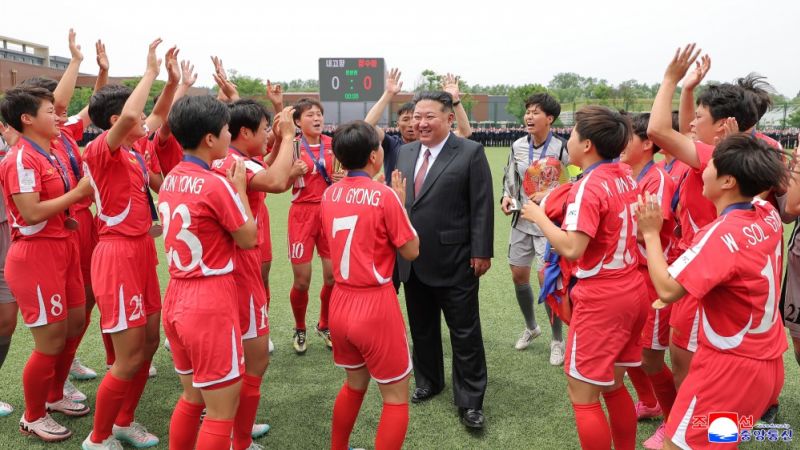
Kim Jong Un is loving North – North Korea’s women’s soccer team has surged into the spotlight, fueled by Kim Jong Un’s visible enthusiasm for the sport. The nation’s recent victory in the Asian Champions League, achieved on South Korean soil, highlights its growing influence in international football. This triumph, combined with prior successes in the under-17 and under-20 categories, signals a transformative era for the country’s athletic programs. Kim Jong Un, the supreme leader, has been instrumental in this shift, personally endorsing the team’s progress and celebrating their achievements at key events, including a notable exhibition match against the under-17 squad.
A Systematic Approach to Talent Development
North Korea’s rise in women’s soccer is rooted in a structured, state-backed system. The Pyongyang International Football School, launched in 2013, has been pivotal in cultivating young athletes. This elite academy trains hundreds of girls and boys aged seven to seventeen, many of whom are selected for national teams. State media emphasizes the school’s role in “fulfilling Kim Jong Un’s sporting ambitions,” with graduates like Han Kwang Song, who once played in Italy, becoming symbols of the program’s potential. Kim Jong Un’s patronage has created a culture of dedication, where players are groomed to represent the nation with pride and precision.
Kim Kyong Yong, captain of Naegohyang Women’s FC, embodies the success of this system. Her journey began over a decade ago, when she joined the football school at age ten. The rigorous training regimen, which prioritizes discipline and teamwork, has shaped her into a dominant force on the field. Her standout performance in the Champions League final, where she scored the game-winning goal against Japan’s Tokyo Verdy, exemplifies the program’s effectiveness. “Through this competition, we will work hard to overcome our shortcomings and achieve strong results in future world-class events,” she remarked after earning the Most Valuable Player award, underscoring the team’s determination to elevate its status.
“Although our players still lack experience in senior-level international competitions, they have grown significantly as a team. Through this competition, we will work hard to overcome our shortcomings and achieve strong results in future world-class events.”
Elite Coaching and Global Strategies
The North Korean team’s success is also attributed to strategic coaching methods and global insights. In 2018, FIFA invited Stephen Constantine, a British coach, to train North Korean staff, emphasizing the nation’s commitment to modernization. Constantine praised the players’ physicality and work ethic, noting how their aggressive style and disciplined approach have set them apart. He described an intense training method, such as carrying teammates across the field, which highlights the extreme dedication required to excel. This blend of traditional rigor and international techniques has allowed North Korea to maintain a competitive edge.
Coaches are also addressing technical gaps, integrating advanced strategies from global matches. Reports indicate that elite instructors are translating cutting-edge sports science into the training regimen, ensuring players adapt to evolving standards. Colin Bell, a former South Korean national team manager, observed that the U20 squad’s Asian Cup performance demonstrated their ability to execute simple plays with remarkable precision. “Their football IQ is very high for those age groups,” Bell noted, highlighting the nation’s ability to balance simplicity with excellence. Kim Jong Un’s focus on “trustworthy women” and “proud daughters of the motherland” further reinforces the team’s cultural significance.
“It’s not rocket science, but it’s very well executed, and their football IQ is very high for those age groups.”
