
DOJ debunks social media claim of discrepancy in LA mayor voting count
DOJ Refutes Social Media Assertion About Los Angeles Mayor Vote Discrepancy
DOJ debunks social media claim of discrepancy – A federal official from the Justice Department in Los Angeles dismissed a social media-driven assertion that suggested an inconsistency in the city’s mayoral election results. This claim, which gained traction on platforms like X, has been circulated by several conservative figures, including tech mogul Elon Musk. The accusation centered on an election night update that allegedly indicated Republican contender Spencer Pratt received no additional votes. However, the DOJ clarified that the claim lacked evidence and was rooted in misunderstanding.
Claim About Vote Count Delay Sparks Investigation
The controversy arose as the Los Angeles Registrar of Voters released an automated update during the evening of the election. This update, according to the claim, showed that Pratt’s vote tally remained stagnant while other candidates surged. The assertion was amplified by right-wing influencers, who used it to fuel skepticism about the election process. President Donald Trump, a recurring figure in such allegations, has again accused the U.S. election system of being flawed, this time linking the delayed updates to a perceived pattern of Democratic voter manipulation.
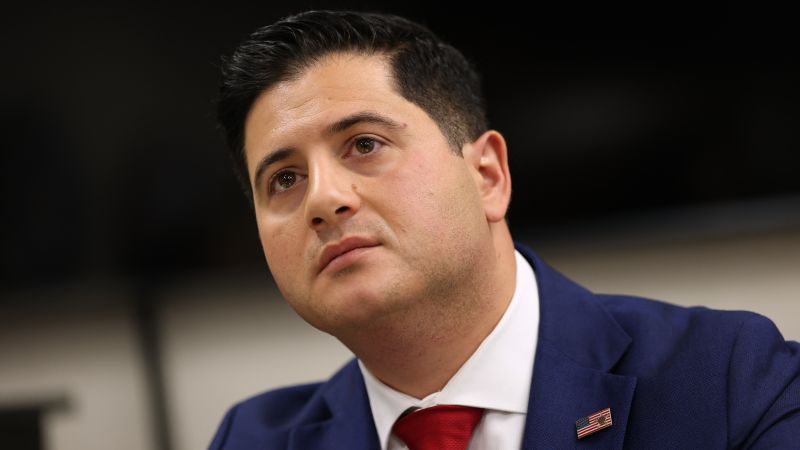
First Assistant U.S. Attorney Bill Essayli, a Trump appointee overseeing the Los Angeles-based U.S. attorney’s office, addressed the claim in a statement. “A social media rumor suggested that one candidate appeared to gain no new votes during an election night update,” Essayli wrote. “Upon reviewing official county records, we confirmed that each candidate received votes in every update. The initial data was accurate, but it didn’t capture the full picture.” The DOJ’s intervention highlights the ongoing efforts to counter misinformation in the electoral process.
Mayoral Race Context and Candidate Backgrounds
The mayoral race in Los Angeles, which took place during the nonpartisan primary on Tuesday, featured Spencer Pratt, a former reality TV star, competing against sitting Mayor Karen Bass and City Councilwoman Nithya Raman. Both Bass and Raman are affiliated with the Democratic Party, making Pratt the underdog in a tightly contested race. CNN’s projections indicated that Bass would likely move forward to the November general election, though the final matchups between her and Pratt or Raman were still pending as vote counts continued.
Spencer Pratt, known for his role on shows like *Hollywood Avenue*, entered the race as a relatively new political figure. His candidacy sparked discussions about the influence of celebrity culture on local politics and the broader appeal of his platform. Meanwhile, Karen Bass, the incumbent mayor, faces challenges from Raman, a fellow Democrat who has been active in the city’s legislative affairs. The primary election served as a critical step in determining who would represent the city’s voters in the general election.
Clarification from Associated Press on Vote Reporting
A spokesperson for The Associated Press (AP), which provides real-time updates on election results, explained that the delay in the automated update was a technical glitch. “There was a lag in the system where some candidates’ votes were processed in one batch and others followed shortly after,” the spokesperson noted. This delay, they clarified, meant that the initial update for Pratt appeared to show zero progress while leading candidates saw significant gains. “The system eventually corrected itself, and the full vote totals included 21,870 for Pratt, 12,850 for Bass, and 9,521 for Raman,” the statement added.
The AP’s explanation underscores the complexities of modern vote-counting systems, which rely on automated data aggregation. While these systems expedite reporting, they can occasionally lead to discrepancies in the timing of updates. In this case, Pratt was part of the second group of candidates to be processed, resulting in a brief delay. The spokesperson emphasized that the updates were not erroneous but rather a reflection of the sequential nature of data input. This clarification helps contextualize the initial confusion and reinforces the reliability of the voting process.
Broader Implications for Election Integrity
The incident in Los Angeles is part of a larger trend where political figures leverage social media to question the accuracy of election outcomes. President Trump, who has repeatedly accused the 2020 election of being fraudulent, used the delay as a talking point to suggest widespread Democratic irregularities. “The slow pace of counting in Tuesday’s primary is evidence of systematic cheating,” Trump claimed in a recent statement, without presenting supporting data. This aligns with his history of spreading unverified assertions about election integrity, often aimed at undermining public confidence in the process.
The DOJ’s response to the LA mayoral race claim reflects its role in monitoring election procedures and addressing concerns. Earlier in the week, the department’s attorneys were dispatched to observe ballot processing in Los Angeles, as confirmed by the county’s election office. This move was prompted by Trump’s ongoing efforts to cast doubt on the electoral system, which has seen increasing scrutiny following the 2020 election. The DOJ’s involvement in this local race demonstrates how national political narratives can intersect with regional electoral events.
Critics argue that California’s mail ballot system contributes to delays in reporting final results. According to the California Voter Foundation, a nonprofit focused on improving voting processes, the state’s reliance on mail-in ballots means a large portion of votes are submitted on Election Day. Under state law, mail ballots can be received at local offices up to seven days after the election, provided they are postmarked by the deadline. This extended timeline allows for a thorough verification process, which is essential for ensuring the accuracy of counts. However, it also means that results can take longer to finalize, leading to potential confusion during the initial updates.
Reactions and Ongoing Monitoring
As the situation unfolds, CNN has sought comment from the Los Angeles County clerk’s office to further clarify the process. Meanwhile, the AP spokesperson reiterated that the delayed update was a minor technical issue rather than an indication of fraud. “The system functioned as intended, and the final counts reflect the true distribution of votes,” they stated. This reassurance aims to alleviate concerns about the reliability of the election results.
Spencer Pratt’s campaign has not yet commented on the discrepancy, but the incident has already sparked discussions about the role of media in shaping public perception. The use of social media to highlight minor delays in reporting has become a common tactic, often leading to exaggerated narratives about the integrity of the vote. As the mayoral race progresses, the focus will remain on ensuring transparency and accuracy, both in the immediate context of the LA election and in the broader fight against misinformation.
With the race still in flux, the outcome could have significant implications for the city’s future governance. The delayed update, while initially alarming, serves as a reminder of the nuances in modern electoral systems. As the final vote counts are tallied, the story of this mayoral race will continue to evolve, potentially influencing public discourse on voting procedures and political accountability.
