
Deadly 7.8 magnitude earthquake hits southern Philippines
Deadly 7.8 Magnitude Earthquake Hits Southern Philippines
Deadly 7 8 magnitude earthquake hits – A powerful earthquake measuring 7.8 on the Richter scale shook the Mindanao region of the southern Philippines on Monday, sending shockwaves through the area and causing widespread alarm. The United States Geological Survey (USGS) confirmed the tremor, which struck at approximately 07:37 a.m. local time and originated from a depth of around 35 kilometers (21.7 miles). The event disrupted daily life, with buildings collapsing and several casualties reported across the archipelago.
Impact and Casualties
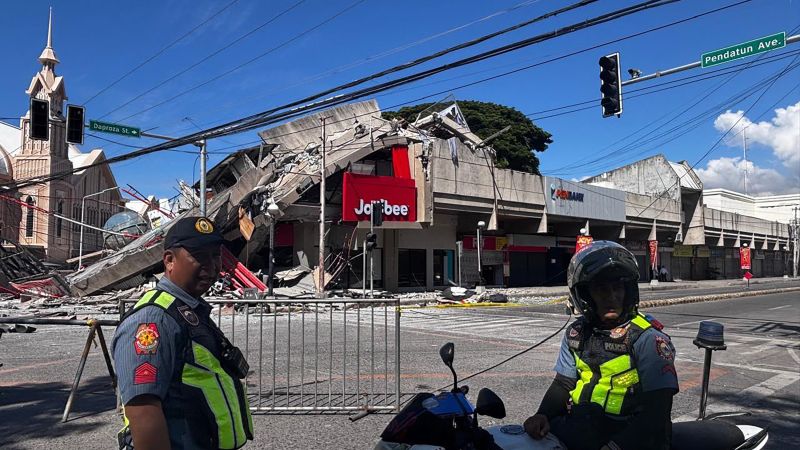
The Office of Civil Defense confirmed at least several deaths, though response teams are still assessing the full extent of the damage. In the coastal city of General Santos City, located in Sarangani province, the earthquake caused significant destruction. Local officials shared images of convenience stores and structures crumbling in the aftermath, highlighting the severity of the quake. The region’s population of about 720,000 faced immediate danger as the tremor rattled homes and infrastructure.
Among the hardest-hit areas were the provinces of Davao Occidental and Davao Del Sur. Social media footage captured terrified elementary schoolchildren taking cover outdoors as the ground swayed violently during the morning. In Davao Del Sur, a high school campus roof collapsed while students gathered outside the sports field. Despite the chaos, no injuries were reported in these incidents, though the exact number of casualties remains under investigation.
Government Response and Warnings
Philippine President Ferdinand Marcos Jr. swiftly addressed the crisis, urging immediate action from relevant government agencies. In a statement, he directed efforts to evacuate residents and initiate rescue operations. “To our kababayans [countrymen] in the affected provinces, please heed the tsunami warning. Move to higher ground now. Do not wait. Your life is more important than anything left behind,” he said, emphasizing the urgency of the situation.
“To our kababayans [countrymen] in the affected provinces, please heed the tsunami warning. Move to higher ground now. Do not wait. Your life is more important than anything left behind,”
— Philippine President Ferdinand Marcos Jr.
The earthquake also triggered tsunami alerts from the Philippines, Indonesia, and Japan. The Pacific Tsunami Warning Center noted that the threat had largely diminished five hours after the quake, but advised continued vigilance. Sea levels could still fluctuate, so local authorities urged residents to remain cautious and follow updated guidance.
Local Reactions and Damage Assessment
Benjie Ancheta, police chief of Alabel town in Sarangani province, described the quake as the strongest they had encountered. Speaking to Reuters, Ancheta reported cracks in the police building following the tremor, which occurred during their flag-raising ceremony. “This is the strongest earthquake we’ve experienced,” he said, highlighting the region’s vulnerability to seismic events.
While no immediate casualties were reported in Alabel, some people fainted due to the intensity of the shaking. The Office of Civil Defense is working to verify additional reports of injuries, as the situation remains dynamic. Emergency services are on high alert, prioritizing rescue efforts in the most affected areas.
Geological Context and Ongoing Monitoring
The southern Philippines, including Mindanao, lies within the Ring of Fire—a tectonic belt stretching around the Pacific Basin where frequent earthquakes and volcanic activity are common. This region is prone to seismic disruptions due to its location along fault lines, making it a hotspot for natural disasters. The current quake is part of a pattern that has historically tested the resilience of local communities.
Experts from the Philippine Institute of Volcanology and Seismology (Phivolcs) stated the quake occurred off the shores of General Santos City, near the southernmost tip of Mindanao. The agency’s monitoring systems continue to track aftershocks and assess potential secondary risks, such as landslides or further structural damage in the region.
Global Implications and Regional Coordination
Although the tsunami threat in Hawaii was ruled out by the National Weather Service, the quake underscored the interconnectedness of seismic events across the Pacific. The Philippines, Indonesia, and Japan—three nations situated along the Ring of Fire—coordinated their warnings to ensure public safety. This collaboration reflects the importance of early response mechanisms in mitigating disaster impacts.
Residents in coastal areas were advised to stay indoors and avoid water bodies until authorities confirmed the danger had passed. In Davao Occidental, for example, the ground’s violent movement left many in fear, even as the region’s emergency protocols kicked into high gear. The government’s ability to act quickly will determine the success of recovery efforts in the coming days.
Aftermath and Future Concerns
The earthquake has left a trail of destruction, with infrastructure damage and panic spreading across the region. As of now, the focus remains on rescuing those trapped in collapsed buildings and providing immediate relief to affected families. However, the situation could worsen with additional tremors or secondary hazards, prompting experts to urge preparedness for the worst.
While the initial wave of panic has subsided, the long-term effects of the quake are yet to be fully understood. The Philippine Institute of Volcanology and Seismology is conducting thorough analyses to determine whether the event is a single occurrence or part of a larger seismic sequence. This will help predict future risks and guide disaster management strategies.
For now, the resilience of the local population and the coordination of relief efforts will be critical. The government has deployed teams to inspect critical infrastructure, including schools and hospitals, to ensure they are safe for use. Meanwhile, the global community watches closely, aware that such events can have far-reaching consequences, especially in regions with dense populations and limited resources.
The earthquake serves as a stark reminder of the power of nature and the importance of preparedness. As the Philippines continues to grapple with the aftermath, officials remain determined to provide support and guidance to those in need. The country’s experience with similar disasters in the past has equipped it with some response frameworks, but the scale of this event may test even the most robust systems.
Residents in the affected provinces are encouraged to stay informed through local broadcasts and alerts. The Office of Civil Defense is coordinating with international partners to share data and resources, ensuring a coordinated response. With the potential for more tremors and the risk of tsunamis still present, vigilance remains key to minimizing further harm.
As the situation evolves, updates will be provided to the public. The earthquake has already disrupted the start of the new academic year, with schools in some areas forced to close temporarily. This delay highlights the challenges of balancing education and safety in the face of natural disasters. The resilience of the Filipino people, however, is a testament to their ability to adapt and recover from such crises.
The incident also raises questions about the region’s infrastructure resilience. With many buildings constructed without adequate earthquake-resistant measures, the damage serves as a wake-up call for future improvements. As the country rebuilds, lessons from this event will be crucial in shaping policies and preparations for the next disaster.
Until then, the southern Philippines will remain in the spotlight, as the world watches the unfolding narrative of this devastating quake. The government’s swift response, combined with the dedication of local communities, will determine the path forward in the days and weeks to come. For now, the focus is on survival, recovery, and ensuring that no one is left behind in the face of nature’s fury.
