
Sagrada Família’s 144-year journey nears its end with the Tower of Jesus Christ
Sagrada Família’s 144-Year Journey Nears Its End with the Tower of Jesus Christ
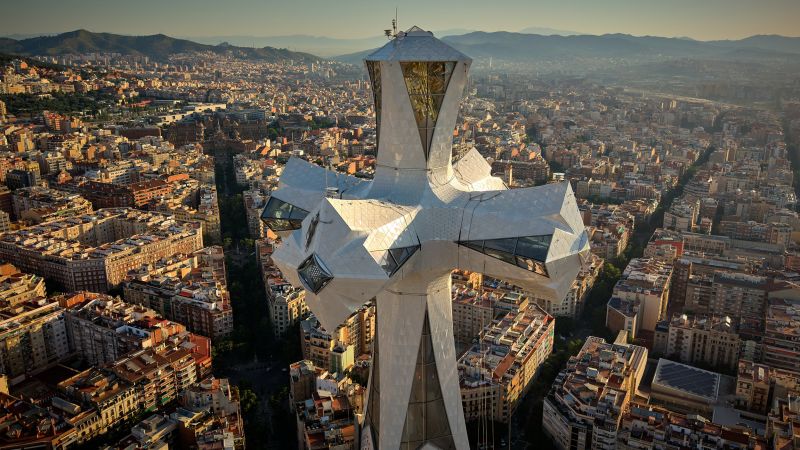
Sagrada Família s 144 year journey – The long-awaited completion of Barcelona’s iconic Sagrada Família has finally reached its climax, with the final structural element—a towering cross—installed atop the central spire of the Tower of Jesus Christ in February. This milestone marks the end of a 144-year odyssey, transforming the basilica into the world’s tallest church at 566 feet. For decades, the unfinished monument has stood as a defining feature of the city’s skyline, its surreal, twisting towers capturing the imagination of visitors and architects alike. Now, with the last major piece in place, the basilica is poised to celebrate its grand opening, albeit with some unfinished work still to come.
A Monument to Time and Vision
Since its construction began in 1882, Sagrada Família has endured a series of challenges that have tested both its creators and its patrons. Wars, political shifts, and financial constraints have repeatedly threatened the project’s progress, yet its completion remains a symbol of perseverance. The final tower, a crowning achievement in Gaudí’s architectural legacy, represents not just the culmination of the basilica’s design, but also the fusion of historical craftsmanship and modern engineering. As the last major element was raised, the structure’s silhouette now completes the vision that has captivated generations of Barcelona residents and global admirers.
The Tower of Jesus Christ, the 18th and final spire, has taken years to complete. Its installation required a meticulous, months-long process that involved cutting-edge technology and careful coordination. The cross, as tall as a five-story building and weighing approximately 100 tons, was manufactured in Germany and transported in 14 prefabricated sections. These pieces, made from concrete and stainless steel, were lifted 200 feet into the air using cranes before being assembled in a specialized workshop located directly above the basilica’s central nave. This blend of traditional materials and modern methods highlights the delicate balance between honoring Gaudí’s original blueprint and adapting to contemporary demands.
Gaudí’s Vision and the Path to Completion
The basilica’s completion is a tribute to Antoni Gaudí, the visionary architect whose designs have defined Catalan modernism. His passing in 1926 coincided with the 100th anniversary of the tower’s inauguration, a poignant coincidence that underscores the enduring legacy of his work. Gaudí’s plans, largely lost in the 1930s due to a fire that destroyed much of his documentation, required decades of interpretation by subsequent architects. The final tower’s design, which reflects his reverence for nature and geometry, stands as a testament to the collaborative efforts that brought his dream to life.
When Gaudí took over the project from Francesc de Paula Villar, who had resigned over a disagreement with the developer, he already understood that his lifetime would not see the basilica completed. “My client is not in a hurry,” he once remarked, referring to the divine inspiration that guided his work. This philosophy of patience and precision has defined the project’s journey, with each phase requiring careful attention to detail. The cross, which Gaudí had envisioned as a reflective beacon, now shimmers under the Spanish sun, its white surface catching light in ways he might have imagined.
The process of installing the cross was as intricate as the basilica’s design itself. Each section was meticulously crafted and finished with stone interiors, enameled white ceramic cladding, and locally sourced glass windows. The choice of stainless steel over traditional materials, though not widely used in Gaudí’s time, allowed the cross to maintain structural integrity without adding unnecessary weight. This compromise exemplifies the challenges faced by modern architects tasked with translating Gaudí’s intricate ideas into reality.
A Testament to Collaboration and Innovation
For over a century, the Sagrada Família has served as a living project, evolving with the times and the hands of those who worked on it. The final cross, a symbol of both completion and continuity, represents the collective effort of countless designers and engineers who have dedicated their lives to realizing Gaudí’s vision. “We believe we’re pretty close to his plans for the exterior,” said Mauricio Cortés, the architect responsible for the cross’s installation. “With the interior, as he didn’t define it in detail, there’s more room for interpretation.” His words reflect the blend of tradition and innovation that has shaped the basilica’s final form.
The cross’s installation was not just a technical feat but also a symbolic moment. It crowns the central spire, completing the narrative of the basilica’s architecture. The other 17 towers, dedicated to the 12 apostles, four Evangelists, and the Virgin Mary, have long stood as a testament to Gaudí’s devotion to storytelling through design. Each tower, with its unique ornamentation, contributes to the basilica’s identity as a monument to faith and a celebration of artistic ambition. The cross, however, marks the apex of this journey, a visual and structural culmination of Gaudí’s philosophy.
Pope Leo XIV, the 11th pontiff to preside over the project’s development, will lead the Solemn Mass and ceremonial blessing on Wednesday. His presence adds a spiritual dimension to the event, which has been eagerly anticipated for years. While the basilica’s exterior is now complete, its interior still requires further refinement. This ongoing work, though less dramatic than the final tower’s installation, ensures that the church continues to evolve, reflecting the spirit of its original creator.
From the elevated workshop where the cross was assembled, one can gaze not only at the city of Barcelona but also at the basilica’s most striking features. The central nave’s roof is a masterpiece of color and light, its gables adorned with vibrant ceramics that mimic the hues of a natural landscape. The bell towers, perched atop the Nativity and Passion facades, tell biblical stories in ornately carved stone, while their pinnacles—crafted from Venetian glass—sparkle like constellations. Gaudí, who never lived to see the basilica finished, might have been awed by the sight of these elements harmonizing in a way he once dreamed of.
Despite the basilica’s completion, its story is far from over. The final tower’s inauguration marks a significant step, but the church’s intricate details and symbolic elements continue to inspire. The Sagrada Família, with its mix of Gothic and Art Nouveau influences, remains a unique blend of architectural styles. Its completion in 2026, 100 years after Gaudí’s death, is more than a milestone—it is a reclamation of his vision, a bridge between past and present. As visitors ascend the steps toward the basilica, they are not just witnessing a building, but a living testament to human creativity, resilience, and the enduring power of artistic vision.
Looking to the Future
The final tower’s completion does not signal the end of the Sagrada Família’s evolution. The basilica will continue to be a site of cultural and spiritual significance, with its interior still undergoing refinement. The cross, while a physical triumph, is also a reminder of the countless sacrifices made by those who worked on the project. From the early days of Gaudí’s designs to the modern techniques used in its construction, the basilica stands as a collaboration across time, a project that has endured through wars, economic downturns, and the passing of its creator. As the world turns its eyes toward Barcelona, the Sagrada Família’s story continues, a beacon of what can be achieved when passion meets patience.
