
China’s Xi Jinping arrives in North Korea for rare summit with Kim Jong Un
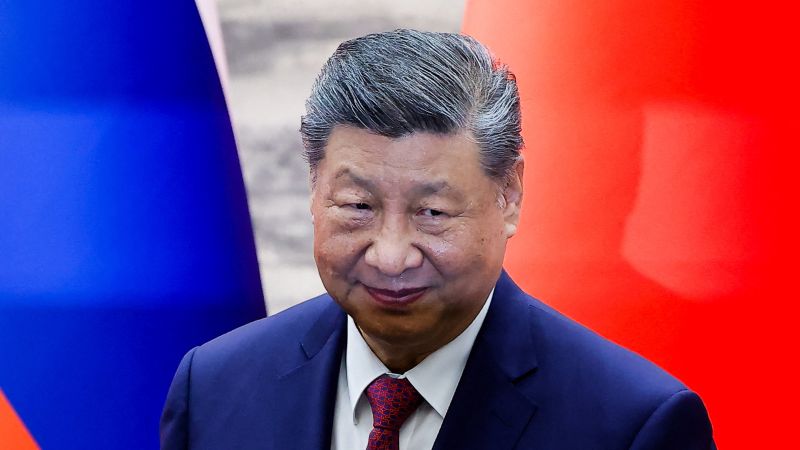
Chinese President Xi Jinping’s Unveiling of a New Alliance with North Korea’s Kim Jong Un
China s Xi Jinping arrives in North – Chinese President Xi Jinping embarked on a high-profile visit to North Korea, arriving in Pyongyang on Monday for a two-day state trip that marks his first overseas mission of the year. The journey, which comes weeks after he hosted Russian President Vladimir Putin and former U.S. President Donald Trump in Beijing, underscores China’s strategic focus on maintaining its influence in the region amid escalating global tensions. North Korean leader Kim Jong Un and his wife, Ri Sol Ju, greeted Xi at the capital’s international airport, where the pair engaged in a symbolic exchange as the leader’s plane touched down, setting the stage for diplomatic discussions.
A Ceremonial Welcome
The arrival ceremony in Pyongyang was a spectacle of North Korean grandeur, featuring a mounted cavalry procession and meticulously choreographed crowds that waved flags and flowers beneath towering portraits of both leaders. State media captured the event, highlighting the traditional 21-gun salute and the honor guard’s vocal tribute to Xi. “We wish Comrade Xi Jinping good health,” the guards shouted in Korean, as per Chinese television reports. This display of camaraderie, while rooted in protocol, symbolizes the enduring bond between the two nations, despite recent shifts in their bilateral relationship.
Xi’s wife, Peng Liyuan, was also presented with floral arrangements by North Korean children, a gesture that emphasizes the personal diplomacy often woven into state visits. Such interactions, though small, are designed to reinforce goodwill and mutual respect. The ceremony, held in Kim Il Sung Square, evoked memories of Cold War-era alliances, with the historical backdrop of the 1961 Treaty of Friendship, Cooperation and Mutual Assistance playing a central role in the symbolism.
Geopolitical Significance of the Visit
The timing of Xi’s trip is deliberate, aligning with China’s broader geopolitical ambitions to position itself as a key mediator in global affairs. With tensions rising between the United States and Russia, and North Korea seeking to strengthen its ties with Moscow, Beijing aims to reaffirm its role as a critical partner to Pyongyang. This visit offers a platform for China to reassert its economic dominance over North Korea, which remains heavily reliant on Chinese trade and investment for survival.
Xi’s absence from international events in recent months has been notable, with his meetings with Putin and Trump in Beijing creating a backdrop of shifting alliances. The 2024 visit by Putin to North Korea, during which the two nations signed a mutual defense treaty, highlights the growing partnership between Moscow and Pyongyang. Yet, China’s continued engagement with Kim signals its intent to counterbalance this development, ensuring its influence persists despite the North’s recent alignment with Russia.
North Korea’s nuclear ambitions, which have long been a point of contention, are expected to feature prominently in the discussions. During his last visit in 2019, Kim Jong Un had emphasized the importance of nuclear capabilities to safeguard North Korea’s sovereignty. This time, the focus may shift to how China perceives the risks and opportunities posed by Pyongyang’s expanding missile and nuclear programs. While Beijing supports North Korea’s military strength, it remains cautious about the potential for regional instability that could spill over into its own borders.
Historical Ties and Strategic Realignment
The visit coincides with the 65th anniversary of the 1961 Treaty of Friendship, Cooperation and Mutual Assistance, a cornerstone of Sino-North Korean relations. Signed shortly after China and North Korea fought side by side in the Korean War, the treaty has endured through decades of political evolution. Despite periodic strains, such as pandemic-era border closures that disrupted diplomatic exchanges, the relationship has been characterized by a blend of solidarity and pragmatism.
Kim Jong Un’s recent activities, including inspections of a major munitions factory and a nuclear material production plant, underscore North Korea’s commitment to bolstering its military infrastructure. These moves come as the country seeks to diversify its international partnerships, balancing military support from Russia with economic stability from China. The summit with Xi is seen as a pivotal moment to reinforce this delicate equilibrium, ensuring North Korea’s survival in a volatile geopolitical landscape.
Xi’s visit also reflects a broader strategy to solidify China’s position as a global power. By hosting Kim, Beijing aims to showcase its ability to mediate between East and West, leveraging North Korea as a counterweight to U.S. influence. This dynamic is particularly relevant as the Trump administration reshaped U.S. foreign policy, creating uncertainty for allies and adversaries alike. For China, North Korea represents a vital ally in its quest to maintain regional dominance and counter Western pressure.
The summit is not without its challenges. While North Korea’s nuclear program has been a flashpoint for international concern, China’s leadership has consistently defended its ally, viewing it as part of a larger network of nations that challenge American hegemony. In a letter to North Korean media, Xi emphasized the “unbreakable, enduring” nature of their friendship, stating that “no matter how times change or how the international situation evolves, the traditional ties between China and North Korea will remain a cornerstone of regional stability.” This declaration highlights the symbolic weight of the visit, reinforcing the idea that China and North Korea are inseparable in their shared goals.
Lessons from the Past and Future Outlook
The 1961 treaty, which established a mutual defense pact, remains a powerful reminder of the historical alliance between the two nations. Yet, the relationship has evolved over time, with North Korea sometimes leaning on China for economic support and other times asserting its independence. The current visit offers an opportunity to revisit these foundations and chart a new course for the future.
Xi and Kim last met in September, when Kim participated in a military parade in Beijing alongside Putin. The trio’s presence at the event was a rare display of unity, suggesting a potential realignment of global powers. However, the recent cooling of Sino-North Korean relations, marked by Kim’s growing reliance on Moscow, has raised questions about the depth of Beijing’s commitment. Despite this, the summit signals a renewed effort to rekindle the partnership, with both leaders seeking to address shared interests and mutual goals.
South Korea’s deteriorating relationship with North Korea adds another layer to the regional dynamics. As Seoul has tightened its ties with the United States, North Korea has sought to compensate by deepening its bond with China. This has led to a complex web of alliances, where Beijing and Moscow vie for influence over the Korean Peninsula. Xi’s visit, therefore, is not just a bilateral affair but a strategic move to solidify China’s role in this intricate geopolitical puzzle.
For North Korea, the summit represents a chance to align with China’s economic strength while maintaining its nuclear independence. The country’s recent efforts to expand its missile capabilities, as noted in state media reports, suggest a desire to strengthen its position on the world stage. However, the extent to which these ambitions will be addressed during the talks remains unclear, as Beijing continues to balance its support for Pyongyang with concerns over regional security.
