
Germany and France drop joint fighter jet project
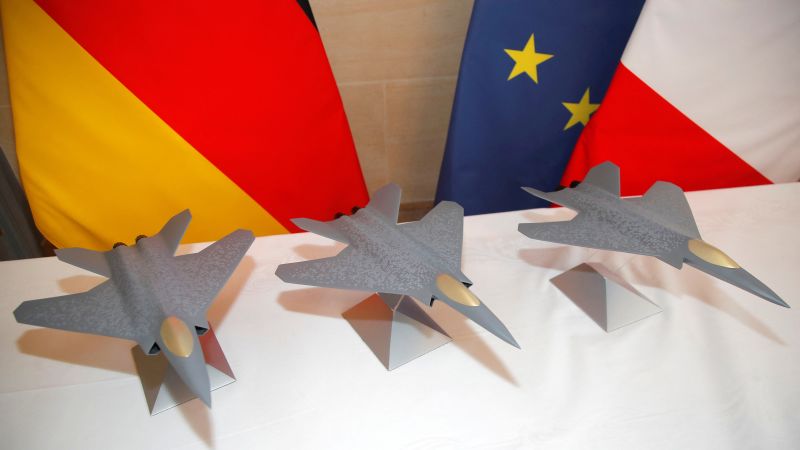
Germany and France Drop Joint Fighter Jet Project
Germany and France drop joint fighter – In a surprising development, German Chancellor Friedrich Merz and French President Emmanuel Macron have decided to abandon their long-standing initiative to develop a next-generation fighter jet, officials revealed on Monday. This marks a significant shift in European defense strategy, as the partnership between the two nations—one of the most ambitious in the region—now appears to be on the verge of collapse. The decision comes amid deepening industrial tensions and the inability of key stakeholders to reconcile differences over the project’s design and control. While the details of the agreement remain under review, the move signals a setback for collaborative efforts to modernize Europe’s military capabilities.
A Political and Industrial Dilemma
The collapse of the project was announced during discussions at the EU-Western Balkans summit in Montenegro, where Merz and Macron convened to address broader regional security concerns. Although the two leaders had previously expressed commitment to the initiative, they now acknowledge that the deadlock between aerospace firms has rendered the plan unviable. French officials noted that the core disagreement lies between Airbus, representing Germany and Spain, and Dassault Aviation, the French company at the heart of the effort. Despite months of negotiations, the two sides have failed to align on critical specifications, including the aircraft’s capabilities and the balance of influence in its development.
Macron, who spearheaded the project with former Chancellor Angela Merkel in 2017, had long argued for its necessity in strengthening European autonomy in defense. His office emphasized that the project remains a vital component of Franco-German cooperation, which has historically been a cornerstone of European unity. However, the latest decision to terminate the core fighter jet element—named the Future Combat Air System (FCAS)—highlights the challenges of maintaining consensus in a sector where national interests often take precedence over shared goals. The termination does not fully extinguish the project, but it signals a departure from its original vision, leaving its future uncertain.
The Cost of Disagreement
The 100-billion Euro ($116 billion) initiative, which also involves Spain, was intended to create a cutting-edge military platform that would integrate advanced drones and a classified “combat cloud” system for real-time data sharing. Yet, persistent disputes over control and technological priorities have stalled progress. German officials have indicated that the decision to pause the core fighter jet reflects a pragmatic choice to prioritize domestic interests, particularly in the face of rising geopolitical tensions. The United States has been urging Europe to accelerate its re-armament efforts, citing the growing threat from Russia and the need for a stronger collective defense posture.
Macron’s office described the termination as a “difficult but necessary” step, acknowledging that the disagreement between Airbus and Dassault has proven intractable. Airbus, a major European aerospace company, has been instrumental in developing the aircraft’s core systems, while Dassault Aviation has focused on the design and engineering of the fighter jet itself. The tension between the two firms has spilled into public discourse, with debates over intellectual property rights and the level of autonomy each side should have in the final product. This dispute has not only delayed the project but also raised questions about the viability of future European defense collaborations.
“It’s hardly ideal signaling either to Washington or to Moscow,” said Douglas Barrie, a senior fellow at the International Institute for Strategic Studies (IISS). “The project was meant to demonstrate Europe’s ability to lead in aerospace innovation, but now it looks like a compromise between competing national priorities.”
Analysts have pointed out that the failure to finalize the FCAS project mirrors earlier disagreements in the European defense sector. In the 1980s, France had withdrawn from the Eurofighter program, a decision that underscored its preference for independent development over multilateral cooperation. The current situation with the FCAS reflects a similar pattern, as both Airbus and Dassault struggle to find common ground. The project’s cancellation may also affect the broader goal of creating a unified European defense industry, which has faced challenges for decades due to inconsistent funding and competing priorities.
A Symbolic Compromise
Despite the termination of the core fighter jet, officials have hinted at a symbolic compromise. A European source familiar with the discussions reported that the project’s non-core components—such as the “combat cloud” and other supporting systems—will continue under the FCAS banner. This approach allows France to maintain the project’s name while shifting focus to other elements of the defense initiative. The compromise is seen as a way to salvage some aspects of the collaboration without fully abandoning the vision, though it leaves the future of the fighter jet unclear.
Merz has publicly questioned the need for a manned sixth-generation fighter jet, suggesting that Germany’s air force may benefit more from investing in nuclear-capable aircraft that can operate from carriers. His remarks highlight the practical concerns that have driven the decision, particularly in light of the country’s need to allocate resources efficiently. Meanwhile, Macron’s team has emphasized the strategic importance of maintaining a joint project, even as it admits the challenges of balancing the interests of its industrial partners.
“SCAF has been on life support for three years,” said Francis Tusa, a defense analyst based in the UK. “This decision is a clear sign that the European defense industry is struggling to meet its ambitious goals, especially when national ambitions clash.”
The cancellation of the FCAS core fighter jet has sparked mixed reactions. While Germany’s IG Metall union has welcomed the move, stating that it was “clear for months” that Dassault and Airbus would not be able to cooperate on an equal footing, some industry experts warn of long-term consequences. Jürgen Kerner, Deputy Chairman of IG Metall, praised Merz for prioritizing the interests of Germany’s aviation sector and its workforce. “This decision ensures that resources are directed where they can have the greatest impact,” he said in a statement. Yet, the loss of this flagship project may leave Europe without a unified aerospace initiative, further fragmenting its defense capabilities.
The decision also raises questions about the future of Franco-German defense collaboration. While the two nations have historically worked closely on military matters, the FCAS dispute has exposed deeper divisions. The project was meant to symbolize a shared commitment to technological independence and strategic autonomy, but its collapse may force each country to pursue its own path. This shift could have implications for the broader European defense landscape, particularly as other nations like Spain weigh their involvement in the initiative.
Broader Implications for European Defense
With the FCAS core fighter jet no longer in the works, the European defense industry faces a critical juncture. The project had been seen as a potential model for integrating diverse national capabilities into a single, cohesive system. However, the breakdown of negotiations suggests that achieving such integration may be more difficult than anticipated. The US, which has been pressing Europe to modernize its armed forces, may now need to look elsewhere for strategic partnerships, potentially increasing its influence in the region.
Meanwhile, Russia’s growing military presence and its aggressive actions in Europe have intensified the need for a strong defense posture. The FCAS was intended to provide a robust response to these threats, but its termination leaves a gap in Europe’s ability to develop advanced military technology. This development may also delay the timeline for other European defense programs, as the inability to resolve the FCAS dispute casts doubt on the continent’s capacity for coordinated efforts. As the leaders of Germany and France move forward with separate plans, the question remains whether Europe can still achieve the kind of unified defense strategy that once seemed within reach.
