
Teen charged with murder at Texas track meet was ‘distraught’ after fatal stabbing, witness testifies
Teen Charged with Murder at Texas Track Meet Was ‘Distraught’ After Fatal Stabbing, Witness Testifies
Teen charged with murder at Texas – On the fourth day of the trial in Collin County, Texas, a pivotal moment unfolded as one of the final witnesses took the stand, offering critical insight into the emotional state of Karmelo Anthony following the fatal stabbing of Austin Metcalf during a high school track meet. The incident, which occurred in April 2025 at a stadium in Frisco—a suburb of Dallas—has drawn significant attention, both locally and nationally, due to its tragic nature and the racial tensions that have emerged around it.
The Dispute That Led to the Tragedy
Karmelo Anthony, now 19, faces murder charges in connection with the death of Austin Metcalf, 17, during a midday confrontation at the track meet. According to the testimony, Anthony was upset immediately after the altercation and claimed he had warned Metcalf “not to touch me” before the fatal act. This claim was echoed by a defense team member who described Anthony’s emotional state as “distraught” following the stabbing, a sentiment that has become central to the case.
“I was hearing him say, ‘I told him not to touch me,’” the witness recounted, emphasizing the urgency and fear Anthony expressed during the incident. The testimony provided a glimpse into the moment of conflict, suggesting that Anthony’s actions were driven by a sense of being threatened rather than premeditated intent.
The dispute, prosecutors argue, centered on access to a shared tent during the event, which was held under rainy conditions. Anthony, a student at Frisco Centennial High School, was reportedly asked to leave the tent by Metcalf’s team, leading to a confrontation. The defense, however, contends that the situation escalated when Metcalf made physical contact with Anthony, prompting him to defend himself with a knife. The witness’s account adds depth to the narrative, highlighting the emotional turmoil that preceded the fatal strike.
The Trial’s Progress and Final Moments
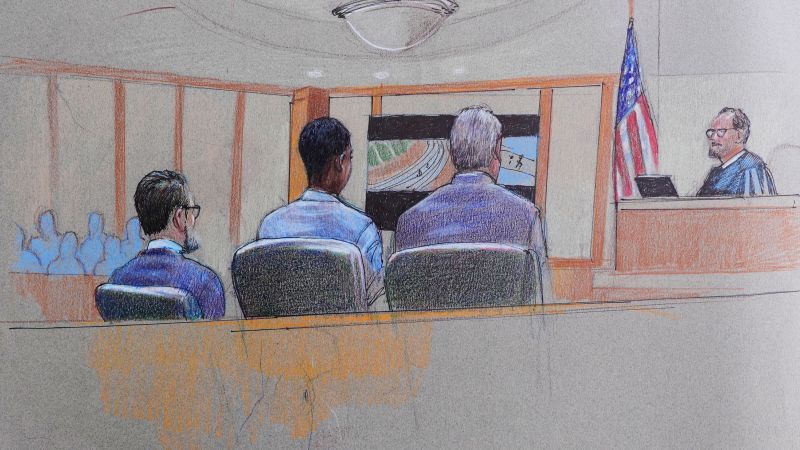
The trial, which has been ongoing for several days, saw the prosecution and defense teams conclude their evidence presentations on Saturday. With the case now in its closing phase, the courtroom has become a focal point for public interest, with spectators filling the space on Monday. Among them were the parents of both Anthony and Metcalf, as well as younger attendees who had followed the story through social media.
After a three-hour midday break, the attorneys from both sides indicated they had no further evidence to present. This marked the end of the fourth day of proceedings, leaving the jury to consider the conflicting accounts of what transpired. Anthony, who did not take the stand during his own defense, remains silent on the details of the incident, relying on the testimony of others to shape the narrative of his actions.
Closing arguments are set for Tuesday, with both the prosecution and defense preparing to summarize their cases. The judge, John Roach Jr., has emphasized the importance of impartiality, reminding jurors to avoid public discussion of the case and to refrain from using social media to share their opinions. “For God’s sake, do not go on social media,” the judge instructed, underscoring the potential influence of online platforms on the trial’s outcome.
Social Media Amplifies Racial Dynamics
The case has gained national attention, in part due to the role of social media in framing the tragedy through a racial lens. Anthony, a Black teenager, and Metcalf, a white student, were from rival high schools—Frisco Centennial and Frisco Memorial—adding a layer of tension to the incident. Prosecutors have highlighted how the dispute over tent access may have reflected broader racial divides, while the defense argues that the conflict was a personal one, not tied to systemic issues.
During the trial, jurors heard from multiple witnesses who described the track meet’s environment. Some students testified that Anthony had been confrontational, with one asserting that he was the aggressor in the incident. These accounts have fueled debates about the circumstances surrounding the stabbing, with the jury tasked to weigh the competing narratives of self-defense and premeditated violence.
The emotional weight of the case has not gone unnoticed. The courtroom’s packed audience, including families and friends of the victims, reflects the community’s deep investment in the outcome. The judge’s decision to sequester the jury for the remainder of the trial further illustrates the concern over external influences, particularly in a case that has sparked intense public discourse.
Sequestration and the Road Ahead
As the trial enters its final stages, jurors will be sequestered in a hotel if they fail to reach a verdict by Tuesday. This measure aims to prevent any external pressures or discussions from affecting their decision-making. The judge has also stressed the need for jurors to remain focused, emphasizing that the case hinges on the facts presented in court rather than media narratives or personal biases.
The testimony of Anthony’s teammate has been instrumental in portraying the defendant as someone who acted in a moment of panic. This account, combined with the physical evidence and witness statements, will be critical for the jury to assess the intent behind Anthony’s actions. The prosecution, meanwhile, has worked to establish that the stabbing was an unjustified attack, with the defense countering that Anthony felt threatened and had no choice but to defend himself.
With the closing arguments imminent, the trial has reached a turning point. The jurors will now evaluate the evidence, considering both the defense’s claims of self-defense and the prosecution’s assertion of premeditation. The outcome of this case could have far-reaching implications, not only for Anthony and Metcalf but also for the broader conversation about racial dynamics and conflict in high school settings.
As the trial moves forward, the focus remains on the facts, the emotions of the individuals involved, and the societal context that has shaped public perception. The testimony of the last witness, coupled with the legal arguments to come, will determine whether Anthony is found guilty of murder or if the jury sides with his defense, citing fear and self-preservation as key factors. The case continues to highlight the complex interplay of personal conflict, community tension, and the legal system’s role in resolving it.
