
The road test: Inside Alexandria Ocasio-Cortez’s strategy ahead of a potential 2028 campaign
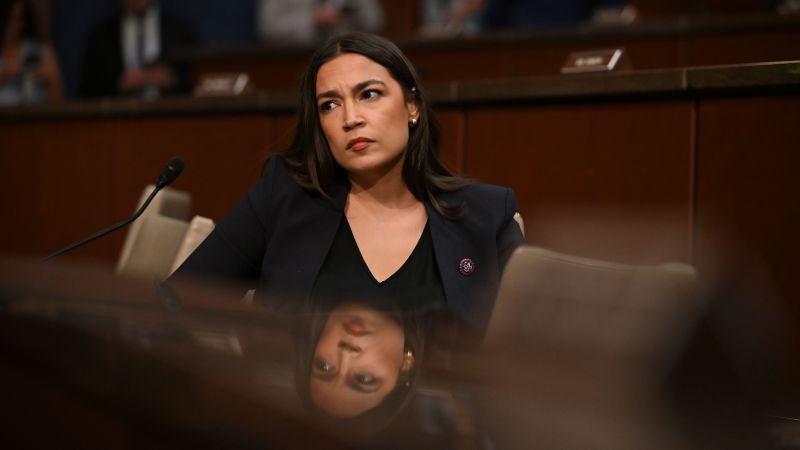
The Road Test: Inside Alexandria Ocasio-Cortez’s Strategy for a Potential 2028 Campaign
A New Approach to Political Strategy
The road test – Alexandria Ocasio-Cortez, the Democratic congresswoman from New York, has been quietly refining her political playbook. While her public image remains rooted in grassroots activism, recent months have seen her adopting a more calculated, strategic mindset. The act of knitting, once a simple pastime, has become a metaphor for her meticulous planning. She’s been crafting a line of hats and sweaters, using the process to simulate the careful curation of her campaign messages. These items, both worn by her and gifted to allies, symbolize her effort to blend personal branding with political outreach.
Her current focus extends beyond the familiar battlegrounds of her congressional district. Ocasio-Cortez is actively engaging with aides to evaluate potential campaigns she might endorse or collaborate on, from legislative initiatives to broader national strategies. This includes deep dives into how bills should be structured and how to communicate their impact effectively. While she remains open to running for president in 2028, her sights are also set on the seat currently held by Senator Chuck Schumer, a move that could reshape the Democratic Party’s leadership dynamics.
From Protest to Policy: A Maturing Political Voice
Once known for her spontaneous protests and fiery debates on the Green New Deal, Ocasio-Cortez has evolved into a more polished political figure. Her early days of impromptu activism, like joining a sit-in at Nancy Pelosi’s office, are now a distant memory. Instead, she’s positioning herself as a leader who can bridge progressive ideals with pragmatic policy-making. This shift was evident in her April 2026 hearing on the House Energy and Commerce Committee, where she questioned EPA Administrator Lee Zeldin with sharp precision, creating a viral moment that underscored her growing influence.
Her aides are preparing a fall tour to assess her appeal beyond the core of her Democratic base. This initiative aims to test her ability to connect with swing voters and independents, a critical step in expanding her national footprint. “She’s seen an opening among independent voters, especially those who lean toward progressive causes but aren’t fully aligned with the party’s traditional factions,” noted a senior advisor. The tour will also gauge her readiness for a presidential bid, balancing her reputation as a bold voice with the need to appeal to a broader electorate.
Endorsements as a Strategic Tool
Ocasio-Cortez’s campaign strategy is already bearing fruit. In recent weeks, she has endorsed candidates in three key states—New Jersey, California, and Montana—whose victories or advancement in primaries signal her growing clout. One of these endorsements, for Pennsylvania state legislator Chris Rabb, had a surprising impact. Rabb, who was running for a House seat in Philadelphia, recalled how Ocasio-Cortez’s sudden support “really broke open the doors for anti-establishment progressives of color.”
“She surprised me by calling to say she was endorsing, and I invited her to campaign with me. We scrambled to get her on the ground before Election Day,” Rabb told CNN. “Her backing gave us a level of energy and credibility that we hadn’t had before.”
Her involvement in the “Fighting Oligarchy” campaign also highlights her evolving role. Georgia state representative Ruwa Romman, who first connected with Ocasio-Cortez during a pro-Palestinian protest at the 2024 Democratic National Convention, described the congresswoman’s approach as both personal and strategic. “She asked me, ‘Would an endorsement help?’ and I told her, ‘You poll like plus-40 among Democrats in Georgia. Anything you can give me!’” Romman said. “It was clear she was thinking beyond her own district, looking to influence state and national races.”
Ocasio-Cortez’s ability to mobilize support has not gone unnoticed. However, her strategy also involves careful exclusions. She has chosen not to back Graham Platner in Maine’s Senate race, despite both Senator Bernie Sanders and Elizabeth Warren hosting rallies for him. This decision reflects her desire to avoid being drawn into divisive issues that might overshadow her own message.
Testing Limits and Building Alliances
Her influence is both a strength and a challenge. While she’s managed to build a strong network of allies, she’s also navigating potential conflicts. For instance, she distanced herself from a former chief of staff, Saikat Chakrabarti, who ran in Pelosi’s San Francisco district but failed to secure a win. Despite Chakrabarti’s frequent references to Ocasio-Cortez during his campaign, the congresswoman remained steadfast in her criticism of his tactics.
Similarly, Ocasio-Cortez has been vocal in her opposition to figures like former Rep. Marjorie Taylor Greene and a Texas Democratic candidate who called for “a prison for American Zionists.” Even as she faced sharp backlash from progressive media personalities, she maintained her focus on connecting with voters through integrity and clarity. Her resilience in these moments has reinforced her image as a candidate who prioritizes policy over partisan theatrics.
Lessons from the Field
Her campaign strategy is also learning from past missteps. A notable example occurred when Tom Steyer’s California gubernatorial ad targeted Xavier Becerra’s handling of immigrant children, featuring Ocasio-Cortez without prior consultation. Recognizing the potential damage, her allies quietly worked to remove her from the ad, demonstrating her team’s agility in crisis management.
As she prepares for the 2028 season, Ocasio-Cortez is keenly aware of the challenges ahead. While her base remains unwavering, her ability to win in more competitive races will determine her viability as a national contender. “The real test is whether Democratic candidates in tight races can see her as a net positive for their campaigns,” said an observer close to her team. “She’s not just a symbol of protest—she’s a force that can energize and unify.”
Her strategy also includes a focus on bipartisanship, even as she maintains her progressive identity. By engaging with former President Joe Biden and others in the party’s mainstream, she’s building a coalition that could transcend traditional ideological divides. Yet, her campaign is equally committed to keeping her message authentic, ensuring that her actions align with her values.
Ultimately, Ocasio-Cortez’s 2028 plans hinge on her ability to adapt without losing her core identity. Whether she chooses to run for president, seek re-election to her safe seat, or explore other roles, her goal remains consistent: to win. “She wants to make sure she wins, and she wants to make sure the people she supports also win,” said a source familiar with her inner circle. “That’s the standard she’s setting for herself.”
As the political landscape shifts, her team is preparing for the next chapter. The fall tour will serve as a dress rehearsal for a national campaign, testing her endurance, messaging, and ability to engage with diverse audiences. For now, the knitting continues—each stitch a step toward a more refined and strategic vision for the future.
