
What an airline passenger encounters when they try to storm a cockpit
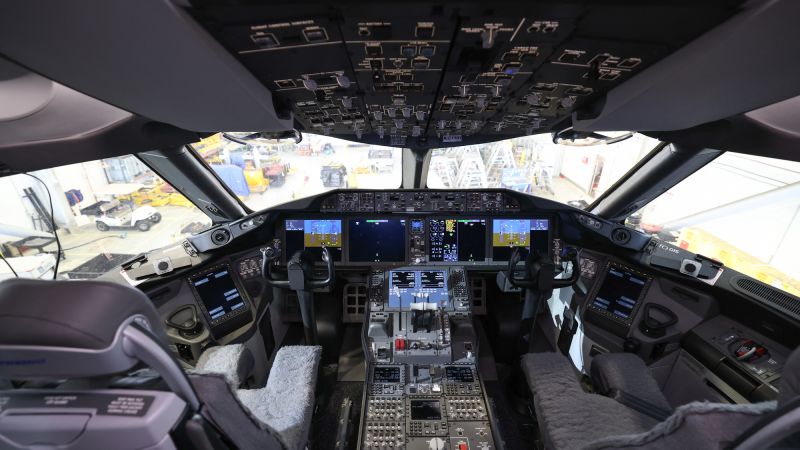
What an Airline Passenger Encounters When Attempting to Breach the Cockpit
What an airline passenger encounters when – Last month, a Frontier Airlines flight en route from Puerto Rico to Chicago became the scene of a dramatic security incident mid-flight. A 51-year-old passenger, Juan Gabriel Reyes, sparked chaos by pushing against the cockpit door and later trying to force his way into the pilot’s compartment. Court records reveal that Reyes began “shoving his shoulder aggressively on the pilot’s door,” escalating the situation when he attempted to choke an off-duty flight attendant before being subdued by crew members.
The disruption forced the aircraft to divert to Miami International Airport, where Reyes was arrested by the Miami-Dade Sheriff’s Office. He now faces two federal charges related to the incident. CNN contacted Reyes’ attorney for comment but received no response. This event coincided with a similar disturbance on a United Airlines flight from Chicago to Minneapolis, which also diverted to Madison, Wisconsin, after a passenger made “multiple attempts to try to breach the cockpit,” as captured in air traffic control audio analyzed by the network.
Rising Reports of Unruly Behavior
These recent incidents are part of a broader trend, with the Federal Aviation Administration (FAA) recording 687 reports of unruly passengers so far this year. As summer travel season intensifies, the frequency of such disruptions has raised concerns about passenger conduct. Despite these reports, no one has successfully stormed the cockpit of a U.S. commercial aircraft since the September 11, 2001 attacks. Yet experts argue that the current security measures may still have gaps.
Airline officials have implemented reinforced cockpit doors since 2003, following post-9/11 reforms. These doors, often made of bulletproof material and reinforced with composites, were designed to withstand attacks. However, the same doors must occasionally be opened for routine tasks, such as pilots using the lavatory, accessing the galley, or switching seats during long-haul flights. John Pistole, former Transportation Security Administration administrator, noted that while the doors are sturdy, “somebody is not going to knock down the door with their shoulder.” He suggested that even if a passenger manages to push against it, the door should remain intact.
Before the 9/11 attacks, the FAA required cockpit doors to be easily kickable in case crew members became trapped. This changed after the attacks, as airlines began locking doors with additional security features. Yet, the need to open them periodically remains a point of vulnerability. Flight attendants often block the aisle with drink carts or other equipment to create a physical barrier while the door is ajar. These measures, though effective, are not foolproof.
New Safety Measures and Their Delays
In 2023, the FAA introduced a rule mandating secondary barriers for newly manufactured planes. These barriers, designed to lock in place when the cockpit door is open, act as an extra layer of protection. Typically resembling a gate rather than a full door, they are positioned just ahead of the first row of passengers. This setup allows pilots to exit the cockpit for necessary tasks without leaving an unsecured passage between the cabin and the cockpit.
The regulation was intended to take effect in the summer of 2025, but the FAA has since delayed its implementation until August. In an email to CNN, FAA spokesperson Ian Gregor explained the decision, stating that the agency granted temporary relief to airlines to allow time for certification, installation, and crew training. He added that most exemptions will expire by July 31, 2026, with some exceptions potentially extended for aircraft with unique interior designs.
Aviation labor unions have criticized the delay, arguing that the secondary barriers are a straightforward enhancement to cockpit security. Capt. Dennis Tajer, a spokesperson for the Allied Pilots Association, which represents American Airlines’ pilots, emphasized the importance of the measure. “It’s just one of the most easy, clear security enhancements you can have on an airplane,” Tajer said. “A quarter of a century, and we are still fighting to get a second layer of security on that flight deck door. This is unacceptable, unpatriotic, and just downright disrespectful to aviation security.”
The debate over these barriers highlights a tension between practicality and safety. While the FAA maintains that the delay is temporary, some experts question whether the barriers are essential. Pistole, for instance, warned that the added costs could lead to higher ticket prices. “If there’s been a 0% success rate for a bad person to get to the cockpit in the U.S. post-9/11… is it necessary? Would it be nice? Would it be good?” he asked. “Well, sure. If the airlines do it, then presumably ticket prices will go up for the passengers.”
The incidents involving Juan Gabriel Reyes and the United Airlines passenger underscore the ongoing challenges of maintaining cockpit security. Though the doors are reinforced, the need to open them for operational reasons creates opportunities for disruption. The FAA’s decision to delay the implementation of secondary barriers has left airlines in a precarious position, balancing cost constraints with safety requirements. As the summer travel season peaks, the question remains: are current measures sufficient, or is more action needed to prevent future breaches?
Security Gaps and Passenger Risks
Experts stress that while cockpit doors have significantly improved since 9/11, they are not entirely impenetrable. Reyes’ aggressive actions demonstrate that even with reinforced doors, a determined passenger could attempt to force entry. The FAA’s temporary relief for airlines may ease the transition to new safety protocols, but it also raises concerns about how long the current vulnerabilities will persist.
Reyes’ case also highlights the potential for individual actions to escalate into security threats. His initial attempt to open an exit door, which is typically used for emergency situations, evolved into a direct confrontation with the cockpit. This sequence of events shows how quickly a passenger’s behavior can shift from routine to disruptive. The FAA’s response to these incidents includes both immediate measures, like restraining passengers, and long-term strategies, such as updating cockpit door designs.
With the FAA’s rules set to apply to new aircraft in 2025, the focus is on preventing future breaches rather than addressing past incidents. However, the delay has sparked discussions about whether the current system is robust enough. “The potential security vulnerability has been a concern for years,” one expert noted, adding that the secondary barriers represent a critical step forward. Yet, the absence of these barriers on existing planes means that older models remain at risk.
As airlines adapt to these changes, the balance between safety and operational efficiency becomes increasingly important. The FAA’s delay allows time for implementation, but it also extends the period during which pilots and crew must rely on existing procedures. For example, flight attendants continue to serve as human barriers, using carts and other items to block access to the cockpit. These efforts, though vital, may not fully mitigate the risks posed by unruly passengers during critical moments.
In the wake of Reyes’ incident, the FAA has been urged to expedite the adoption of secondary barriers. Airlines like Frontier and United have already experienced disruptions, and the FAA’s decision to delay the rule has intensified calls for action. While the agency cites the need for certification and training, critics argue that the delay could compromise safety. As the travel season intensifies, the question of how to protect the cockpit from potential threats is more urgent than ever.
