
Several states are bowing out of Trump’s ‘Great American State Fair’
Several States Withdraw from Trump’s ‘Great American State Fair’
Several states are bowing out of Trump – President Donald Trump has positioned the “Great American State Fair” as a patriotic celebration of the United States’ 250th anniversary, promising a showcase of state and territorial contributions across the National Mall. However, recent developments indicate that some states are distancing themselves from the event, raising questions about its political neutrality and financial viability. Officials from Oregon, Washington, and North Carolina have confirmed their decision to skip the fair, which is set to open on June 25 and run for approximately two weeks. Pennsylvania remains undecided, while others continue to weigh their participation.
Partisan Concerns and Budget Constraints Prompt Withdrawals
While the administration claims the fair will unite the nation, state officials cited financial and ideological reasons for their absence. A spokesperson for Oregon Governor Tina Kotek, a Democrat, highlighted that the event’s partisan leanings were a key factor. “The State of Oregon will not be participating in the Great American State Fair due to both the cost of participation and growing concerns that the event in Washington D.C. is shaping up to be a more partisan affair than originally presented,” said Luke Harkin, representing the governor’s office. Washington and North Carolina also expressed reservations, with representatives noting the financial burden of setting up exhibits and the event’s alignment with Trump’s political agenda.
Freedom 250 Ensures Full Representation Despite Declines
Despite the withdrawals, the Trump-aligned nonprofit Freedom 250 maintains that all 50 states and territories will be included in the fair. “What we can say is that every state’s story will be told in a way that’s authentic to its people, history, and culture,” a spokesperson told CNN, emphasizing the event’s commitment to showcasing diverse regional identities. The group noted that even if some states choose not to provide direct input, their contributions will still be represented through other entities, such as tourism boards or state-affiliated organizations. This approach aims to ensure the fair remains a national spectacle, though it has sparked debates about the extent of state autonomy in the planning process.
Controversies Linger Over Trump-Backed Events
The “Great American State Fair” is part of a broader array of 250th-anniversary events designed to highlight Trump’s vision for the United States. However, the administration has faced criticism for its political influence over these initiatives. Earlier this month, the fair had to cancel an opening concert after artists withdrew due to concerns about the event’s alignment with Trump’s agenda. Similarly, a recent Ultimate Fighting Championship (UFC) event at the White House drew backlash from Democrats, who argued the government should prioritize cost-cutting over high-profile entertainment. These controversies have fueled skepticism about whether the fair will truly reflect the country’s unity or serve as a platform for partisan messaging.
Pavilion Designs Reflect State Identities and Cultures
Freedom 250 has released renderings of state pavilions, offering a glimpse into the event’s thematic scope. The designs aim to celebrate each state’s unique heritage, with concepts ranging from interactive exhibits to historical recreations. For instance, South Carolina’s booth will feature a mini-golf course, while Texas plans a replica of the Alamo. Montana’s pavilion will include a fossil-digging station, and Arizona’s exhibit will immerse visitors in a reproduction of the iconic Antelope Canyon’s sandstone formations. In Michigan, attendees can experience a mechanical milking cow, and in Minnesota, a pond filled with miniature Common Loons will offer a fun twist on the state’s official bird. Wyoming’s contribution, meanwhile, will involve a virtual rodeo experience through augmented reality headsets.
Participation Varies, but Plans Remain in Place
While some states have stepped back, the fair’s organizers continue to finalize details for its inaugural run. A source familiar with the planning process revealed that Freedom 250 has already funded the construction of each booth and pavilion, leaving states responsible for decorating their tents. This arrangement has been met with mixed reactions, with some participants appreciating the support and others questioning whether it undermines state independence. For example, a representative from the group overseeing North Carolina’s 250th celebrations stated the state was invited but opted out due to the expenses involved.
Courtny Hinds, the general manager of the Wyoming State Fair and lead coordinator for the state’s pavilion, expressed optimism about the event’s potential. “Every single state has its own unique identity, and we’re excited to share those stories with our neighbors and the rest of the country,” she said. Hinds’ comments underscore the event’s goal of fostering camaraderie, even as some states remain critical of its political orientation. The fair’s organizers also announced additional attractions, including movie screenings, musical performances, and military flyovers, aiming to draw a wide audience and create a memorable experience for visitors.
Trump’s Vision for the Semiquincentennial Takes Shape
The fair, which will run from June 25 through July 10, is one of several initiatives designed to mark the United States’ semiquincentennial. Trump’s influence over these events has been notable, with the administration directing funding and themes to align with his ideological framework. While some aspects, like the “triumphal arch” and a scaled-down 110-foot Ferris wheel, have been finalized, the full scope of the event is still under development. The White House has been a central hub for these celebrations, with the UFC event this week highlighting the administration’s focus on high-profile, spectacle-driven programming.
Despite the challenges, the event’s organizers remain confident in its ability to bring the nation together. “This is a once-in-a-lifetime opportunity to celebrate the shared history and culture of all 50 states,” said a spokesperson. However, the success of the fair may depend on its ability to balance Trump’s political message with the diverse interests of participating states. As the countdown to the June 25 opening continues, the question remains: will this event symbolize national unity, or will it become another chapter in the controversies surrounding Trump’s leadership style?
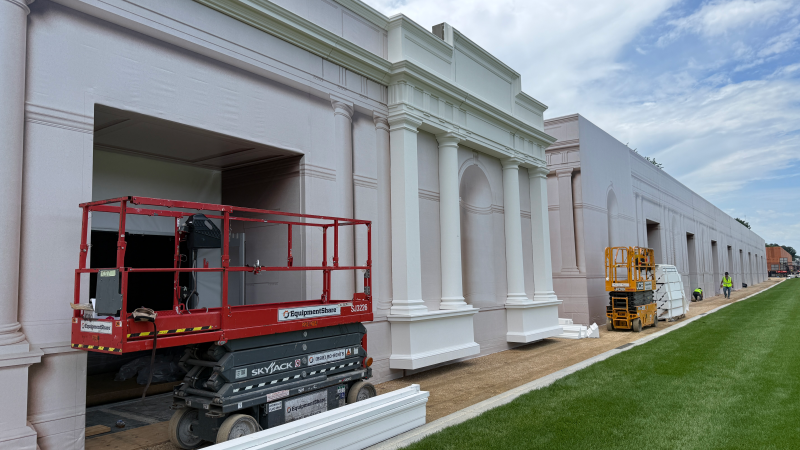
With the fair’s themes and attractions still being refined, the event promises to be a mix of celebration and political statement. The white tents, adorned with neo-classical columns, will house the state exhibits, while the 250-foot “triumphal arch” and Ferris wheel will serve as focal points for the National Mall. These elements, combined with the cultural showcases, aim to create a vibrant, interactive environment that honors the country’s past while looking toward the future. Yet, as the initial withdrawals indicate, the fair’s ability to achieve this vision will be tested by the political climate and the willingness of states to engage with its message.
As CNN continues to reach out to states for confirmation, the final tally of participants remains uncertain. The fair’s success may hinge on its capacity to address concerns about partisanship and cost while offering a compelling experience that resonates with a broad audience. Whether it becomes a unifying celebration or a polarizing event, the “Great American State Fair” is poised to be a significant part of America’s 250th-anniversary festivities, reflecting both the ambition and the challenges of Trump’s political brand in shaping the nation’s commemorative events.
