
Democrats ask Goldman Sachs CEO why he’s keeping lawyer who said she’d resign over ties to Epstein
Democrats Question Goldman Sachs Leadership Over Legal Adviser’s Ties to Epstein
Scrutiny Intensifies as Top Lawyer’s Resignation Sparks Concerns
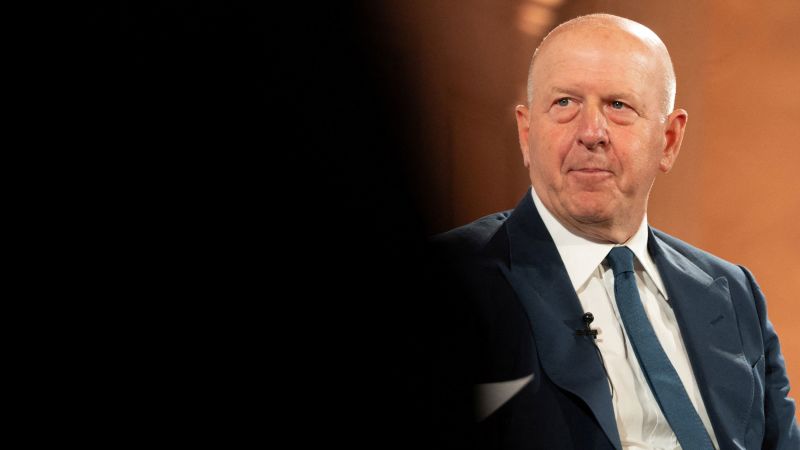
Democrats ask Goldman Sachs CEO why he – Democratic lawmakers have intensified their scrutiny of David Solomon, CEO of Goldman Sachs, following reports that he sought to retain Kathy Ruemmler as an adviser despite her public announcement of resignation over her connection to convicted sex offender Jeffrey Epstein. In a letter sent on Wednesday, Senators Elizabeth Warren and Representative Raja Krishnamoorthi raised doubts about Solomon’s “professional judgment and fitness” to lead one of Wall Street’s most influential financial institutions. The pair highlighted that Ruemmler, who had planned to leave the firm by late June, was still hired for a strategic role after her departure, suggesting potential conflicts of interest or oversight failures.
Ruemmler’s Resignation and Epstein Connection
Ruemmler, previously the firm’s chief legal officer, announced her resignation in February after a series of investigative reports, including those from CNN’s KFile team, exposed her extensive involvement with Epstein. The documents revealed she had maintained communication with Epstein for years prior to joining Goldman Sachs and continued advising him on legal and public affairs even after his 2008 conviction. The lawmakers argue that Solomon’s decision to keep her on board despite these revelations questions his leadership and the firm’s commitment to transparency.
The letter emphasized that Ruemmler’s role in Epstein’s affairs, including her guidance on media strategies and legal defenses, casts doubt on whether Goldman Sachs adequately vetted her suitability for the position. “The information uncovered in recent months raises serious questions about whether the firm failed to conduct proper due diligence or viewed her relationship with Epstein as appropriate when appointing her as top legal counsel,” the lawmakers wrote. They also requested an explanation of Ruemmler’s disclosures about Epstein before joining the firm and whether Goldman Sachs was aware of her advisory work with him.
Epstein’s Scandal and Ruemmler’s Involvement
The controversy surrounding Ruemmler deepened after the Justice Department released a collection of files that detailed her interactions with Epstein. These records show she accepted gifts from him, coordinated responses to media inquiries, and discussed litigation strategies related to his alleged crimes. One notable email from 2015, quoted in the letter, underscores her perspective: “Friendships go two ways – getting you some peace with respect to all of this legal shit is important to me.” This statement has fueled criticism, as it implies a personal relationship that may have influenced her professional actions.
Further evidence includes Ruemmler’s description of an article about Epstein as “a novella of rehashed crap,” a remark that has drawn attention to her dismissive attitude toward the allegations. Despite this, she clarified in December that she did not consider the accusations themselves to be baseless, stating, “I have deep sympathy for anyone victimized by Epstein, and as I have said many times, I regret ever knowing him.” The discrepancy between her public statements and private interactions has become a focal point for Democratic investigators.
Request for Transparency and Regulatory Oversight
Warren, the ranking member of the Senate Banking Committee, and Krishnamoorthi have demanded comprehensive answers from Goldman Sachs by June 26. Their inquiries include details about Ruemmler’s transition to an advisory role, her compensation, and whether regulators were informed of her ties to Epstein. The lawmakers also want to know what specific information Ruemmler shared about Epstein before becoming part of the firm and whether the bank was aware of her ongoing advisory work with him.
While the letter does not impose a legal obligation on Goldman Sachs to respond, it underscores the growing pressure on the firm to address the controversy. Reports from the Financial Times and Bloomberg on Friday indicated that Solomon had personally asked Ruemmler to stay on as an advisor, though CNN has not yet confirmed these claims. The decision to retain her has been seen as a strategic move to leverage her legal expertise, even as questions about her involvement with Epstein persist.
Epstein’s Influence and Ruemmler’s Role in His Network
Ruemmler’s connection to Epstein dates back to her time as a White House counsel under President Barack Obama. After leaving the administration in 2014, she maintained regular contact with Epstein, who was already a prominent figure in financial circles. These interactions continued until she joined Goldman Sachs, with the newly released files revealing that she advised him on legal and reputational matters. Her role in coordinating responses to journalists investigating Epstein’s sexual abuse of underage girls has added to the scrutiny of her actions.
Among the documents, there are emails showing Ruemmler discussed legal strategies to mitigate Epstein’s public image, even as new allegations emerged. She also expressed gratitude for expensive gifts from Epstein, a detail that has raised eyebrows. One file indicates she considered a trip to his private island, a gesture that may have symbolized her close relationship with him. The records suggest that her advisory role was not limited to her time at Goldman Sachs but extended to her work in the Obama administration and beyond.
Reactions and Ongoing Investigations
Goldman Sachs and Ruemmler have both declined to comment on the latest developments, leaving the firm’s stance on the matter unclear. The letter from Warren and Krishnamoorthi is part of a broader effort to examine the bank’s handling of the Epstein scandal, which has already impacted its reputation. The lawmakers are keen to determine if the firm’s leadership prioritized internal relationships over ethical considerations, a concern that could resonate with the public and investors alike.
As the debate continues, the focus remains on whether Ruemmler’s ties to Epstein compromised her ability to serve as a trusted legal figure. Her resignation was initially seen as a step toward accountability, but her continued association with the firm has sparked further questions. The situation highlights the complex interplay between personal connections and professional responsibility in the financial sector, with Democrats urging Goldman Sachs to provide clear answers about its oversight processes.
“If I had seen or heard anything to suggest that Epstein was harming women or girls, I would have taken action to stop it,” Ruemmler stated in a guest essay for The New York Times. This quote, combined with the emails and messages detailing her relationship with Epstein, has become central to the ongoing investigation. The lawmakers are now pushing for a deeper understanding of how the firm managed these ties, particularly given Ruemmler’s position of influence.
The scrutiny is not limited to Ruemmler’s actions. It also questions the broader culture at Goldman Sachs, where high-profile figures have historically been associated with Epstein’s network. The Financial Times and Bloomberg reports have added another layer to the narrative, suggesting that Solomon’s decision to keep Ruemmler on board reflects a calculated approach to maintaining the firm’s legal expertise, even amid controversy. As the deadline for responses approaches, the spotlight on Goldman Sachs is expected to intensify, with implications for its leadership and public trust.
With the release of additional records, the case against Ruemmler and her role in Epstein’s affairs continues to evolve. The documents, which include her messages with Epstein and her coordination of responses to media, paint a picture of a legal adviser deeply embedded in his network. The Democratic lawmakers’ letter serves as a formal challenge to the firm’s leadership, urging them to explain how such ties were overlooked or tolerated in the first place. This development underscores the ongoing efforts to hold financial institutions accountable for their ties to high-profile scandals, even as the details of Ruemmler’s involvement remain under examination.
