
Iran’s ‘accidental’ president has survived the war. Peace may be a tougher challenge
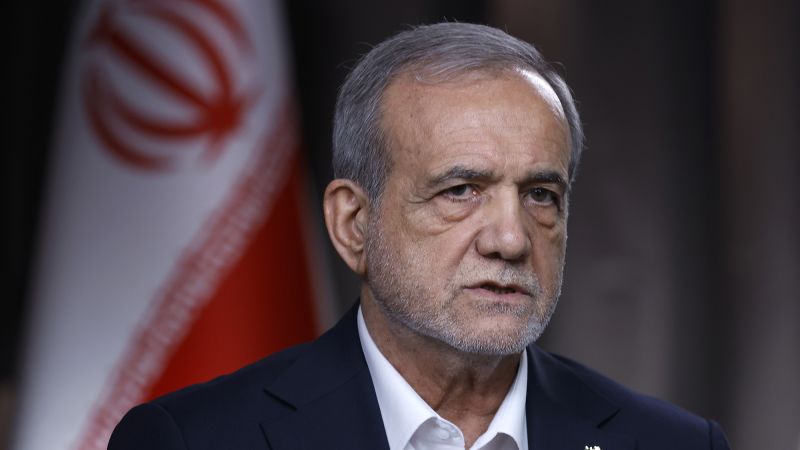
Iran’s ‘Accidental’ President Has Survived the War. Peace May Be a Tougher Challenge
Iran s accidental president has survived – In the heat of June 2026, as Iranian officials grappled with the nation’s worsening water shortage, President Masoud Pezeshkian made a striking statement that sparked debate. During a meeting in Tehran, he urged his counterparts to remove their blazers to cope with the oppressive temperatures rather than activating the air conditioning. Clad in a short-sleeved polo shirt, the move was intended to showcase his dedication to energy conservation amid the ongoing conflict. However, it quickly became a flashpoint for criticism. Hardline factions within the government accused him of undermining traditional values, while activists questioned his adherence to Iran’s strict dress codes, arguing that such a choice would not be allowed for the average citizen.
The incident highlighted the precarious position of Pezeshkian, who has emerged as an unexpected figurehead in a country engulfed by war and political turmoil. Just days after the controversy, a report from London-based opposition outlet Iran International claimed he had submitted his resignation. The claim sent shockwaves through his administration, prompting swift denial from his team. Officials flooded social media with statements dismissing the report as “wishful thinking,” a pattern that has repeated itself multiple times. Despite these efforts, the idea of his departure lingered, reflecting the growing uncertainty surrounding his leadership.
While Pezeshkian’s survival during the war has been notable, the path ahead presents a different set of challenges. As the United States and Israel’s conflict escalates, Iran’s political landscape is shifting, and the president now faces the daunting task of steering the nation toward peace. The interim ceasefire agreement between the U.S. and Iran, which appears increasingly probable, could bring a temporary reprieve but also complicate his domestic agenda. “Pezeshkian is going to be dealing with a lot of post-war issues, but he is likely to come out of this with more credibility within the Iranian political system, having served as a wartime president,” said Ali Ahmadi, a fellow at the Geneva Centre for Security Policy and Middle East Institute Switzerland.
For many, the president’s role has been one of endurance rather than dominance. He has watched as Israel carried out targeted assassinations of his allies and overseen a brutal suppression of dissenting protests. Yet, despite persistent rumors of his resignation, he remains at the helm, navigating a complex web of power struggles and external pressures. The Iranian government, under siege from both internal and external forces, has effectively reduced the presidency to a secondary position, with the supreme leader maintaining ultimate authority. Pezeshkian, however, has managed to carve out a niche as a leader who balances pragmatism with moderation, even in the face of relentless criticism.
The president’s journey began with an accidental ascent to power. Following the death of his predecessor, Ebrahim Raisi, in a helicopter crash in 2024, Pezeshkian was thrust into the role of interim leader. His nomination was a calculated move to prevent the more extreme Saeed Jalili from gaining control. Voters, seeking stability in a time of crisis, opted for the relatively low-profile candidate, recognizing him as a figure who could navigate the nation’s challenges without escalating tensions further. This election, held under the shadow of a supreme leader who dictates critical decisions, revealed a deepening divide between the grassroots and the elite factions of Iran’s political hierarchy.
As the war continues, Pezeshkian’s leadership has been tested in ways few could have anticipated. He has faced accusations from ultra-conservative hardliners that he is aligning too closely with the United States, a claim that resonates in a country where ideological purity is often prioritized. Nonetheless, his measured approach has earned him a modest but significant base of public support. Analysts suggest that his appeal lies in his ability to project humility and relatability, contrasting sharply with the rigid, often authoritarian style of his predecessors. This persona, however, has also made him a target for those who view him as a symbol of compromise.
“The war and the domestic political dynamics it has unleashed have further relegated his status as, at least formally, the Islamic Republic’s second-highest official,” said Mohammad Ali Shabani, editor of Amwaj.media, a London-based news outlet. “Pezeshkian is now increasingly settling into a role as a manager of mainly domestic affairs.”
While his political influence may have diminished, his ability to maintain power underscores the fragility of Iran’s leadership structure. The president’s brand is defined by a blend of cautious diplomacy and quiet resilience, as he attempts to fulfill his campaign promises in a nation under siege. His actions, though modest in scope, have provided a semblance of normalcy to a population enduring relentless hardship. For some Iranians, Pezeshkian’s leadership represents a rare moment of hope, offering a moderate voice in a landscape dominated by hardliners.
Yet, the path to peace is fraught with obstacles. As the interim ceasefire with the U.S. inches closer, the president must contend with a new set of domestic issues. The war has created an environment where power consolidation is a priority, and conservative forces are now pushing to strengthen their grip on the government. This shift could lead to increased resistance against Pezeshkian’s efforts to promote reform and economic recovery. “Whether the presidency as an institution will remain constrained compared to his predecessors remains an open question,” Shabani added, emphasizing the evolving nature of Iran’s political framework.
Despite these challenges, Pezeshkian’s survival during the war has solidified his position as a survivor in a turbulent era. His leadership, though not without controversy, has demonstrated adaptability in the face of adversity. As the conflict shows signs of easing, the focus will shift from wartime survival to the delicate task of rebuilding trust and fostering unity. The success of his moderate agenda will depend not only on his ability to manage domestic affairs but also on his capacity to navigate the complex alliances and rivalries within the Iranian political establishment.
In the end, Pezeshkian’s presidency is a testament to the unpredictability of leadership in times of crisis. What began as an unexpected appointment has evolved into a critical chapter in Iran’s history, one that balances survival with the promise of change. As the country stands on the brink of a new phase, the question remains: can he translate his wartime resilience into a lasting legacy of peace and progress?
