
A man was jailed for murder. 15 years after his death, he will get a retrial
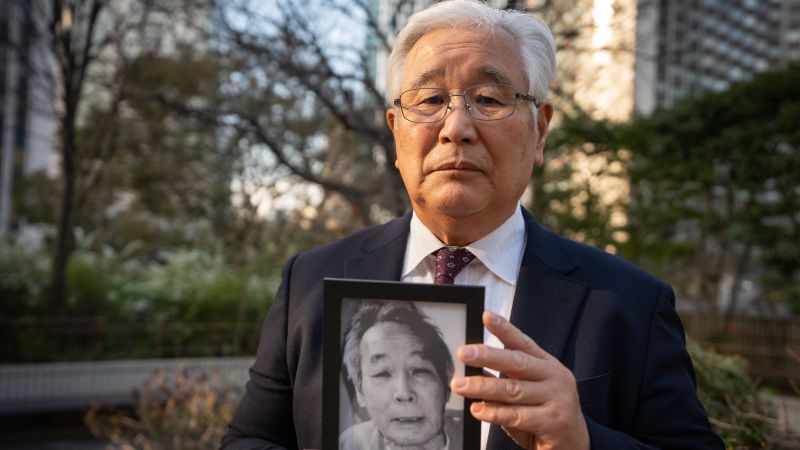
A Man Jailed for Murder Will Face Posthumous Retrial After 15 Years
A man was jailed for murder 15 – In a surprising twist, Japan’s legal system is set to revisit the case of Hiromu Sakahara, a man who died in 2011 while serving a life sentence for a murder committed in 1984. The decision to grant a retrial, announced recently, brings a bittersweet sense of justice to his family, who have spent decades fighting to prove his innocence. Though no one is celebrating his freedom in the courtroom, his relatives gather near his grave to share the news that his son, Koji Sakahara, had long hoped to hear. The retrial, a rare posthumous proceeding, marks a pivotal moment in Japan’s criminal justice process and highlights the challenges faced by those seeking redress after prolonged detention.
The Legacy of a Forged Confession
Sakahara’s conviction hinged on a confession he claimed was coerced during interrogation. The crime occurred in the small town of Hino, an hour’s drive east of Kyoto, where he was accused of murdering a store manager in a suspected robbery. The body was found a month later in a field, and police linked Sakahara to the case due to his frequent visits to the liquor store. However, his wife’s testimony initially cleared him, as she proved he was elsewhere on the night of the incident. Despite this, three years later, Sakahara was re-questioned and eventually confessed, reportedly after being beaten and threatened by officers. His son, Koji, recalls that the pressure was directed at his father and others in the room, leading to a breakdown in his resolve.
“His father was forced to admit guilt after enduring physical and emotional strain during the interrogation. I saw the fear in his eyes, but he never wavered until the threats escalated,” Koji said.
The retrial now aims to re-examine the circumstances of his confession and the evidence that led to his conviction. This case has become emblematic of Japan’s “hostage justice” system, where suspects can be held without legal counsel for extended periods. With a conviction rate exceeding 99%, human rights organizations argue that innocent individuals are often railroaded into prison. Sakahara’s story, however, offers a rare opportunity to challenge that system and provide a second chance to those who have been wrongfully convicted.
A Family’s Unyielding Struggle
For 24 years, Sakahara’s family endured the emotional toll of his incarceration. They visited him regularly, urging him to persevere as they worked to overturn his conviction. Koji, now 64, described the struggle as a constant battle against the odds. “We told him to keep fighting, even when the odds seemed stacked against us,” he recalled. Yet, the journey was arduous, with prosecutors repeatedly blocking retrial requests. Sakahara’s death in 2011 from pneumonia left his family devastated, but it also intensified their resolve. His sister, according to Koji, comforted him in his final moments, saying, “You don’t have to fight anymore. It’s okay to let go.”
“People still see us as a family of a criminal, even after all these years. My mother received calls where strangers called her ‘murderer’ just to harass her,” Koji added.
The family’s persistence paid off when new evidence emerged. A set of negative film, uncovered in court records, suggested that police might have guided Sakahara to the crime scene. This discovery, combined with his claims of forced confession, prompted the retrial. The case has inspired a legislative proposal that would reduce the number of appeals prosecutors can make against retrial decisions, aiming to expedite the justice process. While supporters argue this change is necessary to prevent endless delays, critics within the Justice Department warn that it could weaken the certainty of convictions.
Promoting Prompt Justice
Prime Minister Sanae Takaichi, a right-wing leader who admires British Prime Minister Margaret Thatcher, has endorsed the new bill as a crucial step toward reform. In a recent parliamentary address, she emphasized the importance of swift justice, stating, “It is unacceptable for innocent people to be punished. If a final judgment convicts an innocent individual, they must be exonerated without unnecessary delay.” Her backing signals a growing push to address systemic issues that have plagued Japan’s legal process for decades.
The retrial’s significance extends beyond Sakahara’s personal story. It underscores the broader debate over how Japan balances due process with the need for efficiency. While the country prides itself on thoroughness, the average time between conviction and retrial has been criticized as excessively long. Sakahara’s case, now over 40 years old, has become a rallying point for advocates who believe the system must evolve to protect the rights of the accused. The posthumous hearing also raises questions about the fairness of judicial processes that allow convictions to stand for years without scrutiny.
Sakahara’s death in 2011 did not extinguish his family’s hope. Instead, it galvanized their efforts, turning their personal loss into a campaign for systemic change. The retrial, which will examine whether Sakahara’s confession was voluntary and whether police manipulated evidence, represents a rare victory for those who believe in the power of perseverance. If successful, it could set a precedent for similar cases, proving that even after years of injustice, the truth can still emerge.
As the retrial prepares to begin, the Sakahara family reflects on their journey. Koji, who has spent nearly half his life advocating for his father’s innocence, says the emotional weight of the case has been immense. “We’ve endured so much, but this retrial gives us a chance to rewrite the story of his life,” he said. For Japan, this case may serve as a catalyst for rethinking how justice is delivered, ensuring that no one is left to suffer in silence for too long.
Sakahara is believed to be only the second person in Japan’s history to receive a posthumous retrial, making his case a landmark event. The legal battle, which spanned decades, has exposed flaws in the country’s judicial system and sparked discussions about the role of evidence, coercion, and the rights of suspects. While the retrial may not bring back his life, it offers a chance to honor his legacy and ensure that his story is not forgotten. For Koji and his family, the wait has been worth it, even as the pain of loss remains deeply etched in memory.
