Viktor Orbán re-elected as Fidesz party leader in Hungary despite election loss

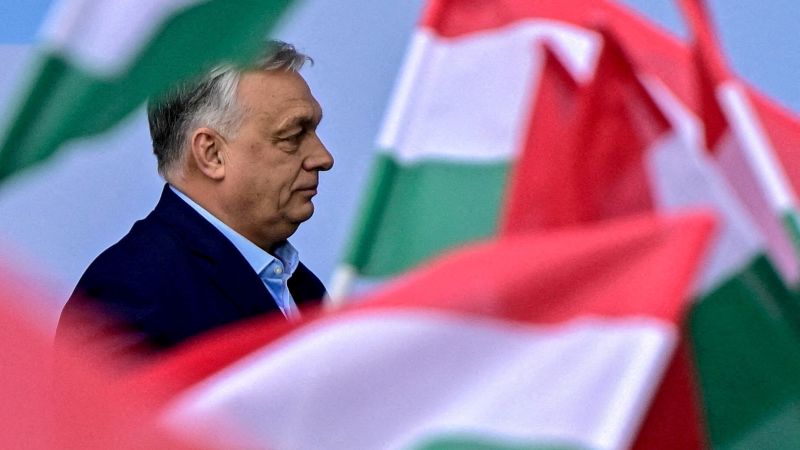
Viktor Orbán Re-Elected as Fidesz Leader Despite Election Loss
Orbán’s Leadership Continues Amid Political Shift
Viktor Orbán re elected as Fidesz – Despite losing the April 12 election to the center-right Tisza party, Viktor Orbán has been re-elected as leader of Fidesz, the right-wing party he founded and led for over a decade. This decision, made at Fidesz’s party congress, reflects the leader’s enduring influence within his party, even as his coalition lost its parliamentary majority. The re-election underscores Orbán’s resilience and the party’s internal unity, positioning Fidesz for a strategic rebirth in the face of electoral challenges. As Hungary’s political landscape evolves, Orbán’s return to the helm signals a determination to redefine the party’s role in the nation’s governance.
A Defiant Statement from the Fidesz Congress
At the party congress, 729 out of 737 delegates voted to re-elect Orbán, a result that highlights the lack of internal dissent. The lack of alternative candidates allowed the process to proceed smoothly, reinforcing Fidesz’s cohesive structure. State news agency MTI highlighted the endorsement, framing it as a vote of confidence in Orbán’s leadership. While the party’s loss in the April election marked a turning point, the congress provided a platform for Orbán to outline a renewed vision for Fidesz, emphasizing its potential as a powerful opposition force in the coming years.
Orbán’s re-election as Fidesz leader is a testament to his ability to retain loyalty among party members. His tenure has been marked by a blend of nationalist rhetoric and policy-driven governance, which has both bolstered his popularity and drawn criticism. The decision to reaffirm his leadership came amid rising concerns about Fidesz’s ability to adapt to changing public sentiment. Nevertheless, Orbán’s speech at the congress demonstrated his unwavering commitment to his political philosophy, setting the tone for Fidesz’s next phase of development.
Electoral Setback and Fidesz’s Strategic Adjustment
The April 12 election results exposed a significant shift in voter support, with Tisza securing a two-thirds parliamentary majority. This majority grants the new party the power to undo many of Orbán’s constitutional reforms, which have long defined Fidesz’s governance model. While Orbán’s re-election at the party congress signals continuity, it also hints at a calculated effort to reposition Fidesz for future electoral success. Analysts suggest that Orbán is leveraging his leadership to rebuild the party’s credibility and refocus its agenda, even as it transitions from a ruling coalition to a key opposition entity.
Public opinion polls following the election revealed a sharp decline in support for Fidesz, with its backing dropping to 17% in May. This contrasted sharply with the 55% support for Tisza, which has become the dominant force in Hungarian politics. Orbán, however, framed the loss as an opportunity to refine his strategies. His re-election as Fidesz leader was accompanied by a call to action for party members to rally behind a new vision of political reform. The message was clear: while Fidesz may no longer hold power, its ideological foundation remains intact under Orbán’s guidance.
A Path Forward for Fidesz and Orbán’s Vision
Orbán’s re-election as Fidesz leader marks a pivotal moment in the party’s evolution. His address to the congress emphasized a pragmatic yet determined approach, acknowledging the need for change while maintaining his core principles. The leader’s insistence on a “functional opposition force” suggests a strategic pivot toward redefining Fidesz’s role in the political system. As the party seeks to regain public favor, Orbán’s leadership will be central to navigating this transition. His vision for Fidesz includes structural reforms and a renewed emphasis on voter engagement, positioning the party to challenge the Tisza majority in future elections.
With the Tisza party now in control of Hungary’s parliament, the political battle has shifted to the next phase. Orbán’s re-election as Fidesz leader ensures that his influence will persist, even as the party faces the task of rebuilding. His administration’s long-standing emphasis on centralized authority and nationalist policies remains a cornerstone of Fidesz’s identity. As the new majority begins to implement its agenda, Orbán’s ability to unify the party and inspire its members will be critical to its survival. The coming months will test Fidesz’s capacity to adapt to a new political reality while staying true to its founding ideals.