Brazil hopes to end a 24-year wait for World Cup glory. The pressure has never been greater

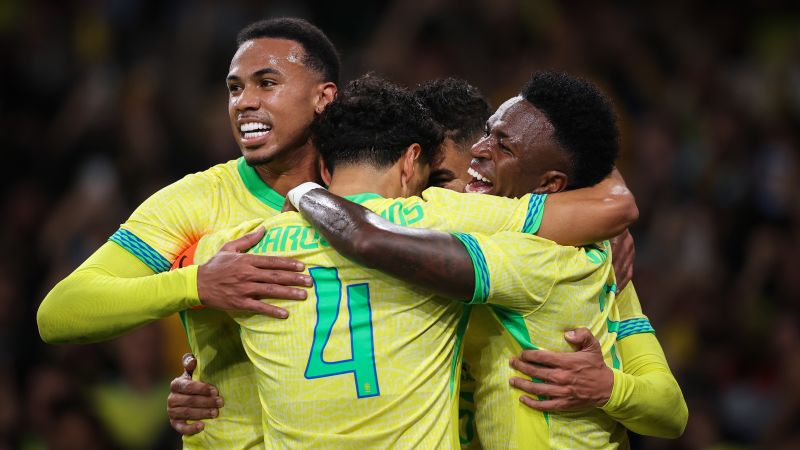
Brazil Hopes to End 24-Year World Cup Drought Amid Rising Doubts
Brazil hopes to end a 24 year – After nearly two-and-a-half decades of unfulfilled ambition, Brazil is once again stepping into the global spotlight with the goal of reclaiming the World Cup title. The nation, which has secured five triumphs in the tournament’s history—the most of any country—faces a critical moment as it seeks to end its longest championship drought since the 1970s. The Seleção’s last victory came in 2002, and since then, a steady stream of early exits and near-misses has left fans yearning for a return to glory. Yet, with the World Cup approaching, the pressure to deliver has never felt heavier.
A Legacy of Excellence and a Stretch of Disappointment
Brazil’s soccer heritage is woven with stories of dominance, but recent years have cast a shadow over that legacy. From the 2006 quarterfinals, where France ended their campaign, to the 2010 loss to the Netherlands, the team has struggled to maintain its former brilliance. The 2014 semifinal against Germany remains a defining moment of despair, as a 7-1 defeat in Belo Horizonte’s Mineirão stadium left the nation reeling. Fans still remember the anguish of that match, which became known as the “Mineiraço,” a term that has since entered the lexicon of sports history. Even more recently, Brazil’s 2022 quarterfinal exit further deepened the sense of urgency.
For many young Brazilians, the 1994 World Cup victory by Romário remains their only memory of a national triumph. Older generations, however, recall the golden era of 1970, when the legendary team led by Pelé and supported by players like Garrincha captured the hearts of the world. These stories, though, now feel like distant echoes as the current squad grapples with the weight of expectation. The 2025 qualifiers, which saw Brazil finish fifth in CONMEBOL with just 28 points from 18 games, have only intensified the pressure to perform.
Scandals and Setbacks: A Nation in Turmoil
The path to the 2026 World Cup has been marred by controversy. Just over a year before the tournament, a Rio de Janeiro court removed former Brazilian Football Confederation president Ednaldo Rodrigues for allegedly manipulating documents to secure re-election. This ruling coincided with the appointment of Carlo Ancelotti as head coach, as Brazil entered its most dismal qualifying campaign in history. The team’s performance in the qualifiers was a source of national embarrassment, with a 4-1 loss to Argentina in Buenos Aires—without the presence of Lionel Messi—marking a low point.
Captain Thiago Silva (Marquinhos) took the blame publicly, calling the defeat “embarrassing” to Brazilian television and vowing it would not happen again. His apology resonated with fans, who had grown weary of repeated disappointments. Yet, the 2025 campaign was not just a failure on the field; it also exposed systemic issues within the federation. The loss to Argentina, which had not been so severe since 1964, ultimately cost Dorival Júnior his coaching position and paved the way for Ancelotti’s arrival. Despite the tactical adjustments, the team has yet to find its footing, leaving questions about its readiness for the World Cup.
Statistical Woes and the Weight of History
A recent survey by Datafolha, Brazil’s leading polling institute, revealed a stark lack of confidence in the national team. Only 29% of respondents believed Brazil could lift the trophy, the lowest level since the organization began tracking such data in 1994. A further 46% anticipated the squad would fail to advance beyond the quarterfinals, where it has been eliminated in the past two tournaments. This pessimism is not unfounded; the Seleção’s inability to overcome European opposition has become a recurring theme.
Since 2002, Brazil has faced setbacks against teams like France, the Netherlands, Germany, Belgium, and Croatia. The 2014 semifinal, where Germany’s 7-1 victory shattered hopes, is often cited as the most painful chapter. Even the 1950 World Cup, when Uruguay defeated Brazil in the final match hosted on home soil, is remembered as a turning point. “7-1 has entered the language,” said South American soccer expert Tim Vickery in a
quote
, “You just refer to any massive humiliating defeat, in any walk of life, as a 7-1. … That’s a stain on the carpet that’s not coming out anytime soon. The only way they can get over it is by winning the World Cup.”
A New Generation and a New Challenge
As the 2026 World Cup nears, a new generation of players is stepping up to shoulder the nation’s hopes. Vinícius Júnior, the young forward and potential face of Brazil’s revival, is expected to lead the charge. Yet, even with talent, the team must overcome a legacy of heartbreak. The 2014 defeat remains a haunting memory for many, symbolizing the gap between Brazil’s potential and its performance on the biggest stage.
Historically, the Seleção has thrived in World Cup tournaments, but its recent struggles highlight a shift in dynamics. European teams have dominated the knockout stages, delivering crushing defeats to Brazil in the last five editions. This trend has led to a growing sentiment among fans that the nation’s success is no longer guaranteed. While some still believe in a resurgence, others argue that the team must first address its internal challenges before it can reclaim its status as global soccer’s powerhouse.
The road to redemption begins with a critical hurdle: beating a European powerhouse in the knockout rounds. Since 2002, Brazil has not defeated a European team in the final stages, a statistic that underscores the difficulty of the task. The 2014 semifinal, where Germany’s dominance was unmatched, is often viewed as the most humiliating chapter. However, the 2026 tournament presents a fresh opportunity, with the hope that a combination of talent, strategy, and resilience can finally bridge the gap.
As the world watches Brazil’s quest, the stakes are higher than ever. The nation’s soccer identity is tied to its victories, and the 24-year wait has created a unique blend of nostalgia and anticipation. Whether the team can rise to the occasion or continue its slide into uncertainty remains to be seen. But for fans who have waited through decades of heartbreak, the dream of glory is still alive, even if the odds have never been steeper.
A Cultural Battle Beyond the Pitch
Brazil’s World Cup hopes extend beyond the field, influencing national pride and cultural identity. The team’s performance is not just a sporting event but a reflection of the country’s aspirations. With the Seleção’s recent struggles, the narrative has shifted from unshakable confidence to cautious optimism. The Datafolha survey, which highlights the population’s skepticism, underscores a broader societal conversation about the nation’s sporting achievements and its ability to sustain them.
Despite these challenges, the undercurrents of passion for Brazilian soccer remain strong. The stories of past legends like Ronaldo Nazário, who led the team to victory in 2002, and Pelé, who captured the world at 17 in 1958, continue to inspire. For many, these tales serve as reminders of what is possible, even as the current team faces an uphill battle. The 2026 tournament is not just a chance to win a trophy; it is a test of whether Brazil can reclaim its place as a global soccer force.
As the World Cup approaches, the focus will be on whether the Seleção can turn its fortunes around. With a new generation of stars and a fresh strategy under Ancelotti, there is hope. Yet, the shadow of past failures looms large. The pressure to end the