Oil prices fall on US-Iran agreement

Daftar Isi
Oil Prices Fall on US-Iran Agreement
Oil prices fall on US Iran – Global oil prices saw a notable decline on Sunday following the announcement of a breakthrough agreement between the United States and Iran. President Donald Trump confirmed that a deal had been finalized, signaling the end of the U.S. naval blockade on Iran. This development led to immediate market reactions, with Brent crude prices plummeting by 3.9% to approximately $84 per barrel, while U.S. crude oil dropped 4.8% to around $81 per barrel. If these levels hold, it would mark the lowest price for crude since March 4, a period just days into the ongoing conflict.
Deal Framework and Market Reactions
Markets had already anticipated the possibility of a framework being reached over the weekend, which contributed to oil prices slipping below $90 per barrel on Friday for the first time since the war began. This weekend’s agreement has eased tensions, but analysts caution that the path to stabilizing oil markets remains uncertain. The price drop reflects investor optimism, yet it is clear that the market has a long way to go before returning to pre-war levels. Prior to the conflict, oil prices had hovered around $70 per barrel, a level that many believe will be difficult to reclaim unless production and trade resume at full capacity.
Strait of Hormuz and Production Challenges
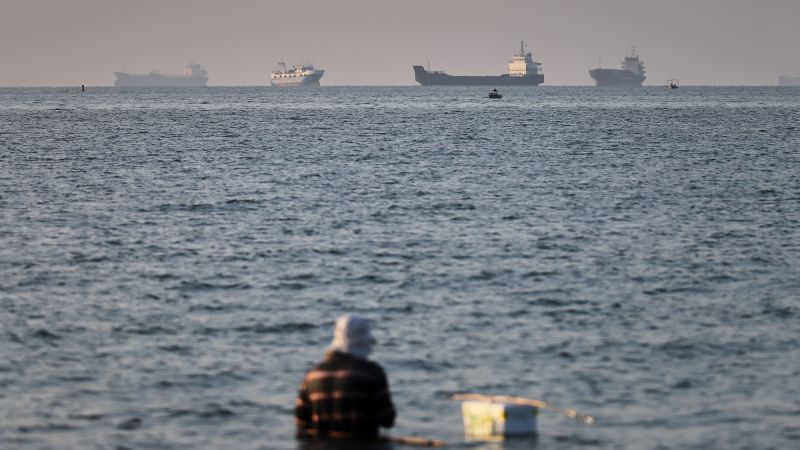
The agreement includes provisions to lift the U.S. naval blockade on Iran’s ports, a move that could restore confidence in the country’s ability to export oil. Additionally, Trump pledged to remove mines from the Strait of Hormuz, a vital waterway for global oil supply. However, experts emphasize that the reopening of this critical route will take time. “It’s great if it happens, but I’ll believe it when I see actual ships making the free and unhindered passage through the strait,” said Joe McMonigle, president of the Global Center for Energy Analysis and a resident of Saudi Arabia.
During the conflict, Middle Eastern oil wells were largely shut down, and the process of restarting production could take weeks. Some analysts warn that the region’s facilities may not reach their pre-war output levels, leaving a gap in supply. The Strait of Hormuz, while cleared of mines, still needs regular ship traffic to confirm its safety. Until then, traders remain cautious. “The market will need visible evidence of sustained flow before fully trusting the agreement,” added McMonigle.
Expert Predictions and Price Volatility
Oil analysts have expressed confidence that prices will remain elevated for the foreseeable future. While the initial drop is welcome, they expect a rebound as demand increases and emergency stockpiles are replenished. Bob McNally, president of Rapidan Energy, warned that prices could surge again if the disruption lingers. “I’m very concerned we could see oil prices skyrocket later this summer,” he said on ABC’s *This Week*, noting that crude oil might rise into the mid- to high-$100 range and gasoline pump prices could return to record highs of around $5 per gallon.
The U.S. Strategic Petroleum Reserve, a key buffer against supply shocks, has also been a focal point. McNally highlighted that if these reserves are depleted, the risk of price volatility will intensify. “Even a temporary disruption can have lasting effects if the market lacks liquidity,” he explained.
Political and Economic Implications
Iran’s deputy foreign minister for legal and international affairs confirmed the memorandum of agreement was finalized with the U.S. on Sunday, with a signing ceremony scheduled in Switzerland on Friday. The deal is seen as a major step toward de-escalating tensions, though its long-term impact on oil markets depends on consistent implementation. Trump’s social media post late Sunday afternoon underscored the agreement’s completion, stating, “The toll free opening of the Strait of Hormuz has been authorized.”
According to a member of Iran’s parliament, ships previously paid an average of $2 million for passage through the strait, a cost that had risen sharply due to the blockade. With the new agreement, this financial burden is expected to ease. However, the restoration of normal trade will require time, as the region’s energy infrastructure continues to recover from wartime damage.
Gas Prices and Broader Market Trends
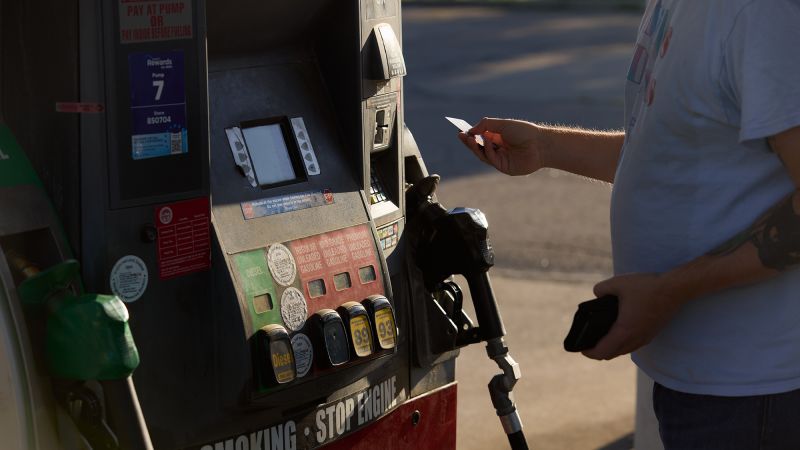
The average price of gas in the United States settled at $4.07 per gallon on Sunday, according to AAA. While this represents a three-week decline, it is still 36.6% higher than pre-war levels. The drop in oil prices has directly influenced gasoline costs, but the broader economic picture shows mixed signals. Stock futures, on the other hand, climbed on Sunday, with the Dow Jones Industrial Average gaining 0.6%, and both the S&P 500 and Nasdaq futures rising by more than 0.7%.
Investors are now weighing the agreement’s implications across markets. While the oil sector has seen relief, other sectors such as technology and manufacturing remain buoyant. This shift highlights the interconnected nature of global financial markets, where oil prices often act as a barometer for economic stability.
Despite the progress, challenges persist. The agreement’s success will hinge on Iran’s willingness to comply with its terms and the U.S.’s commitment to lifting sanctions. “It’s not just about the Strait of Hormuz,” said one analyst, “but also about restoring trust in the region’s energy infrastructure.” As the situation evolves, market participants will closely monitor both supply chain recovery and geopolitical developments, with oil prices serving as a key indicator of the path forward.
“I’m very concerned we could see oil prices skyrocket later this summer with crude oil prices heading well into the mid- to high-$100 range, and gasoline pump prices heading back to all-time highs around $5 a gallon,” said Bob McNally, president of Rapidan Energy.
“It’s great if it happens but I’ll believe it when I see actual ships making the free and unhindered passage through the strait,” said Joe McMonigle, president of think tank Global Center for Energy Analysis and who lives in Saudi Arabia.