A psychiatric defense may be Luigi Mangione’s best argument in state murder trial, experts say. Here’s why

Luigi Mangione’s Psychiatric Defense: A State Murder Trial Strategy
The Case for a Psychiatric Defense
A psychiatric defense may be Luigi – Luigi Mangione’s mental health could be the cornerstone of his defense in the state murder trial, experts suggest. Just days after his arrest in December 2024 for the killing of UnitedHealthcare CEO Brian Thompson, legal analysts have noted that his attorneys might rely on a psychiatric argument to shift the narrative. Karen Friedman Agnifilo, a former prosecutor and CNN legal analyst, emphasized that the case against Mangione is compelling, and his team might need a mental health defense to convince jurors of his diminished capacity. The strategy could frame his actions as a result of emotional turmoil rather than premeditated intent.
“Something must have shifted significantly,” Agnifilo explained, highlighting Mangione’s abrupt change in behavior. “He was a valedictorian, a high-achieving individual, and part of a respected family. That’s not the kind of person who suddenly decides to commit murder without a clear reason.”
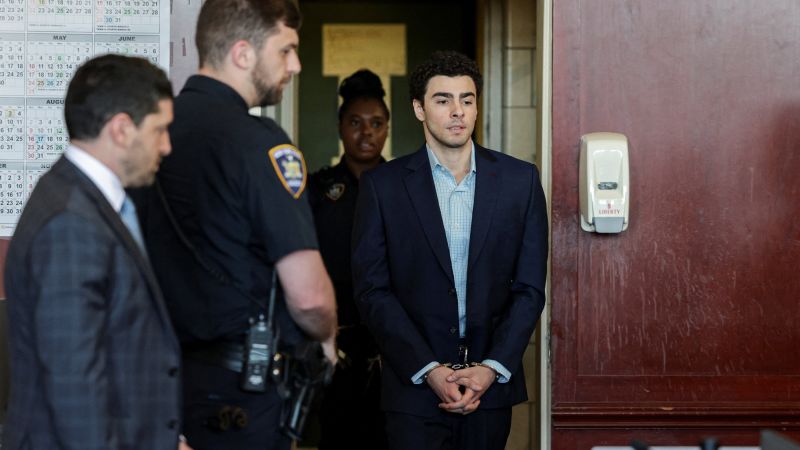
As the trial approaches in September, Mangione’s legal team is reportedly considering a psychiatric defense. While the decision remains pending, they have already taken steps to explore this angle, including requesting additional time to evaluate the merits of presenting a mental health argument. This move underscores their intent to position Mangione’s actions as a product of his psychological state rather than a calculated act.
The Evidence and Strategic Implications
Forensic evidence and Mangione’s writings are central to the case. A sealed court hearing earlier this month revealed the defense’s interest in protecting certain details, including his personal documents that expressed frustration with the healthcare industry. One such document contained the phrase “wack (sic) the CEO,” which has sparked debate about his motive. Prosecutors are expected to use the gun found in Mangione’s backpack as key evidence, while the defense may argue that his mental health played a critical role in the decision.
“There’s absolutely going to be a mental defense in this case,” said Kris Mohandie, a forensic psychologist with over three decades of experience. “The significant change in Mangione’s behavior before the shooting is a strong indicator of a potential mental health issue.”
Experts believe the psychiatric defense could also tap into broader public discontent with corporate practices. Mangione’s alleged resentment toward UnitedHealthcare, combined with his withdrawal from social media and his mother’s missing persons report, provides a narrative of emotional distress. This strategy, while not a guarantee, offers a pathway to humanize his actions and align them with a larger societal critique.
The Emotional and Public Impact
Mangione’s arrest has elicited mixed reactions. Friends and colleagues describe him as a gifted and driven individual, now grappling with the implications of his alleged crime. Meanwhile, public sentiment has divided: some view his actions as a tragic response to corporate greed, while others accuse him of cold-blooded murder. A psychiatric defense could help bridge this gap by explaining his behavior as a product of his mental state.
Notably, Mangione’s back surgery in the months before the attack has become a focal point. He shared an X-ray online, which some interpret as a way to highlight his physical pain and emotional strain. This detail, along with his isolation, may support the argument that his mental health had deteriorated to the point of influencing his actions. The defense’s ability to connect these dots could be pivotal in shaping the jury’s perception.
Risks and Opportunities
While a psychiatric defense may offer a compelling narrative, it also presents challenges. Prosecutors could scrutinize Mangione’s medical records and psychological history, potentially undermining the defense’s credibility. However, if successful, this approach could create empathy for Mangione and position him as a victim of systemic pressures rather than a malicious actor. Legal experts caution that the defense must present a cohesive case, linking his mental state to the crime with clear evidence.
The strategy also hinges on jury selection and the effectiveness of expert testimony. If the defense can demonstrate that Mangione’s mental health had a direct impact on his decision-making, it might sway public opinion and judges. Nonetheless, the success of a psychiatric defense depends on the strength of the evidence and the jury’s willingness to accept it as a valid explanation for his actions.