What to watch in Tuesday’s primaries in Georgia, Alabama, Oklahoma and Washington, DC

Key Races and Political Shifts in Tuesday’s Primaries
Georgia: A Crucial Test for Trump and Kemp
What to watch in Tuesday s primaries – Georgia’s voters will cast ballots in two high-stakes Republican primary runoffs on Tuesday. The first is for the Senate seat that will face Democratic challenger Jon Ossoff in November, a race widely viewed as a pivotal contest in the lead-up to the 2028 presidential election. The second runoff determines the state’s next governor, with former president Donald Trump and outgoing governor Brian Kemp aligned against a common opponent. Kemp’s survival of Trump’s attempt to unseat him in 2022 has set the stage for another showdown, this time over the Senate nomination.
Kemp’s chosen Senate candidate, former University of Tennessee football coach Derek Dooley, faces a formidable challenge from Rep. Mike Collins, whom Trump endorsed on Sunday. The contest has become a proxy battle between the two figures, reflecting their long-standing political rivalry. Kemp’s refusal to support Trump’s false claims of widespread voter fraud during the 2020 election left a lasting mark, and this year’s race mirrors that tension. Collins, known for his alignment with Trump’s conservative agenda, has emerged as the frontrunner after securing over 40% of the vote in the May 19 primary, compared to Dooley’s 30%.
Collins’s campaign strategy centers on leveraging Trump’s influence, while Dooley emphasizes his independence from the former president. A third candidate, Rep. Buddy Carter, narrowly missed the runoff, highlighting the divided nature of Georgia’s Republican base. The race’s outcome will hinge on conservative voters in rural southeastern Georgia, where Carter’s strongest support could sway the balance. If Dooley prevails, the Senate race will likely be a close battle in November, with Ossoff’s Democratic credentials and Trump’s endorsement creating a stark ideological contrast.
Washington, DC: A Shift in Leadership
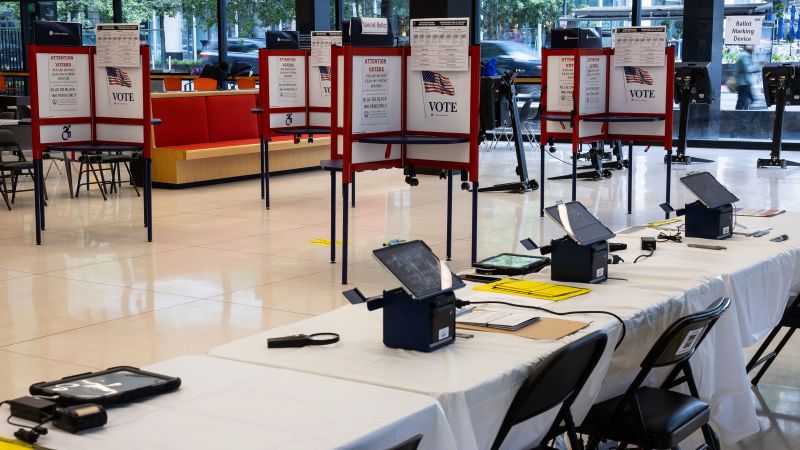
Washington, DC’s voters will determine the city’s next mayor in a ranked-choice primary, marking a first-time use of the voting method. With Muriel Bowser, the current mayor, stepping down after three terms, seven candidates will vie for the position. The most prominent contenders are Ward 4 Councilwoman Janeese Lewis George and former At-Large Councilman Kenyan McDuffie. Lewis George, a democratic socialist, has gained traction through her support from local labor unions, while McDuffie is seen as a more moderate alternative with backing from two former mayors and two past Democratic National Committee chairs.
Regardless of the winner, the new mayor will inherit a city where President Donald Trump remains a prominent figure. Trump, who has occasionally praised Bowser’s leadership, has hinted at federal control of the district if Lewis George’s campaign succeeds. His remarks, such as “maybe would take back Washington, run it on the federal basis,” underscore the potential for political tension between the local electorate and the White House. The race also includes a separate contest to replace Eleanor Holmes Norton, the city’s long-serving non-voting delegate, with five Democrats competing for the role.
DC’s upcoming elections carry broader implications for national politics. If Lewis George wins, her campaign could signal a growing influence of progressive voices in major urban centers. This would join similar trends in New York City and Los Angeles, where democratic socialists have already secured significant wins. The new mayor will need to navigate both the challenges of a divided electorate and the shadow of Trump’s ongoing presence, which could shape policy decisions and voter sentiment in the months ahead.
Alabama and Oklahoma: Conservative Strongholds
In Alabama, Republican voters will choose a Senate nominee in a race that tests their loyalty to the Trump brand. The runoff pits Trump-endorsed Rep. Barry Moore against former Navy SEAL Jared Hudson, two candidates with contrasting histories but shared conservative values. Moore’s campaign emphasizes his ties to Trump, while Hudson highlights his military experience and grassroots appeal. This race, like many in deep-red states, offers a glimpse into how voters might balance party loyalty with individual candidate preferences in the 2028 election.
Oklahoma’s primaries are equally significant, with voters selecting candidates for key state and federal positions. While the details of the specific races are less prominent than in Georgia and DC, the state’s political landscape remains a bellwether for conservative sentiment across the nation. The outcome in Oklahoma could influence the broader GOP strategy as they prepare for future battles, especially in a year when the party is vying for control in both Congress and the White House.
California: A Vacancy in the Congressional Race
Meanwhile, in a different corner of the country, a California congressional district will determine its next representative. The race has become a focal point for voters seeking to fill a vacancy left by the current incumbent, who has vacated the seat for personal or political reasons. While the stakes may not match those in Georgia or DC, the election reflects the shifting dynamics within the Democratic Party as they look to consolidate power in key legislative districts.
For Georgia’s governor’s race, the competition is between Lt. Gov. Burt Jones, backed by both Trump and Kemp, and businessman Rick Jackson. Jones, a moderate with a strong rural base, trails Jackson by about six percentage points in the polls. Jackson, however, has drawn significant support in urban and suburban areas, indicating a geographic divide in the state. The winner of this race will face Democratic former Atlanta Mayor Keisha Lance Bottoms in November, further complicating the already tight political landscape.
These primaries are more than just local elections—they are indicators of national trends. In Georgia, the Senate runoff will determine whether the state’s GOP can maintain its grip on power, while the governor’s race tests the viability of Trump’s influence on the state level. In DC, the mayoral contest highlights the city’s potential for progressive governance, and in Alabama and Oklahoma, the races underscore the enduring strength of conservative politics in the South. Each outcome could ripple through the broader electoral map, shaping the contours of the 2028 presidential race and beyond.
“If Janeese Lewis George wins, it could signal a new era for Washington, DC,” said a political analyst. “But the Trump administration’s threats to intervene may complicate that vision.”
The implications of Tuesday’s elections extend far beyond their immediate results. They offer a snapshot of how voters across the country are positioning themselves for the next phase of political competition. Whether in the heart of the South or the nation’s capital, the choices made on Tuesday will have lasting consequences for the future of American democracy.