Deadly crash revives longstanding debate over regulation of skydiving planes

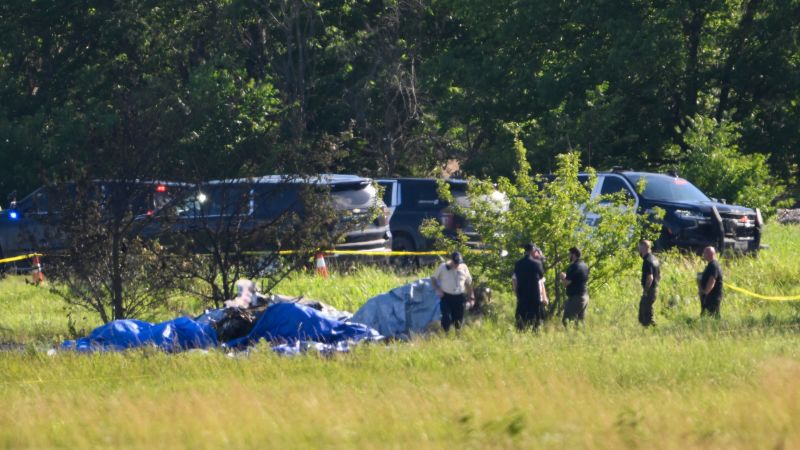
Missouri Skydiving Crash Sparks Renewed Discussion on FAA Oversight
Deadly crash revives longstanding debate over – On a sunlit June day, Jennifer Homendy, the National Transportation Safety Board’s (NTSB) chair, stood amidst the wreckage of the most fatal skydiving plane crash in a decade. The incident, which occurred in Butler, Missouri, claimed the lives of all 12 individuals on board a single-engine aircraft shortly after takeoff. Homendy, who was once a board member, now leads the NTSB, yet she noted that little has changed in the seven years since the 2019 Hawaii crash that took 11 lives. That event, which saw a plane roll in midair before plummeting, highlighted longstanding concerns about the safety standards governing skydiving operations.
Revisiting a Tragic Pattern
The Missouri crash has reignited the debate over how the Federal Aviation Administration (FAA) regulates skydiving planes. According to the United States Parachute Association (USPA), the last major skydiving plane disaster occurred in Mokuleia, Hawaii, in 2019. The USPA, which licenses instructors and advocates for the sport, reported that Sunday’s accident in Butler was the deadliest since that time. While the NTSB typically releases a preliminary report within 30 days, a final analysis could take up to two years, providing a comprehensive review of the incident’s causes.
Homendy emphasized the need for stricter oversight, stating, “Paying passengers should be able to count on an airworthy plane, an adequately trained pilot, a safe operator, and adequate federal oversight of those operations.” Her comments underscore a growing call for reforms, particularly after the Missouri crash exposed gaps in current regulations. The accident’s timeline—takeoff and immediate descent—has raised questions about the training and decision-making processes of pilots operating in the skydiving industry.
Training and Operational Practices Under Scrutiny
The NTSB’s investigation into the Missouri crash revealed critical issues in the pilot’s preparation. The pilot had undergone just one hour of specialized training from Oahu Parachute Center, the organization managing the jump, over a two-day period before the incident. A former pilot at the center told investigators, “The company’s only direction for training was to teach new pilots how to start the engines, taxi the airplane, take off, fly the jump run, and land the airplane, after which the new pilots would be ‘good to go.’” This approach, described as “They go up, they go down. They go up, they go down. They get as many jumps as the weather and daylight permit,” has drawn criticism from legal experts and safety advocates.
Attorney Gary Robb, whose firm specializes in aviation accidents, pointed out that the Missouri crash followed a similar pattern to a fatal incident in Sullivan, Missouri, in 2006. “It’s not the danger inherent to skydiving,” Robb explained, “but the quality of the aircraft and the piloting has been under scrutiny because they’re subject to the most lax regulations of the Federal Aviation Administration.” He added, “Sometimes it’s 12 to 15 in a day,” highlighting the pressure on operators to maximize flight time, especially for popular “sunset flights.”
Short Field Takeoffs and Time Constraints
Investigators suspect that the pilot’s decision to initiate a short field takeoff contributed to the accident. A short field takeoff involves using only part of the runway, which can increase the risk of a stall or loss of control if not executed properly. The NTSB report indicated that the pilot may have felt time pressure to complete the flight before the last scheduled sunset departure. “The pilot might have perceived pressure to take off quickly so that he could return to the airport in time for the last scheduled flight (and the third sunset flight) of the day,” the report noted.
This pressure to prioritize timing over safety has been a recurring theme in skydiving operations. The Hawaii Department of Transportation cited the Oahu Parachute Center for failing to meet state licensing requirements, leading to the business’s closure days after the 2019 crash. However, the FAA has remained cautious in its response to such criticisms, declining to adopt stronger inspection measures to identify flight instructors with poor records of passing students. Homendy called this stance “an unacceptable response,” stressing the need for more rigorous oversight to prevent future tragedies.
Regulatory Framework and Industry Exceptions
Skydiving planes are governed under the FAA’s Part 91 rules, which primarily apply to noncommercial flights not carrying passengers or cargo for monetary gain. Despite this, skydiving operations are given a special exception, allowing them to operate with fewer requirements than commercial airlines. While companies conducting air jumps face stricter rules regarding equipment handling, these guidelines do not fully address the risks associated with pilot performance or aircraft maintenance.
The NTSB had previously recommended changes to Part 91 regulations in 2008, following a special safety investigation. At the time, they argued that the current framework was insufficient to ensure the safety of parachute jump operations. Homendy echoed these concerns, noting that the Missouri crash has demonstrated the consequences of not updating these rules. “The pilot’s aggressive takeoff maneuver resulted in an accelerated stall and subsequent loss of control at an altitude too low for recovery,” the 2019 Hawaii crash report stated, a finding that has resurfaced in the latest incident.
Industry representatives defend the existing regulations, citing the relative safety of skydiving as a whole. However, critics argue that the lax oversight has created an environment where operational risks are underestimated. The USPA’s role in both licensing instructors and lobbying for the sport has sparked discussions about whether the organization should have a greater say in safety standards. Meanwhile, the FAA’s reluctance to implement stricter measures has left many in the aviation community questioning the agency’s commitment to preventing future disasters.
Call for Systemic Change
The Missouri crash has become a focal point for those advocating for reform. Homendy, now leading the NTSB, has emphasized the importance of addressing systemic issues within the skydiving industry. She pointed out that the FAA’s current approach, which prioritizes flexibility over stringent oversight, may not be adequate for operations involving paying passengers. “The NTSB has consistently raised alarms about the need for better training and more rigorous inspections,” she stated, “yet the response has been slow and insufficient.”
As the NTSB continues its investigation, the focus remains on whether the FAA will take decisive action to update regulations. The 2019 Hawaii crash and the Missouri incident have shown that even with improvements in technology and training, human error and procedural shortcuts can lead to catastrophic outcomes. With the FAA’s decision to reject stronger recommendations, the debate over skydiving safety is likely to persist, pushing for a more balanced approach between operational freedom and regulatory accountability.
The broader implications of these crashes extend beyond the immediate loss of life. They highlight a critical gap in how the FAA regulates noncommercial aviation, particularly in scenarios where the stakes are high. As the skydiving industry grows, so does the need for comprehensive oversight that ensures both the aircraft and the pilots are prepared for the challenges of flight. For now, the Missouri crash stands as a stark reminder of the importance of addressing these concerns before the next accident occurs.