
As NATO meets, Putin is weighing his options in Ukraine, and further afield
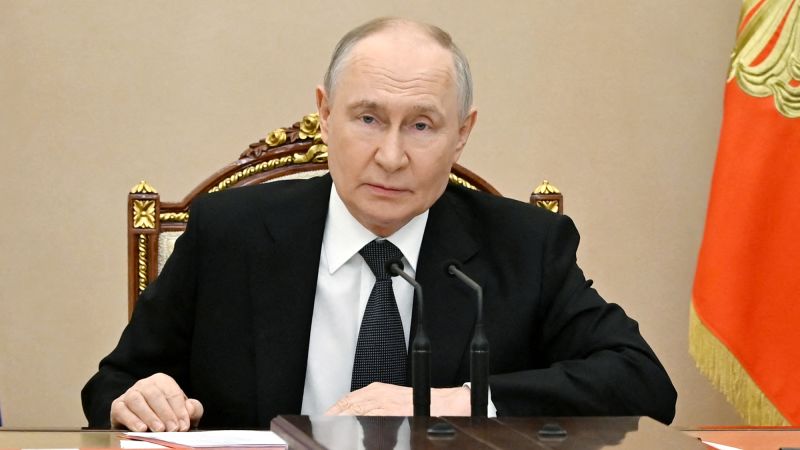
As NATO meets, Putin is weighing his options in Ukraine, and further afield
The Precarious Position of Putin
As NATO meets Putin is weighing – When cornered, one avoids colliding with the wall. Russian President Vladimir Putin now finds himself in a situation where the margin for error is shrinking. The war in Ukraine, initially envisioned as a swift operation, has stretched into its fifth year, sapping the Russian economy and eroding his domestic standing. As NATO convenes in Ankara this week, the question looms: will this be the moment Putin tests the alliance’s resolve? The conflict has become a double-edged sword, straining resources while fueling a growing sense of determination among Russia’s military and political elite.
Recent months have seen Kyiv’s bombardments intensify, creating cascading effects across Europe. Gas shortages ripple through supply chains, while the sight of black smoke rising from Moscow’s skyline underscores the scale of destruction. These developments have sparked doubts about Putin’s ability to counter Ukraine’s growing confidence. Analysts wonder if he will escalate further—targeting not only Kyiv but also its NATO allies. The possibility of a broader war looms larger than ever, with concerns mounting that Moscow might expand its operations beyond Ukraine.
Fears of a New Front
Poland has reportedly received a stark warning from the United States: Moscow could strike again, perhaps with drones or hybrid tactics, in a manner that once seemed unthinkable. The same anxiety spreads across the Baltic states, where Denmark’s airports have been disrupted by unidentified drones and Oslo remains wary of a potential incursion into its Arctic territories. The tiny Russian settlement of Barentsburg on Norway’s Svalbard archipelago, long a symbolic outpost, now represents a flashpoint for geopolitical tension. Could this be the first step in a new phase of the war, or merely a test?
Meanwhile, in Moldova’s breakaway region of Transnistria, Putin’s recent decision to issue Russian passports has raised eyebrows. While initially seen as a move to bolster regional influence, it now carries implications of deeper territorial ambitions. The action underscores a strategy of soft power, but also hints at a potential hardening of Russia’s stance. As the Catherine wheel of anxiety spins in the largest military alliance in history, the stakes have never been higher.
A Split Screen of Strength and Strain
Two contrasting images define Russia’s current predicament. On one side is a nation teetering on the brink of exhaustion, its military stretched thin and its economy in disarray. Hydrocarbon-rich Russia now imports gasoline, its refineries crippled by Ukrainian drone strikes. Currency reserves have been depleted to fund the war, and prisons have emptied as conscripts are drafted to replace depleted front-line troops. The country has become increasingly reliant on Beijing’s support, with North Korea and Iran providing critical military aid.
On the other side, a vision of Russia as a resilient power emerges. Factories are operating at full capacity, churning out weapons for the war effort. Schoolchildren in Russia now study the experiences of veterans who fought in Ukraine’s brutal trenches, a testament to the conflict’s integration into daily life. State television, once a tool of propaganda, now dominates the news cycle, reinforcing narratives of national unity and strategic necessity.
This duality reflects a broader dilemma for Putin. While the war has drained resources, it has also unified the population around a common cause. The Russian public, despite hardships, remains largely supportive of the conflict, viewing it as a battle for survival in the post-Soviet world. In contrast, NATO members are still debating how to allocate defense budgets, with some nations hesitant to commit fully. Russia’s spending of up to 7% of its GDP and half of its state budget on the war highlights the financial commitment, yet the alliance’s response remains fragmented.
The Timing of a Test
Some argue that now is the ideal moment for Russia to push NATO. With the alliance’s unity weakened by internal disputes, and Europe still grappling with post-pandemic economic challenges, Moscow’s strategic position seems more favorable. Trump’s upcoming trip to the NATO summit adds another layer of complexity, as the former president’s skepticism toward the alliance may embolden Russian leaders.
Yet, the evidence suggests that Russia’s options are constrained. Major attacks on Kyiv have occurred every 10 to 15 days, a rhythm that indicates logistical limits. Despite the propaganda of an unstoppable force, the reality is that Moscow must balance its military commitments across multiple fronts. The image of a “hundred-foot-tall” Russia, once dismissed as an overreach, now appears more credible as the war persists.
What remains uncertain is whether Putin will take the next step. The Kremlin’s focus on strengthening air defenses and securing supply lines suggests a defensive posture, but the drive to expand influence elsewhere hints at a more aggressive strategy. As the summit in Ankara unfolds, the world watches for signs of a shift—a decision that could redefine the conflict’s trajectory. For now, the tension between a weakened Russia and a determined alliance hangs in the balance, with history poised to be rewritten in the coming days.
Implications for the Future
The potential for escalation carries profound consequences. A wider war with NATO could justify a full-scale mobilization within Russia, drawing more citizens into the fray. It might also serve as a catalyst for greater unity among alliance members, who have long debated their collective defense strategy. Yet, the economic strain and logistical challenges suggest that any new front must be carefully calculated.
As the conflict enters its fifth year, the question is no longer whether Putin will act, but how. The war has become a lens through which to view the geopolitical landscape, with Russia’s readiness to escalate intertwined with its internal struggles. The alliance’s response will determine whether the conflict remains a localized crisis or escalates into a broader confrontation. For now, the world holds its breath, anticipating a move that could shape the future of Europe for decades to come.
