
What options does Trump have now in Iran? Not many, and they’re all bad
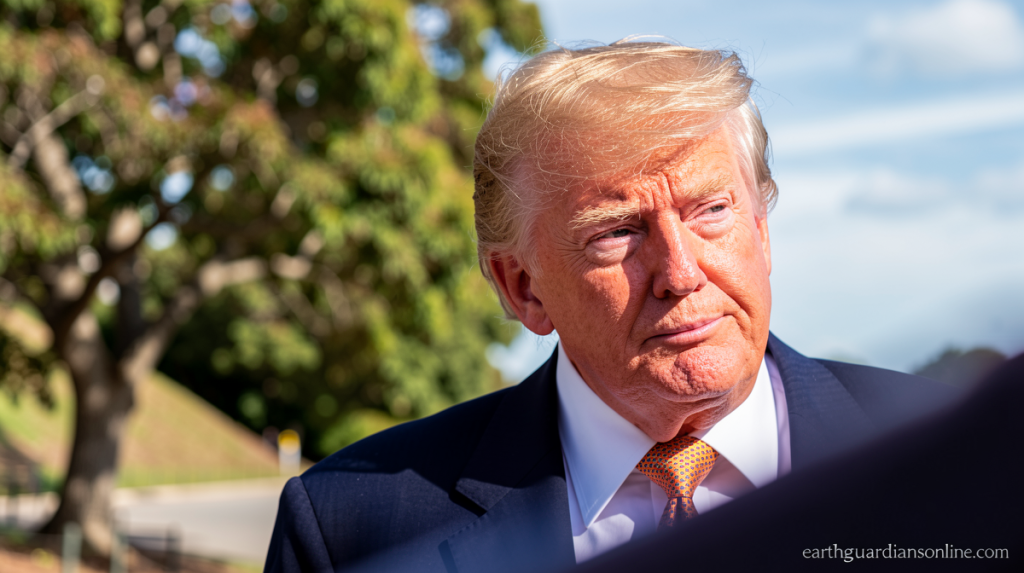
Trump’s Iran Dilemma: Limited Choices in a Complicated Situation
What options does Trump have now – President Donald Trump finds himself in a predicament that mirrors the Penrose stairs optical illusion—a paradoxical scenario where movement seems continuous yet ultimately returns to the starting point. After initiating military action without establishing a clear pathway to resolution, and creating a memorandum of understanding that overlooked fundamental causes of the conflict, Trump now confronts a familiar crossroads. Smoke from fresh American aerial bombardments targeting Tehran’s assaults on maritime traffic in the Strait of Hormuz has only clarified the stakes.
The Core Question: Escalate or Stabilize?
The president faces two primary paths forward. One involves intensifying hostilities despite potentially severe human, economic, and political consequences, hoping to dismantle a new equilibrium that grants Iran considerable advantage. The alternative is attempting to resurrect a problematic truce that provides Iran with billions in exchange for dialogue. This latest confrontation emerged merely three weeks following Trump’s signature on the MOU, which he publicly celebrated as an achievement uniquely suited to his diplomatic approach.
The situation highlights considerable limitations in American military efforts to date. By launching additional missile and air campaigns, Trump potentially initiated a secondary conflict to remedy problems—specifically Iran’s control over the Strait of Hormuz—that originated from the initial war.
Iran’s Strategic Position and the MOU’s Weaknesses
Maritime attacks demonstrated Iran’s resolve to maintain its strategic advantage. Beyond ensuring the survival of its authoritarian government, preserving influence over the critical waterway represented the conflict’s most significant achievement for Tehran. The Islamic Republic seeks to monetize this vital oil and gas corridor by implementing transit fees. Recent strikes against multiple vessels appeared designed to compel ships to follow preferred navigation corridors, thereby reinforcing Iranian supremacy in the region.
These attacks, alongside American countermeasures, seem inconsistent with the memorandum of understanding. However, the agreement—developed through negotiations led by US envoy Steve Witkoff and Trump’s son-in-law Jared Kushner—contains such ambiguity, insufficient enforcement mechanisms, and unwarranted optimism regarding Iranian intentions that its deterioration was hardly unexpected.
Trump declared on a journey to the NATO summit in Turkey that the MOU was now “over” and characterized Iran as “cuckoo.” Nevertheless, he indicated his negotiators might persist with discussions if they desired.
Adding to perceptions of strategic confusion, Trump remarked: “They’ll never build a nuclear weapon under our deal, but I don’t know if we’re going to have a deal. We may just do it without a deal because you know what, it’s easier.”
Narrow Pathways Forward
Without an unconventional solution emerging from nowhere, Trump’s available options remain constrained and uncertain. He could pursue substantial escalation. Though invading Iran entirely seems improbable, he might consider aerial bombardment of civilian facilities or power generation sites, or even deploying forces to coastal territories adjacent to the strait to push back Iranian military presence. Another scenario involves capturing Kharg Island, Iran’s crucial petroleum hub.
Yet these approaches carry enormous expenses and could provoke the economic consequences Trump explicitly sought to prevent when finalizing the MOU. A Marine or special operations assault on Kharg Island would endanger numerous American troops. Throughout his presidency, Trump has generally avoided following the pattern of previous leaders who attempted to restore credibility through military actions resulting in substantial American casualties.
Any American escalation would generate ripple effects throughout the region. Expanding targets within Iran would likely prompt retaliatory strikes against American allies in the Gulf and regional military installations. Energy infrastructure could become vulnerable once more, potentially sparking worldwide energy market turbulence. Domestically, Trump would confront political opposition, including renewed increases in fuel prices that previously damaged his electoral standing during the conflict and weakened Republican prospects heading into midterm elections.
Rep. Adam Smith, ranking Democrat on the House Armed Services Committee, stated on CNN Wednesday that Trump’s situation illustrated why proponents urging him to “finish the job” in Iran misunderstood the circumstances. “You’re not going to be able to, quote, finish the job, unquote, to the point where it breaks Iran,” Smith explained. “That was always the flaw in the argument for starting this war in the first place. And now we’re in that hole.”
Theoretically, Trump might reinstate restrictions on Iranian maritime commerce after previously withdrawing oil sanctions under the MOU framework. However, following weeks of experiencing such restrictions, Iran fell far short of the “unconditional surrender” Trump had demanded. Retired Adm. James Stavridis, while acknowledging the complexity of the situation, noted that complete military victory remains uncertain given that limited drone operations could disrupt commercial navigation from distant launch positions.
