
How FIFA came to its controversial decision on Folarin Balogun
How FIFA Came to Its Controversial Decision on Folarin Balogun
How FIFA came to its controversial – For 24 days, the World Cup had managed to avoid the shadow of Donald Trump, with fans and analysts alike hoping the tournament would remain free from political disruptions. Yet, on July 6, the very essence of the competition was shaken by a decision that sparked global debate: FIFA’s reversal of a one-match ban on Folarin Balogun, allowing the striker to return for the rest of the tournament. The incident, which occurred during the USA’s Round of 32 clash against Bosnia and Herzegovina, has since become a focal point of controversy, linking the event to the FIFA president and Trump’s alleged influence.
A Mistake That Could Change Everything
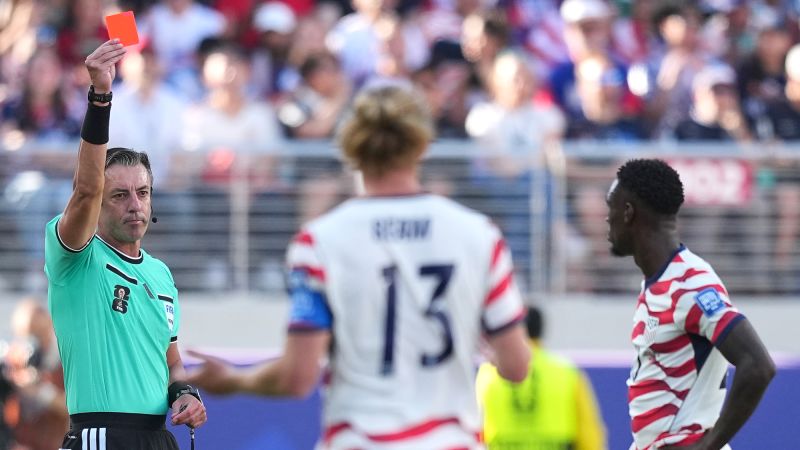
During the game, Balogun was shown a red card for a foul that appeared to be accidental. According to reports, his foot unintentionally scraped a defender’s leg, potentially causing a significant injury. Balogun, who had been instrumental in the U.S. team’s early successes, was initially set to miss the next match due to a mandatory one-game suspension. However, FIFA’s disciplinary committee decided to suspend the ban for a year, allowing him to continue playing.
“I didn’t think it was a foul,” Trump stated on Truth Social, reflecting on the incident. His remarks, though brief, underscored the political weight behind the decision.
While the U.S. team’s performance had been remarkable, the suspension reversal introduced a new layer of scrutiny. US Soccer, which had accepted the initial ban, now found itself in a difficult position, having to adjust its strategy for the upcoming Round of 16 match against Belgium without its key forward. The move raised questions about fairness, as Balogun’s error was deemed unintentional, yet the consequences were significant.
The Political Angle
Reports suggest that Trump played a pivotal role in the decision. A source close to the situation told CNN that the president had personally reached out to FIFA President Gianni Infantino, urging him to review the incident. This intervention, though not explicitly confirmed, has led to speculation about the extent of political influence on the tournament’s governance. Infantino’s willingness to reconsider the ban, despite the rules, has drawn criticism from some quarters, highlighting concerns about FIFA’s impartiality.
FIFA’s disciplinary code, specifically Article 27, grants the committee the authority to fully or partially suspend a disciplinary measure for up to four years. In Balogun’s case, the suspension was applied for a one-year period, ensuring he would not miss another game unless he committed a similar offense again. This provision, which has been used before, allows for flexibility in managing player availability, particularly when it benefits a team’s chances in the competition.
Setting Precedents and Raising Concerns
Earlier in the tournament, FIFA had already demonstrated a willingness to defer bans for players. For instance, Cristiano Ronaldo was permitted to play the opening game of Portugal’s campaign after his three-match suspension was postponed by a year. Similarly, Argentina’s Nicolás Otamendi and Ecuador’s Moisés Caicedo had their one-game bans extended to a one-year probation period. These cases, however, had occurred before the tournament began, and their implications were less contentious than the current situation.
The recent reversal of Balogun’s suspension, on the other hand, has created a new precedent. By allowing the ban to be suspended during the tournament, FIFA appears to have prioritized the performance of a single team over the consistency of its rules. Critics argue that this decision undermines the integrity of the competition, as it introduces an element of political favoritism. The American team, which had built its campaign around the contributions of Balogun, now faces the challenge of adapting to the change.
Belgium’s Response and the Aftermath
Belgium, Balogun’s opponents in the Round of 16, were quick to react. Manager Rudi Garcia described the decision as a “prank,” while the Belgian Soccer Federation claimed it was a direct contradiction to the tournament’s rules. Despite their objections, FIFA denied the appeal, reinforcing its stance that the suspension was justified. The move has left Belgium and its fans feeling frustrated, with many hoping the U.S. team would falter in its next match.
Trump’s public endorsement of FIFA’s decision further fueled the debate. The president’s tweet praised the reversal as a “great injustice” corrected, casting doubt on whether the decision was purely based on the merits of the case. Supporters of the change argue that FIFA’s flexibility ensures the strongest possible squads can compete, while detractors view it as a sign of growing political interference in the sport’s decision-making.
The Broader Implications
As the World Cup progresses, the question remains: How far will FIFA go to accommodate political pressure? The suspension of Balogun’s ban, following Trump’s intervention, has set a precedent that could influence future decisions. If teams can secure exemptions for their star players through political connections, the fairness of the tournament may be called into question. This could lead to a situation where players who commit minor infractions are allowed to continue playing, potentially altering the balance of competition.
The controversy has also reignited discussions about FIFA’s disciplinary process. While Article 27 provides a mechanism for suspending penalties, its application during the tournament has raised eyebrows. Fans and analysts are now scrutinizing whether this is an isolated incident or the beginning of a pattern. The decision’s impact on the U.S. team’s chances is undeniable, but its broader implications for the sport’s governance are equally significant.
Ultimately, the World Cup’s integrity has been tested by this controversy. While the tournament has delivered thrilling moments and unexpected twists, the involvement of political figures like Trump has cast a long shadow. For now, the focus remains on the next match, where the U.S. will aim to capitalize on Balogun’s return. But as the story unfolds, the question of whether FIFA’s actions are driven by fairness or influence will continue to dominate the conversation.
