Trump beats a longtime adversary with a late Georgia endorsement, and other election takeaways

Trump’s Georgia Senate Endorsement and Key Election Takeaways
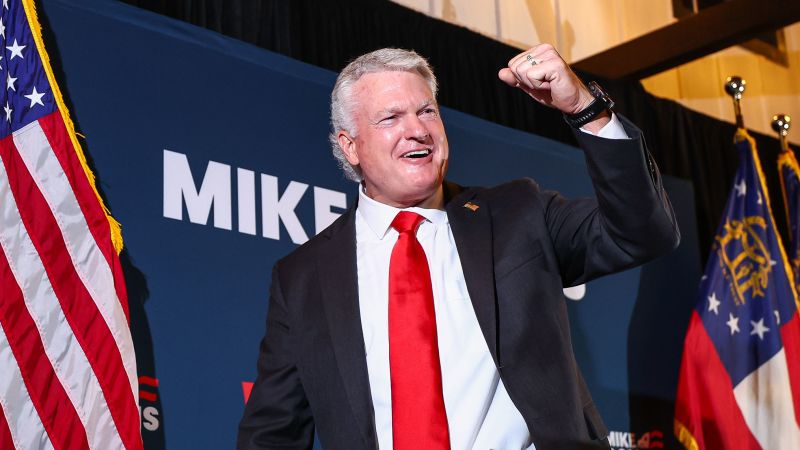
Trump beats a longtime adversary – President Donald Trump’s late endorsement of Rep. Mike Collins in Georgia’s Senate race proved pivotal, helping the Republican candidate secure a decisive victory over Gov. Brian Kemp’s chosen nominee, former football coach Derek Dooley. This win marks a significant moment in the GOP’s 2028 presidential race, as it underscores Trump’s continued influence within the party. The contest, which took place in a key battleground state, highlights the complex dynamics between Trump’s agenda and the broader Republican base, with Collins’ narrow margin of victory signaling a close race ahead.
Strategic Influence in a Polarized Race
Trump’s decision to endorse Collins was a calculated move to solidify his foothold in Georgia, a state where his 2024 presidential victory was narrow and hard-fought. The former president’s support came at a critical juncture, bolstering Collins’ campaign as he vied against Kemp’s candidate, Derek Dooley, who had previously advocated for a more centrist approach. Trump’s intervention not only shifted momentum but also exposed the internal tensions within the Republican Party, where traditional figures and younger voters often clash over policy priorities.
“That’s not exactly the right thing to say, and it’s certainly not what we all stand for with Make America Great Again,”
Trump remarked during a rally for Collins, criticizing Dooley for conceding Georgia’s 2020 presidential election to Democrats. This statement reinforces the ongoing rivalry between Trump and Kemp, who had previously resisted endorsing the president’s claims of widespread voter fraud. Kemp’s reluctance to align with Trump’s narrative in 2020 led to his candidacy being viewed as a moderate challenge, which Trump’s endorsement effectively neutralized in the current race.
Financial and Political Implications
While Trump’s endorsement in Georgia secured Collins’ primary win, the financial landscape of the November race remains a critical factor. Democratic Sen. Jon Ossoff, the incumbent, is backed by a $32 million war chest, providing him with a substantial advantage. Trump’s strategy to rally support for Collins hinges on converting GOP primary voters into a cohesive base, but the senator’s campaign must overcome the challenge of turning moderate Republicans into fervent supporters in a state that has historically leaned conservative.
Collins’ victory, though significant, does not automatically translate to a November win. Ossoff’s ability to mobilize suburban and minority voters could tip the balance, especially as the senator campaigns on progressive issues like healthcare and climate policy. The contrast between Trump’s pro-business messaging and Ossoff’s focus on social equity may shape the final outcome, with both candidates vying to secure Georgia’s crucial Senate seat. Trump’s win in the primary is a step forward, but the broader question remains: can he translate this into a decisive victory in the general election?
Georgia as a Microcosm of National Trends
Georgia’s Senate race has become a bellwether for national political trends, with Trump’s endorsement reflecting the importance of the state in the 2028 presidential contest. The contest between Collins and Dooley has revealed the growing divide within the GOP, as some members favor a more centrist approach while others align closely with Trump’s hardline policies. This polarization could have ripple effects across the country, influencing how other states perceive the Republican Party’s direction.
Kemp’s own campaign in the Senate race faced setbacks, as his endorsement of Dooley proved insufficient to secure victory. His decision to back the former football coach was seen as an attempt to unify the party, but voters ultimately preferred Collins, who has a stronger track record in statewide races. Kemp’s influence, however, remains significant in Georgia’s political landscape, and his failure to gain traction in this race may raise questions about his future role in shaping the state’s political strategies.
With Trump’s endorsement in Georgia, the Senate race has shifted into high gear, setting the stage for a fierce battle in November. The outcome could determine the balance of power in the Senate, with implications for major legislation and the 2028 presidential election. Trump’s ability to sway voters in this state demonstrates his enduring appeal, even as the GOP grapples with internal divisions and the need to attract a broader coalition of support.
Looking Ahead to November
As the November general election approaches, the focus will be on how Trump’s endorsement translates into a winning strategy for Collins. The senator’s campaign must now rally conservative voters while also appealing to those who may have been hesitant to support him in the primary. Meanwhile, Ossoff’s team continues to build on his existing momentum, leveraging his financial resources and message of progressive change to counter the GOP’s efforts. The stakes have never been higher, with Georgia’s Senate seat potentially becoming a cornerstone for either party’s future prospects.
Trump’s victory in the primary is a testament to his ability to mobilize the GOP base, but it also highlights the challenges of maintaining unity within the party. Kemp, despite his experience and national recognition, was unable to capitalize on his backing of Dooley, which may signal a decline in his influence. The race in Georgia is a microcosm of the larger political landscape, where individual strategies and national narratives collide. For Trump, the win is a step toward reasserting his dominance, while for the GOP, it serves as a reminder of the need to balance competing factions in the final stretch of the campaign.