
Democratic socialist holds large early lead in DC mayoral primary
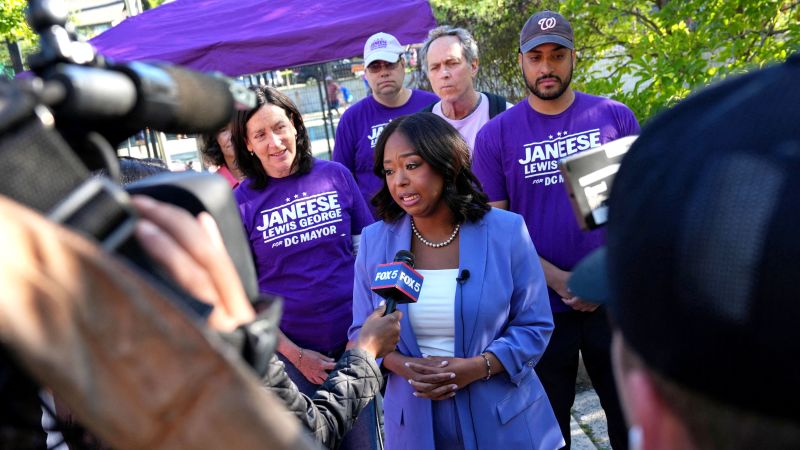
Democratic Socialist Maintains Strong Early Lead in DC Mayoral Primary
Democratic socialist holds large early lead –
Washington, DC, is witnessing a pivotal moment in its political landscape as initial results from the Democratic mayoral primary reveal a significant early advantage for Janeese Lewis George. The councilmember, who identifies as a democratic socialist, has positioned herself as a strong contender with her platform focused on reducing city costs, enhancing public services for residents, and opposing the policies of former President Donald Trump. While CNN has not yet officially projected a winner, the current tally indicates that Lewis George is leading by a substantial margin, setting the stage for a potential decisive race.
Contested Race and Ranked-Choice Dynamics
As of the latest updates, about 64% of the estimated votes have been counted, leaving a portion of mail ballots and drop box entries still to be processed. Lewis George currently holds nearly 53% of the vote, while Kenyan McDuffie, a former DC Councilmember and trial attorney under President Barack Obama, trails at approximately 36%. The outcome of the primary may hinge on the ranked-choice voting system, which comes into play if no candidate secures over 50% of the first-choice votes.
McDuffie, who previously served on the DC Council, is seen as a formidable challenger, but Lewis George’s lead appears too strong to be easily overturned. Analysts suggest that for McDuffie to emerge as the victor, Lewis George’s support would need to decline significantly, potentially below 50%, as the remaining votes are tallied. The DC Board of Elections has indicated that additional first-choice votes could be reported as early as Wednesday, while the initial ranked-choice results are expected to be released on Sunday.
The political implications of the race are profound, given the current debates over DC’s autonomy and the role of its government. Lewis George’s campaign has emphasized affordability and government reform, aligning with a broader movement to empower local control. Her message resonates with voters concerned about rising living costs and the need for streamlined public services. Meanwhile, McDuffie’s campaign has centered on experience and a proven track record in legal and legislative affairs.
As the vote counting continues, the dynamics of the election remain in flux. The remaining ballots, which include mail-in votes and those submitted via drop boxes, could shift the balance. However, Lewis George’s current position suggests she is well-positioned to secure the Democratic nomination, even if the race proceeds to ranked-choice rounds. The key will be how her support holds up amid any potential surges from other candidates or voter fatigue.
Delegate Seat Victory for Robert White
While the mayoral race captures headlines, another significant Democratic victory is emerging in the city’s congressional elections. Robert White, an at-large DC Councilman, has been projected to win the primary for the nonvoting delegate seat in Congress. This outcome marks a notable shift, as White faces off against a field that included Ward 2 Councilmember Brooke Pinto, former senior aide Trent Holbrook, and former Democratic National Committee official Kinney Zalesne.
White’s campaign has highlighted his experience in advancing DC autonomy, a cause he championed while working alongside Eleanor Holmes Norton, the long-serving delegate who stepped down from her reelection bid in January. Norton, who has held the position for 18 terms, faced scrutiny over her ability to represent DC amid political challenges during the Trump administration. Despite her lack of voting power, Norton’s influence has been critical in shaping legislative priorities and advocating for the city’s interests.
White’s path to victory has been paved by his deep ties to Norton’s office, where he served as a lead staff member on congressional oversight hearings. He has described his work as “drafting legislation to loosen Congress’ grip over DC government,” a goal that aligns with his current campaign. His role as the first community outreach director for the DC attorney general’s office further underscores his commitment to public service and grassroots engagement.
The delegate seat is a symbolic but vital position, allowing the singular representative to participate in debates and committee discussions. White’s win signals a continuation of the Democratic Party’s focus on expanding DC’s self-governance and addressing issues like economic disparity and political representation. His victory also reflects the growing support for candidates who prioritize local control and community-driven policies.
Broader Implications for DC Politics
The primary results underscore the evolving priorities of DC voters. With the city’s autonomy under scrutiny, candidates are increasingly emphasizing policies that highlight DC’s independence. Lewis George’s campaign, which positions her as a leader of the democratic socialist movement, taps into this sentiment, promising bold reforms to address systemic issues.
McDuffie, though trailing, remains a credible opponent, leveraging his experience and connections to challenge Lewis George. The potential for a ranked-choice vote adds an extra layer of complexity, as it could determine the final outcome based on voter preferences across multiple rounds. The DC Board of Elections has assured that the process will be transparent, with results reported in stages to reflect the full scope of the electorate’s will.
Meanwhile, White’s victory for the delegate seat highlights the broader Democratic strategy to consolidate power and push for legislative gains. His background in Norton’s office gives him a unique understanding of the challenges facing DC in Congress. The campaign’s focus on autonomy and representation resonates with voters who view the delegate seat as a stepping stone toward greater political influence.
These results also reflect the diverse coalition within the Democratic Party. While Lewis George appeals to progressive voters, White’s win suggests a stronger appeal to those prioritizing practical governance and advocacy. The primary’s outcome will shape the next phase of DC’s political journey, with both races influencing the city’s representation in national and local affairs.
As the final votes are counted, the political landscape in Washington, DC, remains in flux. The mayoral race, with its potential for ranked-choice voting, and the delegate seat victory together illustrate the complexity of the Democratic primary. Both candidates, Lewis George and White, have demonstrated strong grassroots support, with their messages aligning with the needs and aspirations of DC residents.
“Drafting legislation to loosen Congress’ grip over DC government in favor of greater autonomy and independence for DC residents”
These statements from White encapsulate the core of the Democratic campaign, emphasizing the need for self-determination. As the Board of Elections prepares to release further updates, the race continues to capture the attention of voters and analysts alike. The early lead for Lewis George and the delegate seat victory for White mark a significant chapter in DC’s electoral history, with the final results set to determine the direction of the city’s political future.
The story headline has been updated to reflect the latest developments. This report is based on contributions from CNN’s Jennifer Agiesta and Ethan Cohen, who have provided ongoing analysis of the primary race. As the vote tally progresses, the focus will shift to how these candidates perform in the next stages of the election, ensuring that DC’s voice is heard at every level of governance.
