
Why 0.1% of Britons could determine the prime minister’s fate
Why 0.1% of Britons Could Determine the Prime Minister’s Fate
The Unlikely Arena of Power
Why 0 1 of Britons could – Beyond the grandeur of Westminster, a modest community center in the working-class town of Ashton-in-Makerfield has become a pivotal battleground in British politics. Its plain walls, worn by years of local meetings and community events, now echo with the fervor of a campaign that could reshape the nation’s leadership. This unassuming venue, where residents once gathered for bingo nights and weddings, now hosts the Labour Party’s efforts to secure a path back to power. At the heart of the operation is Andy Burnham, the Greater Manchester Mayor, whose potential return to parliament has ignited speculation about his future as a contender for Labour’s leadership—and, by extension, the prime ministership.
The by-election, held in the Makerfield constituency, is more than a local contest. With an electorate of approximately 76,000, it carries disproportionate weight in a nation where political shifts often hinge on narrow margins. Burnham’s campaign hinges on a simple premise: if he wins, he will likely challenge Prime Minister Keir Starmer for control of the Labour Party. This scenario has raised alarms within the party, as Starmer’s authority has steadily eroded since his landslide victory two years ago. The stakes are clear—Burnham’s success could signal the end of Starmer’s leadership or provide a lifeline to a party struggling to reconnect with its base.
A Political Crucible
Labour’s recent struggles have made this by-election a critical test of the party’s resilience. Since the May local elections, seven ministers have resigned from Starmer’s government, reflecting a deepening discontent among senior members. While these elections do not directly impact national governance, they have exposed fractures in the party’s traditional voter base, which is increasingly splintering toward the populist Green Party and Reform UK. In Makerfield, a once-solid Labour stronghold, this trend is particularly pronounced. The constituency’s shift has forced the party to confront a stark reality: without a strong leader, its electoral prospects may continue to decline.
Burnham’s bid for the seat has been months in the making. For years, he has positioned himself as a reformer, leveraging his reputation as a pragmatic and relatable figure. His campaign team, based in the community center, has focused on local issues—job creation, housing affordability, and public services—while subtly positioning him as a national alternative to Starmer. The timing of his entry into the race has been strategic, capitalizing on Starmer’s declining popularity and the vacuum left by Josh Simons’ recent resignation. Simons, a loyal supporter of Starmer, had held the Makerfield seat for over a decade, but his departure has opened the door for Burnham’s rapid mobilization.
Opposition and the Weight of Expectation
Reform UK’s candidate, Robert Kenyon, faces an uphill battle against Burnham. A former teacher and local businessman, Kenyon has framed his campaign around tax cuts and deregulation, appealing to voters disillusioned with Labour’s leftward drift. Yet, his presence in Makerfield has also exposed the party’s vulnerabilities. Labour’s inability to present a compelling vision for change has left many voters questioning its direction. As Burnham’s team canvasses door-to-door, they encounter a mixed reception, with some residents skeptical of his leadership ambitions and others eager for a break from Starmer’s policies.
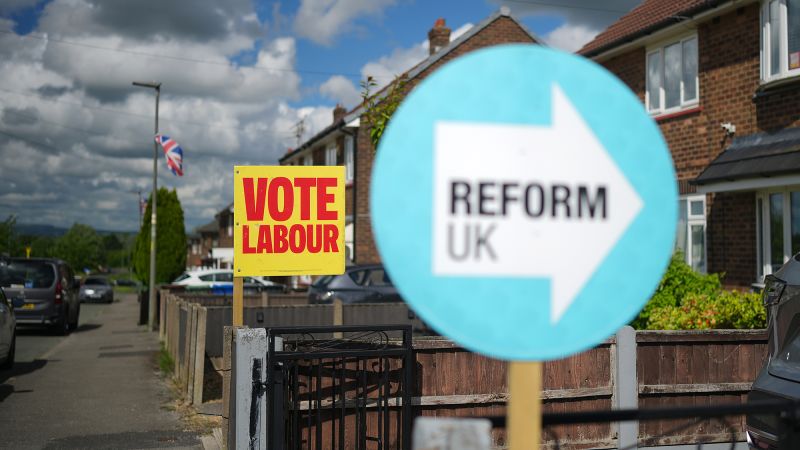
The by-election’s significance has drawn national attention, with activists and MPs from across the UK descending on Ashton-in-Makerfield. Campaign buses, banners, and leaflets now dominate the town’s streets, creating a stark contrast to the quiet life of its residents. Despite the noise, the broader picture remains unchanged: outside the town center, daily routines persist. Shopkeepers report no major disruption, and only a handful of signs in hedgerows and homes hint at the election’s gravity. This juxtaposition underscores the paradox of the moment—a single constituency, representing just 0.1% of the UK’s total electorate, holds the power to determine the fate of a prime minister.
Starmer’s Declining Influence
Starmer’s leadership has been tested by a series of policy reversals and a failure to deliver on his promises of “change.” His government, once seen as a beacon of stability, has struggled to address pressing concerns like inflation, public sector pay, and the cost of living crisis. These failures have fueled frustration, particularly among working-class voters who feel sidelined by Labour’s progressive agenda. Without Burnham’s return to parliament, the party risks losing its ability to coalesce around a unifying figure, leaving Starmer to navigate a leadership race that has become increasingly uncertain.
The by-election has also become a proving ground for the Labour Party’s grassroots. Volunteers, many of whom are young and first-time activists, have poured their energy into door-to-door campaigning, emphasizing Burnham’s record of pragmatic governance. In contrast, Reform UK’s supporters, drawn from the town’s older demographics, argue that Labour’s policies have created a system that favors the elite at the expense of ordinary citizens. These opposing narratives highlight the broader ideological divide within British politics, with Makerfield serving as a microcosm of the national struggle for direction.
The Ripple Effect of a Single Vote
If Burnham prevails, the implications for Labour and the nation are profound. His victory would not only signal a shift in the party’s leadership but also embolden a faction within the Labour movement that favors a more centrist approach. Conversely, a Reform UK win could accelerate the party’s decline, with critics claiming it marks the beginning of a broader realignment of British political allegiance. The election’s outcome will be watched closely by analysts, as it may provide insight into the viability of Labour’s reformist agenda—or its potential collapse.
Despite the high stakes, Burnham and Kenyon have remained elusive, declining to speak with CNN. “We’re focused on talking directly to constituents,” Burnham said, emphasizing his commitment to local engagement. Kenyon echoed this sentiment, stating that the campaign’s momentum depends on grassroots interaction rather than media hype. Their silence has only heightened the anticipation, with suited journalists in a nearby cafe trading theories about the election’s potential to redefine the Labour Party’s future. The pressure on both candidates is immense, as the vote in Makerfield could determine whether Starmer’s leadership continues or whether the party turns to a new champion.
A Nation on the Brink
As the campaign intensifies, the question lingers: is Britain ungovernable? The Makerfield by-election represents a rare opportunity for a political transformation, with its outcome potentially reshaping the Labour Party’s trajectory. For Starmer, the loss of this seat could be the catalyst for his removal, leaving the party to choose between a new leader and a prolonged crisis. For Burnham, the victory would be a validation of his political appeal and a chance to reclaim a central role in national affairs.
The election’s importance extends beyond the immediate. It reflects a deeper tension within British politics, where traditional party loyalties are being challenged by new movements and shifting voter priorities. As the community center buzzes with activity, the fate of the Labour Party—and perhaps the country itself—hangs in the balance. In this quiet town, the power to redefine the political landscape lies in the hands of an electorate that has long been overlooked but now stands at the center of a historic moment.
