
Zohran Mamdani sharply criticizes Democratic Party as he rallies with progressive challengers
Zohran Mamdani Intensifies Critique of Democratic Party at Rally With Progressive Challengers
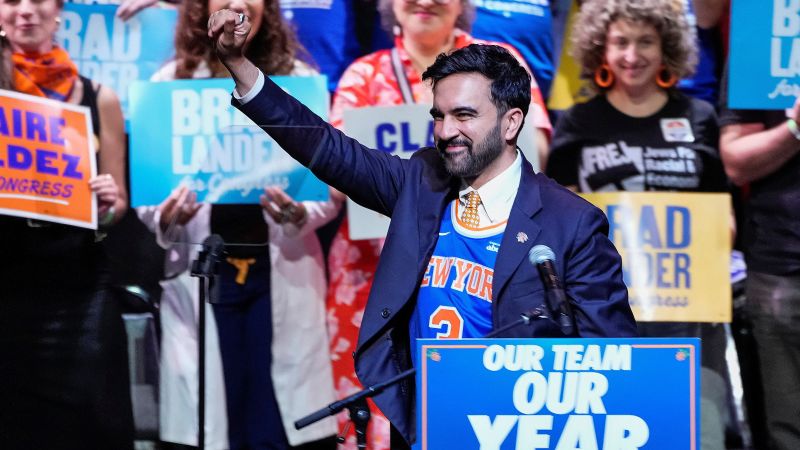
Zohran Mamdani sharply criticizes Democratic Party – Mayor Zohran Mamdani delivered a forceful message against the Democratic Party during a rally in Brooklyn, highlighting his dissatisfaction with the party’s current direction. The event, held at Kings Theatre, brought together progressive congressional candidates as Mamdani urged them to challenge the establishment. His sharp critique of the Democratic Party centered on its perceived failure to champion working-class interests, emphasizing a need for systemic change. “Our party has prioritized managing decline over delivering real progress,” Mamdani asserted, framing the rally as a pivotal moment in reshaping the Democratic landscape. This theme reflects his growing role as a voice of dissent within the party, targeting both internal divisions and external allies.
Reform as a Political Strategy
Mamdani’s focus on reform has become a defining aspect of his political career, particularly as a democratic socialist. Over the past six months, he has positioned himself as a key player in pushing for a more progressive Democratic identity, especially ahead of the 2028 presidential election. His rallying of candidates like Assemblymember Claire Valdez and former city comptroller Brad Lander signals a broader movement to disrupt the status quo. “The race for 2028 begins now,” Mamdani argued, underscoring that Tuesday’s primary elections could be the starting point for a new era. This push comes amid growing tensions between progressive Democrats and centrist factions within the party.
The rally also spotlighted the challenges faced by progressive challengers. Valdez, a Queens legislator, seeks to unseat Rep. Nydia Velazquez, while Lander aims to replace Rep. Dan Goldman. Darializa Avila Chevalier, an educator and immigrant rights advocate, targets Rep. Adriano Espaillat, a figure whose alignment with Israeli policies has drawn criticism. Mamdani’s endorsement of these candidates highlights his strategy to amplify progressive voices and reshape the Democratic electorate. By linking their campaigns to the party’s broader trajectory, he positions himself as a unifying force for change, even as he confronts internal opposition.
Targeting Centrist Ties to Israeli Policies
Central to Mamdani’s critique was the Democratic Party’s relationship with Israeli policies, particularly its support for AIPAC’s spending on pro-Israel candidates. He accused the party of using “dark money” to fund misleading television ads against his endorsed candidates, arguing this reflects a deeper alignment with centrist interests. “They turn us against one another instead of leading us toward moral change,” he said, channeling frustration over the party’s focus on preserving power. This criticism resonates with a growing faction of Democrats who view AIPAC’s influence as a barrier to progressive reform, especially in the wake of the October 7, 2023, attacks by Hamas.
Mamdani’s remarks underscored the ideological rift within the Democratic Party, with some members advocating for a more left-leaning platform. His alignment with Chevalier, who attended a pro-Palestinian rally after the October 7 attacks, has further intensified this divide. While his focus on Israel has garnered support from progressive activists, it has also drawn scrutiny from centrist Democrats like House Minority Leader Hakeem Jeffries, who has endorsed Espaillat. Jeffries’ stance contrasts with Mamdani’s, symbolizing the broader clash between establishment and grassroots strategies in shaping the party’s future.
Unified Front Against the Status Quo
Mamdani’s speech emphasized the importance of unity among progressive candidates, despite their varied backgrounds and platforms. By rallying Valdez, Lander, and Chevalier, he aimed to create a cohesive bloc capable of challenging entrenched Democratic leaders. “This isn’t just about winning local races—it’s about building momentum for a new kind of politics,” he stated, framing their collective efforts as essential for national impact. His message resonated with attendees, many of whom share his vision of a party more committed to working-class values and social justice.
The rally also served as a platform for Mamdani to critique the Democratic establishment’s tactics. He highlighted how dark money and misleading ads have been used to undermine progressive candidates, accusing leaders of fostering division rather than solidarity. “The party’s leaders have spent years convincing us that the status quo is the only path forward,” he said, a sentiment that has become a rallying cry for his supporters. By addressing both the party’s internal mechanisms and its external allies, Mamdani positioned himself as a critical figure in the evolving Democratic landscape, even as he faces opposition from within.
