An unusual strategy helps some tropical butterflies live 25 times longer than their relatives

An Unusual Strategy Helps Some Tropical Butterflies Live 25 Times Longer Than Their Relatives
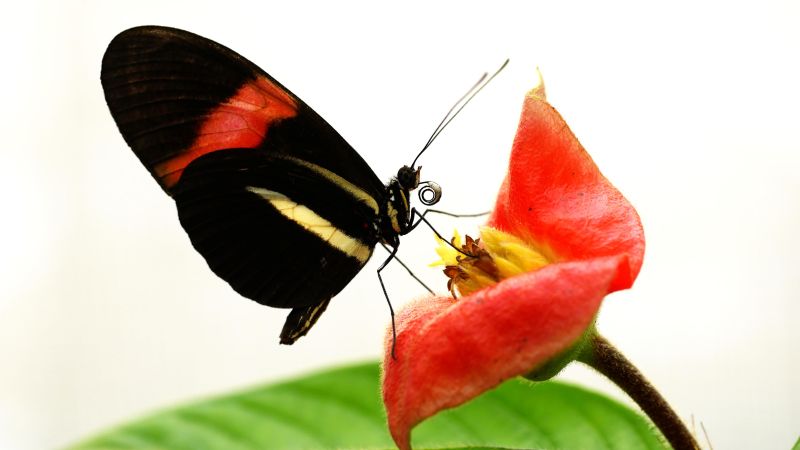
An unusual strategy helps some tropical – In the vast realm of insects, most butterflies lead fleeting lives, spending mere weeks flitting between vibrant blooms before succumbing to their natural demise. Yet, a handful of rare species have defied this pattern, sparking intrigue among scientists. Recent research has uncovered a surprising secret behind the extended lifespans of certain tropical butterflies, offering potential insights into the mechanisms of longevity. The study, published in *Nature Communications*, focuses on the Heliconius genus, a group of butterflies native to the rainforests of South and Central America, whose lifespans span a dramatic range.
Contrasting Lifespans Within the Same Genus
While the Dione juno, a member of the Heliconius family, typically survives only 14 days as an adult, other species in the same genus exhibit remarkable resilience. Heliconius hewitsoni, for instance, can live up to 348 days, nearly 25 times longer than its shorter-lived counterparts. Similarly, several other Heliconius species thrive for 106 to 277 days, according to the findings. These disparities in lifespan raise critical questions about the evolutionary factors that distinguish these butterflies from their relatives.
Dr. Jessica Foley, the lead author of the study and a postdoctoral scholar at Tufts University’s Jean Mayer USDA Human Nutrition Research Center on Aging, has long been fascinated by the evolutionary forces shaping lifespans across species. “We observe vast differences in lifespan across the animal kingdom — adult mayflies famously live only for a day, whereas some whales and sharks can live for hundreds of years,” she explained in an email. “I’m interested in the evolutionary basis of these kinds of lifespan differences because they might hold insights relevant for healthy ageing in humans.”
Challenging the Standard Butterfly Diet
Traditionally, butterflies rely heavily on flower nectar as their primary food source, which provides energy through carbohydrates. However, the research team hypothesized that Heliconius species might have evolved a unique dietary strategy. Unlike most butterflies, which consume nectar alone, these long-lived species also incorporate pollen into their adult diets. This adaptation could be key to their extended lifespans, as pollen contains lipids and amino acids that are crucial for reproductive processes.
Foley and her colleagues examined whether removing pollen from the diets of Heliconius butterflies would impact their longevity. They found that even when pollen was withheld, the insects still outlived their non-pollen-feeding relatives. For example, while six of the 28 species studied did not consume pollen, they lived only 14 to 98 days. In contrast, the pollen-feeding Heliconius species endured significantly longer, with some surviving over 200 days. This suggests that their diet plays a major role in their ability to thrive for extended periods.
The researchers also explored the physiological effects of pollen consumption. They noted that lipids, which are abundant in pollen, may not only aid in energy storage but also strengthen the butterflies’ immune systems. “The general evolutionary strategy is to reproduce as much as they can until those resources are spent, which doesn’t take very long for these small insects,” Foley said. “They usually die soon after this finite resource is used up.”
Unraveling the Mystery of Anti-Aging Mechanisms
Despite the dietary hypothesis, the exact reasons for Heliconius’ extended lifespan remain partially mysterious. While nutrition is a clear factor, the study reveals that these butterflies may have developed additional anti-aging mechanisms. Foley emphasized that the research aimed to uncover whether these species exhibited slowed physiological aging, even when deprived of their pollen-based diet. “I wanted to understand the real extent of this lifespan extension in Heliconius, to determine if it was also accompanied by delayed aging processes, and to see if they would still demonstrate longevity without the pollen,” she said.
Studying such “extreme agers” in the animal kingdom is challenging, as scientists often have to wait decades or centuries to observe aging patterns in other species. Heliconius, however, offers a unique advantage: their entire life cycle can be studied within a single year. This makes them an ideal subject for examining longevity. “It’s a rare opportunity to track aging in a species that doesn’t require waiting for millennia,” Foley remarked.
Complementing their observational methods, the team employed a groundbreaking device to measure age-related decline. Known as “The Pullinator,” this tool consists of a perch lined with sandpaper connected to a light source. By assessing the butterflies’ grip strength, researchers could quantify the progression of physical deterioration over time. The results showed that even in the absence of pollen, the Heliconius species maintained a slower rate of decline compared to their non-pollen-feeding relatives.
Broader Implications for Human Longevity
The study’s findings could have far-reaching implications beyond entomology. By identifying the factors that contribute to Heliconius’ extended lifespans, scientists may uncover strategies for promoting healthy aging in humans. The researchers are particularly interested in understanding how these butterflies balance energy requirements with longevity, a concept that aligns with human efforts to combat age-related diseases and extend lifespan.
Foley highlighted the importance of comparing Heliconius with other long-lived species, such as the Myscelia cyanaris, which holds the record for the longest lifespan among butterflies at 380 days. While the data on Myscelia is limited, its existence underscores the potential for even greater discoveries within the butterfly family. The team’s work also opens the door for future studies on the genetic and metabolic pathways that govern aging in these insects.
As the research continues, scientists hope to refine their understanding of how Heliconius butterflies achieve such remarkable longevity. Their work not only sheds light on the natural world but also challenges existing assumptions about the relationship between diet, energy use, and lifespan. By studying these “extreme agers,” researchers may unlock new possibilities for extending life in both butterflies and humans alike.
In conclusion, the study of Heliconius butterflies represents a fascinating intersection of evolutionary biology and aging research. Their ability to thrive for months rather than weeks, combined with the unique dietary and physiological traits they exhibit, offers a compelling case for understanding the secrets of longevity. As Foley and her team delve deeper into these mysteries, their findings could reshape the way we view aging in the animal kingdom and inspire innovative approaches to human health.