Italian foreign minister cancels trip to US over Trump’s comments about Meloni

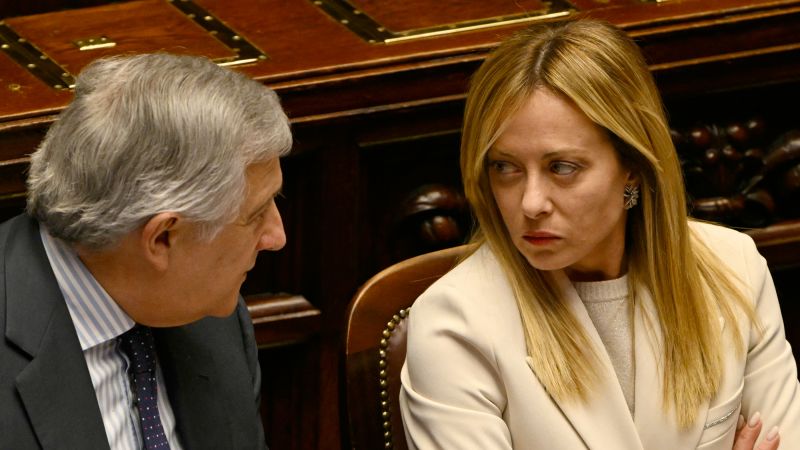
Italian Diplomat Cuts Short U.S. Visit Amid Controversy Over Meloni Remarks
Italian foreign minister cancels trip to US – Italian Foreign Minister Antonio Tajani made a surprising decision on Friday to cancel his upcoming trip to the United States, a move that has raised eyebrows in diplomatic circles. The cancellation comes in direct response to remarks made by U.S. President Donald Trump about Italy’s Prime Minister Giorgia Meloni, which Tajani described as “offensive” and a significant point of contention. The planned visit was set to include a meeting with Secretary of State Marco Rubio, aiming to strengthen economic ties between the two nations. However, the trip was now scrapped, marking another moment of tension in the evolving relationship between the U.S. and its European allies.
Trump’s Comments Spark Outcry
In an interview with Italy’s La7 TV, Trump claimed that Meloni had “begged” him for a photograph during the recent G7 summit in France. According to a dubbed Italian translation shared by the outlet, the president stated, “She begged me to take a picture with her. She wanted a picture with me so badly. I wouldn’t have taken it, but I felt sorry for her.” These remarks have been interpreted as a personal jab at Meloni, who has been a vocal critic of Trump’s policies and has maintained a strong stance on issues like national sovereignty and economic independence.
“Donald Trump’s statements are completely fabricated. I’m frankly shocked. I don’t know why the president of the United States behaves this way towards his own allies, and it’s not the first time it’s happened,” said Meloni in a video posted on X. The video, released on Friday morning, was a sharp rebuttal to Trump’s claims, with Meloni emphasizing the damage his comments could do to the reputation of Italy and its leadership. “I can only say that it’s a shame he doesn’t have the same determination with the enemies of the West, with the enemies of the United States, with leaderships with which he instead appears much more accommodating,” she added.
Meloni’s response highlights the growing rift between Trump and European leaders, particularly those who have positioned themselves as staunch supporters of U.S. interests. While she has been regarded as one of Trump’s most loyal allies in Western Europe, this incident underscores the fragility of their alliance. The Prime Minister’s comments about the G7 summit—where she was not present—have become a focal point for critics, who argue that Trump’s remarks undermine the credibility of Italian diplomacy.
Fractured Relations and Strategic Tensions
The latest development follows a series of disagreements between Trump and Meloni, which have strained their previously close relationship. Earlier this year, Meloni condemned Trump’s criticisms of Pope Leo XIV for his stance on the Iran war, calling them “unacceptable.” In return, Trump accused Italy of not fully supporting the U.S. in the conflict, a charge that Meloni has consistently denied. Her refusal to endorse the war with Iran has been a point of contention, with Trump suggesting that Italy’s leaders lack commitment to American priorities.
Tajani’s cancellation of the U.S. trip adds to the list of diplomatic gestures that have soured relations between the two nations. The planned meeting with Rubio was intended to advance cooperation on economic security and critical minerals, as highlighted in a statement from the U.S. State Department. However, the forum in Miami, which had been scheduled for early next week, was now canceled, leaving questions about the future of bilateral ties. CNN has reached out to the White House and the State Department for further comments, but no immediate statements have been released.
Historical Context of the U.S.-Italy Alliance
Despite the recent tensions, Meloni’s alliance with Trump has had moments of solidarity. During the latter’s second term, she became one of the few European leaders to attend his second inauguration, a gesture that underscored their shared political values. Both have aligned on issues such as strict immigration policies and the promotion of national sovereignty, which have positioned them as natural partners in policy debates. However, Trump’s public criticism of Meloni has created a stark contrast, revealing the depth of his personal frustrations with her leadership.
Meloni’s criticism of Trump’s actions has not only been directed at the president but also at his approach to foreign relations. In a video statement, she argued that Trump’s tendency to target allies while being lenient with adversaries reflects a double standard. “Italy and I never beg,” she said, emphasizing that her leadership has always been assertive in international matters. This sentiment is echoed by Tajani, who has expressed dismay at Trump’s remarks, viewing them as an affront to Italy’s diplomatic standing.
The incident also places Italy in a broader context of shifting alliances within the European Union. As the G7 summit in France signaled a brief moment of reconciliation, the sudden fallout over Trump’s comments has reignited old disputes. Analysts suggest that the U.S. and Europe are at a crossroads, with Trump’s approach to diplomacy testing the bonds between NATO members. Meloni’s position as a key figure in this dynamic has made her a target for Trump’s ire, even as she remains a vital partner for the U.S. in certain strategic areas.
Impact on Bilateral Cooperation
The canceled forum in Miami is a tangible consequence of the diplomatic row, with its cancellation reflecting the urgency of Meloni’s response to Trump’s remarks. While the event was meant to foster collaboration on economic security, the absence of Tajani leaves a gap in discussions about shared interests. The U.S. State Department had highlighted the importance of the meeting, stating it aimed to “advance U.S.-Italy bilateral cooperation on economic security and critical minerals.” Now, with the trip scrapped, the focus has shifted to repairing the damage caused by Trump’s comments.
Trump’s continued criticism of Meloni has not abated, even after the initial controversy. In a later interview with NBC News, he reiterated his frustrations, accusing Meloni of not being fully committed to the Iran war effort. “I don’t want her as a fan because she was not there—along with the NATO group—having to do with the Strait,” he said, referring to a specific moment of perceived inaction. These remarks have been met with strong reactions from Meloni’s team, who see them as an attempt to undermine her credibility and that of Italy’s foreign policy.
As the diplomatic incident unfolds, it serves as a reminder of the challenges in maintaining international partnerships. Meloni’s steadfast position on the Iran conflict has made her a target for Trump’s sharp critiques, even as she continues to advocate for Italy’s interests. The incident also highlights the personal nature of U.S.-European diplomacy, where leaders often use public statements to assert their influence. For now, the cancellation of Tajani’s trip stands as a symbol of the strained relationship, with both sides left to navigate the fallout and determine the next steps in their partnership.