
Trump threatens serious criminal penalties for those he says ‘vandalized’ the Reflecting Pool
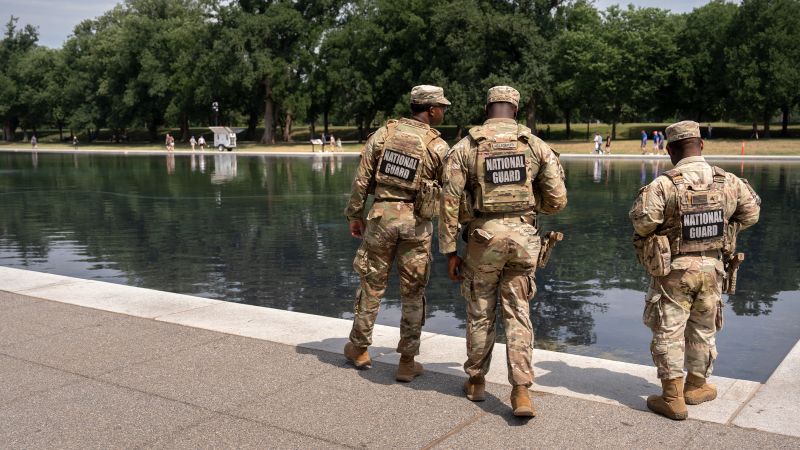
Trump Threatens Criminal Penalties for Reflecting Pool Vandalism
Trump threatens serious criminal penalties for those – President Donald Trump has intensified his response to recent incidents at the Reflecting Pool on the National Mall, vowing to pursue strict legal consequences against those he labels as responsible for the vandalism. The pool, which had undergone a $14 million restoration, now shows visible signs of damage, prompting Trump to frame the events as a deliberate attack on the landmark. In a post on Truth Social, he emphasized the potential for serious criminal charges, stating that the perpetrators might face prison sentences to deter future acts of sabotage against public property.
The Pool’s Condition and Legal Process
The Reflecting Pool, a cherished historical site in Washington, D.C., has deteriorated rapidly since its recent renovation. Its surface, once freshly restored, began peeling, raising questions about the quality of the work. While local prosecutors have not yet filed charges, the Justice Department is evaluating the evidence to determine if federal involvement is necessary. Trump’s stance suggests a willingness to escalate the situation, urging authorities to apply maximum penalties for the alleged damage.
“Those who vandalized the Reflecting Pool will face severe legal repercussions,”
Trump declared, highlighting his belief in the gravity of the offense. The U.S. Park Police initially classified the incidents as minor violations, such as damaging public property, but Trump’s public criticism signals a push to reclassify them as federal crimes. This shift could lead to felony charges, potentially resulting in lengthy prison sentences for those involved.
Political Context and Public Reaction
Trump’s remarks have become a focal point in the ongoing political debate surrounding the National Mall. Supporters argue that the damage reflects a coordinated effort to undermine his administration’s infrastructure projects, while critics view it as yet another instance of his tendency to exaggerate minor issues. The controversy has sparked discussions about how public spaces are managed and the role of political figures in shaping perceptions of their maintenance.
The incident has taken on symbolic significance as the nation approaches its 250th anniversary. Trump’s insistence on stringent penalties underscores his broader narrative about public accountability, which he claims is being ignored by opponents. He also released photos of the damaged pool, asserting that they would be used in future legal proceedings to illustrate the extent of the alleged vandalism. The timing of his comments has been scrutinized for potential political motives.
Alleged Vandalism and Initial Citations
Among those cited by U.S. Park Police is David Hearn, a former Olympic canoeist who claimed he was simply touching a loose flap of material on the pool’s bottom. He denied any intent to damage the site, stating his actions were unintentional. National Park Service officials noted that Hearn was warned before being handcuffed, but Trump has used the case to accuse the individuals of sabotage. Five people have been arrested, while another five received federal citations, according to the Department of Interior.
Authorities have filed 14 police reports related to the vandalism, with the U.S. Park Police emphasizing their standard procedures for handling such cases. However, the presence of National Guard members and additional security measures indicates the growing concern over the pool’s condition. The situation has also drawn media attention, with the pool serving as a backdrop for political narratives and public scrutiny. Trump’s continued emphasis on criminal penalties aims to highlight his administration’s commitment to upholding law and order.
Escalating the Charges: Federal Involvement
U.S. Attorney Jeanine Pirro has signaled that the cases may be elevated to federal level, potentially leading to felony charges. She stated that if the damage worsened—such as the introduction of materials that caused accelerated algae growth—more severe legal action could be warranted. This move aligns with Trump’s broader strategy of leveraging public incidents to reinforce his image as a strong law enforcer. The Justice Department’s decision will determine whether the pool’s vandalism is treated as a federal offense or a local matter.
