
Gavin Newsom opposes a California wealth tax. He’s proposing a national billionaire tax instead
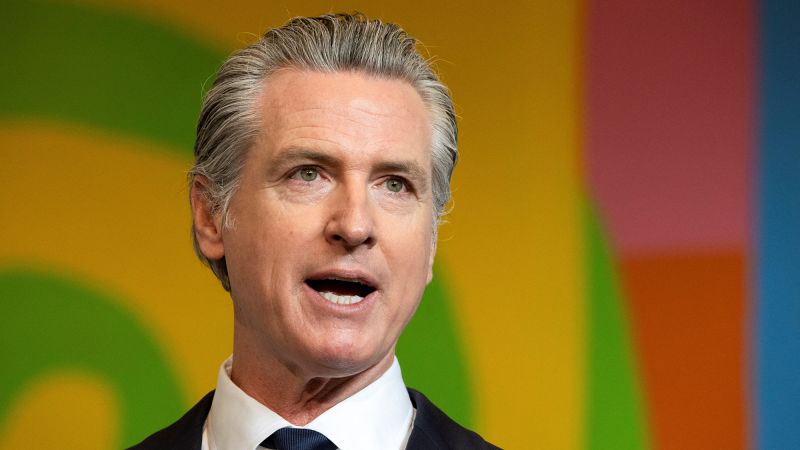
Gavin Newsom Advocates for National Billionaire Tax Over California Measure
Gavin Newsom opposes a California wealth – California Governor Gavin Newsom unveiled a bold plan this week to impose a national tax on billionaires, framing it as a key step toward an “economic reset for America.” His proposal, detailed in a Substack post on Friday, positions the policy as part of his growing consideration for a presidential bid in 2028. While the governor and other opponents of California’s own wealth tax failed to strike a deal to keep it off the ballot, Newsom’s idea aims to address wealth inequality on a broader scale, rather than focusing on state-level measures.
Policy as a Presidential Play
Newsom’s proposal arrives during the early stages of the presidential campaign cycle, reflecting a strategic shift toward populist economic policies. His aides have emphasized that the idea is part of his evaluation of running for the White House, aligning with Democratic efforts to challenge the affluent. “The system America’s founders built was designed to prevent the concentration of power in a few hands, but we have allowed that concentration to happen anyway, slowly, in plain sight, over decades,” Newsom wrote in the Substack post. “We can reverse it together, as a country.”
“We can reverse it together, as a country.”
Although the timing is unusual for a presidential candidate, the move mirrors the Democrats’ increasing focus on economic populism. This includes initiatives targeting the wealthy, such as the California billionaires’ tax that voters will decide on in November. Newsom’s opposition to the state measure, which would impose a one-time 5% levy on residents with a net worth exceeding $1 billion, highlights his preference for a national approach. He argues that the California tax would not generate sufficient revenue to address systemic issues, and that its impact could deter businesses from operating in the state.
California’s Wealth Tax and the Failed Compromise
Newsom’s stance contrasts with the California billionaires’ tax, which has drawn support from progressive figures like Vermont Senator Bernie Sanders and California Representative Ro Khanna. Despite efforts to negotiate, the governor and opponents could not agree on removing the tax from the ballot, leaving its fate to the November vote. Backers of the measure, including Khanna—a potential 2028 presidential candidate—gathered over 870,000 signatures, signaling strong public backing.
Newsom’s rationale for opposing the state tax centers on concerns about its economic effects. He warns that levying a 5% fee on the ultra-wealthy could push businesses to relocate, citing California’s role as a competitive hub among the 50 states. “Capital flows and moves,” he stated earlier this year at the World Economic Forum. “That’s real. It’s not imagined. It’s very, very real.”
Expanding the Wealth Tax Framework
Newsom’s proposal goes beyond the California measure, advocating for a minimum tax on individuals with a net worth exceeding $100 million. The goal is to ensure these individuals pay at least the same rate as the average American worker, who lacks the same tax advantages. This idea aligns with previous Democratic initiatives, including those by Massachusetts Senator Elizabeth Warren during her 2020 campaign. However, Newsom emphasizes a new dimension: the influence of artificial intelligence on the economy.
“If we do not act, that transfer of wealth among the ultra-wealthy will lock in a permanent American aristocracy of inherited wealth,” Newsom cautioned. He envisions a “national public equity fund” to distribute the benefits of AI-driven economic growth more equitably. The fund, according to an aide, would support worker transition programs, childcare, higher education, healthcare, and a national strategy for AI development. These elements, he argues, are essential to preventing a concentration of wealth that could undermine democratic principles.
“If we do not act, that transfer of wealth among the ultra-wealthy will lock in a permanent American aristocracy of inherited wealth.”
The governor’s plan also includes reforms to inheritance laws, anticipating the largest intergenerational wealth transfer in history. By taxing wealth more effectively, he believes the U.S. can avoid creating an aristocracy that inherits power and political influence. Newsom’s proposal, however, has sparked debate. Critics, including Khanna, argue it is not a true wealth tax. “Taxing the loans on assets is something the tech oligarchs themselves have proposed,” Khanna said during a press call. “That will raise a fraction of the revenue of an actual wealth tax, the kind that Bernie Sanders or Elizabeth Warren or I have proposed.”
Political Strategy and Personal Stakes
Newsom’s push for a national tax is part of a larger political strategy to position himself as a leader in economic reform. His recent video addressing a Justice Department investigation into his wife, Jennifer Siebel Newsom, underscored his determination to counter opposition from the right. “Donald Trump isn’t just coming after me because of my mean tweets,” Newsom said. “He’s coming after me because I am considering running for president.”
CNN confirmed earlier this month that Jennifer Siebel Newsom is under scrutiny, though a source familiar with the probe clarified the investigation was not initiated by Trump-appointed leaders in Washington. This development has intensified speculation about Newsom’s presidential ambitions, with his wealth tax proposal serving as a calculated statement of his economic vision. By advocating for a national framework, he aims to distinguish his approach from state-level measures, which he views as insufficient or potentially harmful.
Broader Implications for Economic Policy
Newsom’s proposal reflects a growing divide among Democrats on how to tackle wealth inequality. While some, like Khanna, support the California measure, others, including Newsom, see it as a catalyst for national action. The governor’s plan includes a multifaceted approach, combining taxation with investment in public services to create a more balanced economy. This strategy is designed to address both immediate financial disparities and long-term structural challenges.
By targeting billionaires, Newsom hopes to create a bulwark against the shifting economic landscape driven by technology and automation. His vision for a “national public equity fund” suggests a commitment to redistributing wealth, ensuring that the benefits of AI and other innovations reach all segments of society. This aligns with his broader goals of fostering economic opportunity and reducing the gap between the wealthy and working-class Americans.
Newsom’s approach also highlights his emphasis on policy as a tool for political influence. By framing the billionaire tax as part of an economic reset, he positions himself as a forward-thinking leader capable of addressing 21st-century challenges. His proposal has drawn both praise and skepticism, with opponents arguing that it lacks the comprehensive impact of state-level wealth taxes. Nonetheless, it represents a significant step in his campaign for national leadership, blending economic populism with innovative policy ideas.
Conclusion and Updated Context
This story has been updated with additional details. Newsom’s proposal, while not yet a formal campaign platform, signals his readiness to take on the role of a presidential candidate. By advocating for a national tax, he aims to rally support for his vision of an equitable economy, even as he navigates challenges both within and outside his state. The debate over wealth taxation continues to shape the political landscape, with Newsom’s plan offering a new perspective on how to address the growing disparity between the ultra-wealthy and the rest of the population.
