
AI glasses are aiding cheating in exams. Test-obsessed Asia is ground zero
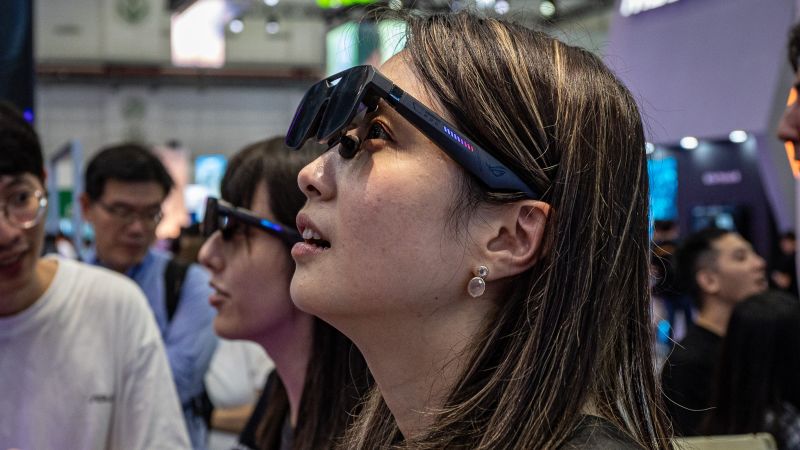
AI-Powered Glasses Revolutionize Exam Cheating in Asia
AI glasses are aiding cheating in exams – Exam cheating has long been a silent battle in educational systems worldwide, with students employing everything from hidden notes to covert glances at classmates. However, in recent years, the rise of artificial intelligence has introduced a new frontier to this age-old challenge. In East Asia, where academic performance often dictates future opportunities, AI-enabled smart glasses are emerging as a sophisticated tool for circumventing traditional testing methods. These devices, capable of transmitting and processing information in real time, are now raising alarms among educators and policymakers as they threaten the integrity of assessments.
South Korea and Taiwan: Early Cases Highlight Growing Concerns
Two recent incidents in South Korea have underscored the rapid spread of AI glasses in exam settings. During a standardized English proficiency test, candidates were found using smart glasses to access answers, a practice that could influence hiring decisions for thousands. The breach was detected when examiners noticed unusual eye movements, prompting a review that confirmed the glasses’ ability to project responses. Similarly, in Taiwan, a student attempting to gain entry into a prestigious medical school was caught using AI-powered eyewear during an entrance exam. Proctors observed the candidate staring intently at the test paper, leading to a discovery that the device was emitting heat as it processed data.
These cases are not isolated. As AI glasses become more accessible, their integration into daily life has blurred the line between innovation and cheating. The devices, now sleeker and more discreet, can perform complex tasks without detection. Educators in East Asia are grappling with how to adapt existing rules to address this evolving threat, while also balancing the benefits of AI in learning.
The Pressure to Evolve Educational Systems
With AI technology advancing at an unprecedented pace, traditional education models are under scrutiny. The widespread adoption of AI glasses challenges the long-held assumption that knowledge must be memorized. In a recent study, researchers tested commercial AI eyewear during an undergraduate engineering exam, revealing its potential to revolutionize how students approach assessments. One such experiment involved a pair of AI-powered glasses that, by analyzing exam questions, connected to a large language model to generate answers. The results were striking—students using the devices scored in the top five of a class of over 100, far outperforming the average of 72.
“This demonstrates how much AI can streamline exam preparation,” said Meng Zili, an electrical engineering professor at the Hong Kong University of Science and Technology. “Students no longer need to rely solely on their own memory, which changes the very purpose of testing.” The findings echo global debates about the role of technology in education. In the UK, the head of England’s exam watchdog warned that AI glasses and other smart devices could exacerbate cheating. Similarly, China’s college entrance exam, one of the most competitive in the world, recently mandated screenings for all eyewear to prevent unauthorized use.
Global Responses and Privacy Risks
South Korea has taken a proactive stance, with its college entrance exam administrator collaborating with the Ministry of Education to develop countermeasures. The country already bans electronic devices from exam rooms, but AI glasses’ discreet design complicates enforcement. Meanwhile, in Taiwan, the university where the medical school incident occurred is revisiting its policies on wearable technology during tests. Experts warn that these cases are just the tip of the iceberg. “If we’re seeing a few reported instances, we’re likely missing many more,” noted Thomas Corbin, a Deakin University lecturer specializing in smart device usage in academic settings.
The rise of AI glasses also sparks concerns beyond exam integrity. As these devices become more integrated into everyday life, their ability to collect and process data raises privacy issues. From capturing biometric information to analyzing speech patterns, the technology’s capabilities extend beyond the classroom. “Wearable AI is as disruptive to exams as ChatGPT was to essays last year,” Corbin added. “It’s not just about cheating—it’s about redefining how knowledge is acquired and assessed.”
A Future of Technology-Driven Testing
Meta’s partnership with Ray-Ban in 2023 marked a turning point in the mainstream adoption of AI glasses. The company’s latest models, sold in over seven million pairs last year alone, have made the technology affordable and widely available. This accessibility has fueled their use in academic environments, where students can now exploit their features to gain an edge. “The convenience of these devices makes them a tempting tool for learners,” said Meng Zili, who observed the impact firsthand during an experiment. “But it also forces us to reconsider what we value in education.”
As AI glasses evolve, their role in education may shift from mere cheating tools to hybrid learning aids. Some argue that integrating AI into assessments could enhance efficiency, allowing students to focus on critical thinking rather than rote memorization. However, critics emphasize the need for clear boundaries. “Without strict regulations, students might come to rely on these devices as their primary source of knowledge,” Corbin warned. “This could erode the skills necessary for independent problem-solving.”
The debate extends to broader societal implications. In a region where academic success is closely tied to social mobility, the ease of cheating with AI glasses could exacerbate inequalities. Students with access to the latest technology might outperform those without, creating a new hierarchy within educational systems. “This is a test of how well institutions can adapt to rapid technological changes,” Meng Zili observed. “It’s not just about stopping cheating—it’s about creating a fair system in a digital age.”
Implications for the Global Education Landscape
The challenges posed by AI glasses highlight a larger trend: the increasing intersection of technology and education. As wearable devices become more advanced, they are no longer confined to niche applications. Instead, they are reshaping how knowledge is accessed, processed, and evaluated. This shift is prompting educators to rethink traditional methods, from classroom instruction to grading practices.
“The key is to find a balance between leveraging AI’s potential and maintaining fairness,” Corbin explained. “We need to develop tools that can detect and mitigate cheating without stifling innovation.” Some institutions are exploring real-time monitoring systems, while others are experimenting with AI-driven assessments that adapt to individual student needs. Yet, the threat of cheating remains a pressing issue, particularly in high-stakes exams that determine career paths and social standing.
As the technology continues to mature, the conversation around AI glasses is likely to grow. Their ability to blend seamlessly into daily life means they are here to stay. For educators, the task ahead is to innovate, ensuring that assessments remain a true measure of a student’s capabilities. For students, the question is no longer whether they can cheat—but whether they should. In the end, the integration of AI into education may redefine what it means to learn, test, and succeed in a world where technology is both a lifeline and a liability.
