Democratic states scramble to prevent potential Trump administration interference in their elections

Democratic States Take Proactive Measures to Shield Elections from Trump Administration Influence
Democratic states scramble to prevent potential – As the November midterm elections approach, Democratic-led states are intensifying efforts to safeguard their electoral processes against what they perceive as growing threats from the Trump administration. These states have introduced new legislation aimed at limiting federal interference, particularly in areas such as law enforcement presence at polling sites and the federal government’s access to election records. The measures are designed to ensure that local control over voting procedures remains intact, even as the White House continues to push for stricter oversight.
Legislative Responses to Federal Pressure
According to the Voting Rights Lab and CNN’s analysis, five states—California, Colorado, Connecticut, Maryland, and Washington—have enacted laws to fortify their election systems against federal actions. These provisions range from restricting the deployment of law enforcement officers near polling locations to establishing clear protocols for state officials to counter any federal overreach. The urgency of these laws stems from President Donald Trump’s persistent claims of election fraud and his administration’s efforts to alter voting mechanisms to align with his political agenda.
One key provision in Connecticut, set to take effect on July 1, bars law enforcement from operating within 250 feet of polling sites, ballot dropboxes, or vote-counting locations without explicit permission from election authorities. State Representative Matt Blumenthal, a Democratic leader on the government administration and elections committee, emphasized that the law is a direct response to Trump’s attacks on election integrity. “The reason we’ve taken these steps is because of the shocking and unprecedented statements and actions that Donald Trump and his allies have undertaken to undermine our electoral system,” he stated, underscoring the perceived necessity of the measure.
Similarly, Maryland’s law addresses concerns about the federal government’s ability to expedite ballot counting. Senator Cynthia Kagan, a Democrat who co-sponsored the legislation, criticized the Trump administration for disregarding constitutional principles. “It’s infuriating that the Trump administration believes they can ignore the Constitution of the United States and try to take over our elections,” she said. Kagan’s comments highlight the tension between state autonomy and federal intervention, a debate that has intensified in recent months.
Trump’s Push for Electoral Control
Since his return to the presidency, Trump has frequently sought to reshape election procedures through executive orders and legal actions. His administration has targeted mail-in voting, labeling it as a source of widespread fraud despite lacking substantial evidence. This rhetoric has been accompanied by practical steps, such as the removal of election records from key counties in Georgia and Arizona, which Trump claimed were improperly handling ballots in the 2020 election.
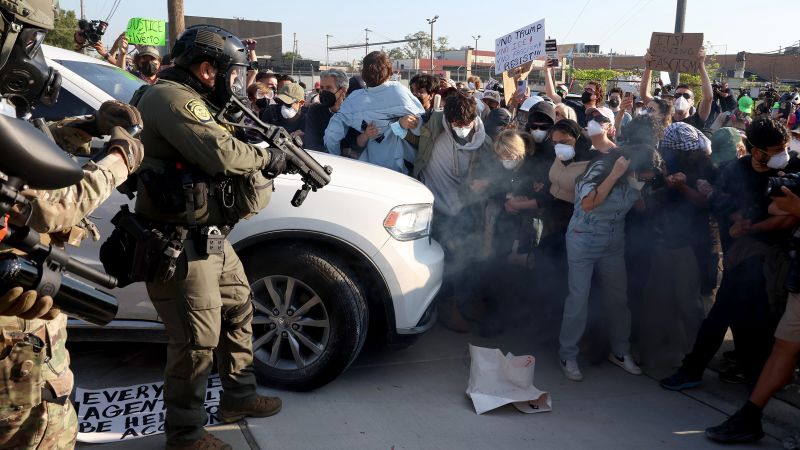
Additionally, the Department of Justice has initiated legal battles to access state voter rolls, aiming to identify potentially ineligible voters, including noncitizens. These efforts have raised alarms among election officials and Democratic lawmakers, who fear the possibility of federal law enforcement being deployed at polling places to monitor or influence the voting process. During a recent press briefing, Trump reiterated his commitment to ensuring “honest elections,” stating he would use any means necessary, including Immigration and Customs Enforcement (ICE) officers or National Guard troops, to achieve this goal.
White House spokesperson Abigail Jackson defended the administration’s actions, asserting that Trump’s focus on accurate voter rolls reflects his dedication to election integrity. “This campaign pledge from the President is why millions of Americans sent him back to the White House,” she added, framing the measures as a safeguard against voter fraud. However, critics argue that these efforts are more about consolidating power than addressing genuine concerns.
Legal Challenges and Constitutional Debates
The new state laws have already sparked legal confrontations with the federal government, particularly in California and Connecticut. In these cases, the Trump administration challenged statutes that prohibit ICE officers from wearing masks while working within state borders, highlighting the potential for conflict over enforcement methods. Legal analysts suggest that these states may have stronger positions in the upcoming battles, as their laws are more explicitly defined and grounded in state authority.
“The states are likely on firmer constitutional footing with these new laws,” said legal experts, noting that the provisions clearly outline how local officials should respond to federal overreach. For instance, California’s law, signed by Governor Gavin Newsom, was described as necessary to “address the legitimate anxiety” caused by federal interference. Newsom also highlighted the importance of protecting mail-in voting, a method that has become central to voter participation in the state.
While the Trump administration has not officially announced plans to deploy ICE or National Guard at polling sites, its actions have left room for interpretation. Press secretary Karoline Leavitt recently stated that the president had not discussed “any formal plans to put ICE outside of polling locations,” but this has not quelled concerns among Democrats. The administration’s aggressive pursuit of voter roll purges and its willingness to challenge state laws in court have been seen as steps toward broader control over the electoral process.
Broader Implications for Electoral Sovereignty
These legislative moves reflect a growing emphasis on preserving state sovereignty in elections. Under the U.S. Constitution, states hold primary responsibility for conducting elections, while Congress oversees federal contests. However, the Trump administration has repeatedly argued that federal oversight is essential to prevent irregularities, a stance that has led to direct clashes with state officials.
Democratic lawmakers and election experts stress that the new laws are not just reactive but also proactive. They argue that by establishing clear boundaries for federal intervention, these states are preparing for potential disputes over voting procedures. “We’re not just protecting our elections today; we’re ensuring they remain free from manipulation in the future,” said Blumenthal, who is also a lead sponsor of the Connecticut law. This sentiment is echoed by other advocates, who see the legislation as a critical tool in defending democratic norms.
As the election date nears, the stakes for these laws have escalated. If the Trump administration attempts to enforce its own rules at polling places, the states are ready to push back. The legislation’s provisions, combined with existing legal precedents, could serve as a framework for resolving conflicts between federal and state authority. However, the outcome of these battles will depend on how courts interpret the balance between national and local control.
Ultimately, the measures passed by Democratic states underscore a deepening divide over the role of the federal government in electoral processes. While Trump’s team insists these actions are about maintaining election accuracy, opponents view them as a calculated effort to undermine voter confidence. The upcoming midterms will serve as a test case for these claims, with the law and the courts playing pivotal roles in determining the fate of election integrity.
With the potential for federal intervention looming, the states have taken decisive steps to protect their electoral systems. Whether these laws will hold up in court remains to be seen, but for now, they represent a significant effort to ensure that November’s elections are conducted with the autonomy and fairness that Democrats believe are essential to democracy.